Random Posts

Thursday, June 23, 2011

Article in the ICCF Bulletin back in 2004

In this article concerning the use of chess engines in modern CC play by Simon Hradecky, he wrote “Whenever you join discussions about correspondence chess, you will find arguments right away that chess engines have become so good these days that humans cannot win anymore against them.” And then he cited a challenge where CCGM and former world CC Champion Arno Nickel (with the help of computers) played correspondence games against six different engines and lost overall. Hradecky went on to explain, “I am convinced otherwise, and my own experience seems to support my conviction fully.”
       He added, “Computers... cannot deviate from their given procedures and knowledge....Did I just say, that chess engines are reliable, do not get caught in mindsets and do not make mistakes? Well, somehow I did, but that statement needs to be put into perspective: accuracy and reliability comes at a high price, namely performance. To compute a position at full accuracy, chess engines need to check all possible moves, all their countermoves and so on – so their ability to look ahead and see developments is vastly limited. To compensate for that, chess engines use different criteria to select the possible moves, which they analyse further, while they just do not follow up the other ones. Only that “trick” allows them to look as far ahead as they do today and to develop their current strength...engines, however, may overlook the stronger, perhaps winning moves amongst the remaining (ones, and) as a result, chess engines, too, get caught in "mindsets" and make mistakes, just like humans.”
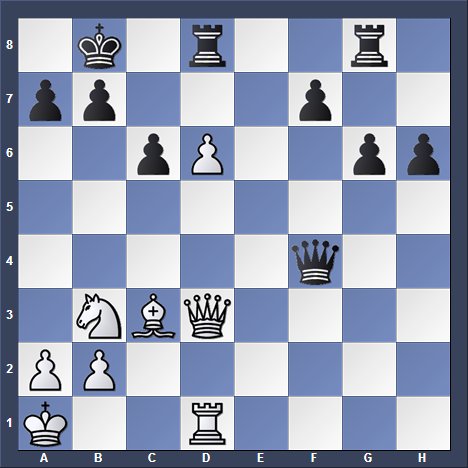
       Hradecky went on to cite an example that occurred in the 8th World Championship game between Vladimir Kramnik and Peter Leko in Brissago/Switzerland 2004, Here is the position in question after Black’s 23...Re8-e2:


      When engines of the day computed the queen sacrifice by Kramnik  (move 24.Qxe2) they thought it was winning for Kramnik and they continued to show a winning advantage for White for more than 15 minutes.  It wasn’t until after Leko’s winning 25…Qd3!! that the engines started to doubt and reduce the score.
       Kramnik confirmed later in the press conference that this queen sacrifice was prepared and checked using chess engines during his preparation but he and his team misjudged the value of his passed P.  They also missed Leko’s subsequent sacrifices which were found OTB!
       I was curious to see how today’s engines compared so let Fire 1.5 xTreme w64 analyze this position for 10 minutes and its conclusion was 24.bxa6 Rxf2 25.Kxf2 was totally equal (0.00) but after actually playing the moves it took an additional 3 minutes to realize that Black is still winning. Fire eventually figured out that after 23…Re2 Black is winning, but it took about 20 minutes.
       Analysis with Houdini was a little different.  It’s initial evaluation was that 24.Qxe2 was about a 1/3 of a P in White’s favor but after 3-1/2 minutes it changed its mind and thought Black had an advantage of nearly 2P’s so switched its attention to 24.bxa6 which it considered nearly equal.  After another 3 minutes or so, it concluded that 24.bxa6 wasn’t any better (2P advantage for Black). 
       The actual game continued 24.Qxe2 Bxe2 25.bxa6 Qd3 Kramnik's preparation went this far, believing his passed pawn gave him compensation. But White is lost here thanks to the nice sacrificial lines that Leko found over the board. 26.Kf2 Bxf3 27.Nxf3 Ne4+ 28.Ke1 Nxc3 29.bxc3 Qxc3+ 30.Kf2 Qxa1 31.a7 h6 32.h4 g4 0-1.
       What this little experiment shows is that engines (and computers) of today are much faster in arriving at their conclusions than those of yesteryear, but just as a reminder of what I said before, you absolutely must give them some time to ponder the position.  A minute or two, even 5 or 10 in a complicated position is just not sufficient.  Then, after all that, you have to step through the lines just to make sure nothing was missed. 
       It’s also been argued that engines have allowed weaker players to compete with stronger players and that the difference between ordinary CC masters and world champions depended only on who had the biggest, badest computers and the best software.  As Hradecky pointed out the gap between strong players using chess engines and the weak players using chess engines still remains because the difference in understanding and human skills of the stronger player will still win against the weaker player. Believe me, he's right about this.
       So what exactly have engines introduced into CC?  First is that you rarely see game losing blunders even in games by low-rated players.  What’s really changed is that CC players also need to know how to use chess engines to compliment their own skills.
       In recent years I’ve discovered it is necessary, like it or not, to make an effort to learn how to incorporate engines into my CC play.  I’ve never been one for quantity over quality in CC.  I’d rather play 10-12 games as good as I can as opposed to slopping through 50 or a hundred and only spending a few seconds per move.  The funny thing is engines haven’t made selecting moves any easier as I have discovered I am spending just as much time going over engine analysis and trying out different ideas of my own as I used to back in the old post card days.  In fact, in some ways it’s worse because in addition to my own thoughts on the position (usually pretty crappy) I have to look at engine lines and because “they” recommend using more than one engine, that can often mean two or three different moves that are “best” depending on which engine you are using. When that happens you have to agonize over which engine to believe and that still means making a judgment call based on one’s understanding of the position. 

Wednesday, June 22, 2011

US Correspondence Championship

Back on the first of December, 2009, the USCC started and on December 16, 2010 John Ballow was declared the winner with +5 =0 =9. His ICCF rating at the start was 2355 and as of March, 2011, his CC rating is 2425. In this game he defeated last place finisher Ken Coryell who has a CC rating of 2205.

Tuesday, June 21, 2011

IECG Game

       In 2004 I returned to chess after a 12-year hiatus during which time I had never even looked at a chessboard.  After rejoining the CCLA and playing using post cards for about 4 years I began to experiment with server sites.  One if the first was IECG.  Games there were played by e-mail  and I selected it because I was allowed to enter tournament based on my CCLA rating.  This was important because I had no desire to start at 1200 or 1400 and slog through a hundred games consisting of bunny bashing before starting to get decent competition.
       As mentioned previously I was unaware that they had no rules against computer use at IECG so ended up going +0 -4 =2 in my first tournament there. IEC G closed up shop last year because of the difficulty in arranging e-mail games.  I understand this because I’m also a member if the International E-mail Chess Club which does not offer server play, only e-mail, and it takes forever for sections to fill up.
       The following game was one of the two I drew in that first IECG event and was played without engines on my part.  I can’t be sure what engine my opponent was using (Fritz 6?), but probably because many players using engines will only let them examine a position for a minute or two then go with the engine’s first choice, I managed to draw a couple of games. 
      What makes the game interesting was that even with today’s very strong engines it highlights the fact that there are some pitfalls in relying totally on their evaluations and suggested moves. I sacrificed a N on f7 at move 18.  Was it totally sound?  An analysis at only 10 seconds a move by Fritz 12 and Houdini gave inconclusive results.  We’ve all heard the saying, “Think long, think wrong.”  That would seem to be the case with engines also because looking at the long variations produced by Fritz 12 and Houdini it was clear that the deeper into the analysis you go, the more errors you find and this, of course, affects the engine’s final evaluation of the given variation.  Fritz seemed to make more mistakes of this type than Houdini did though.
      This also demonstrates why, as I’ve pointed out in previous posts, you cannot always totally rely on numerical evaluations and it is absolutely essential that you scroll through the variations to make sure the engines did not miss anything.  I noticed that in many cases the engines did not change evaluations right up until the actual “mistake” was played on the board at which time they would immediately indicate the move was a poor choice. Something to do with the way they store moves I suppose.  In those cases stepping back a move would allow the engines to rethink things and come up with a stronger move. While I did not subject this game to a lengthy analysis in an attempt to discover the absolute truth, my general impression was that Black missed some stronger moves along the way and probably could have won.  It’s these types of situations that make today’s engine assisted chess just as difficult to play as chess without engines.  Different engines, different move suggestions and evaluations.  Long variations and missed stronger moves.  Sorting through everything takes as much time and patience as playing without an engine.  What it often comes down to is a player’s chess skill and his ability to evaluate the position.
       Speaking of evaluating positions, this is the real skill that separates the men from the boys in chess.  Even if I could calculate as accurately as a GM and we arrived at the same position, it’s the correct evaluation of the position that matters.  If you don’t understand the position you will not know what to do…you might even unknowingly play for a lost position!  This point is often missed by low rated players (the ability to evaluate who stands better and why) and explains why they are usually reluctant to study strategy and endgames but it’s those features that are aids in making correct evaluations as to who stands better and why.  Failure to take salient strategic features into account means you’re just shifting plastic and waiting for a blunder. 

On to the game…

Chess OK

Chess OK sells a lot of stuff online, but I also discovered they have some other things worth looking at:

Learning from an Engine

Wednesday, June 15, 2011

Problems with Komodo64 2.03JA

Taking the advice of reader Kirk, I downloaded the latest release of Komodo and had problems.  Something seems to be wrong with the evaluation function.  In the following position taken from the game in the previous post…


I got this display (after 3minutes and 26 seconds nothing had changed from the initial display):


30.Qe8 Kh7 (-21.93) 31.Qg8+  lead to the following display:
This makes no sense. White is giving away all his pieces in the second line so cannot possibly have the advantage. I decided play a 5 minute game against Houdini and Komodo caused the program to crash after about 30 seconds and in a standard Sicilian opening position Komodo showed White winning by nearly 5 P’s. 

Komodo ended up getting deleted from my computer and for the time being I will continue to use other engines because I have no idea what the poroblem could be. 


Tuesday, June 14, 2011

Let Your Engine Run and Interact With It!!

In a recently concluded game at Lechenicher SchachServer we reached the following position with my opponent to make his 26th move.


      I use Fritz with the Houdini 1.5 64-bit engine and when I first looked at his move I couldn’t believe what it was telling me! 
      White played 26.Nxd6 and the immediate output was Black was winning by 6P’s. Knowing that couldn’t be right I immediately began to look at various replies and the evaluation dropped drastically no matter what I played. Houdini took nearly 5 min to realize Black’s advantage is closer to only 1/4 of a Pawn.  What happened?  After the game (eventually drawn) I discovered what was happening.
      Play continued 26...Rxb2 27.Nf7+ Rxf7 28.Qxf7 h6

      And now I saw Houdini had been considering White’s best move to be 29.Qc4 still showing a 6P advantage to Black after 29...Qc5 30.Qxc5 Bxc5 and this is why it believed Black had a such a large advantage…the R is pinned and lost.  Of course that’s not the case because when you actually get to this position the engine realizes fairly quickly that 29.Re1 is correct and Black’s advantage is only about 1/4 Pawn. 
      The moral of the story is that when you are analyzing with an engine, especially completed games where you only allow it a few seconds per move, the suggested lines aren’t always good ones.  Even letting it analyze each move for a minute or two may not be sufficient.  This is why in order to correctly analyze games with any engine sufficient time and some human input are needed.  The fact is that in the initial position 26.Nxd6 is probably the best move, but if one were relying solely on the engine output and not allowing sufficient time, it could have been rejected out of hand as soon as that 6P advantage to Black showed up on the screen.

Miscellaneous

I discovered Chessville quotes by various players to be quite entertaining and they even offer some good advice.

365Chess online database of 3-1/2 million games  This site has games by players from Manfred Aab of Germany to Sofiya Zyzlova of the Soviet Union and includes unrateds to GM’s. For example GM Olivier Renet of France has 1070 games and Michal Maciazek, rated 1453, from Poland has 3 games.  My favorite player, Reshevsky, has 1356 games.  Maybe you have some games in it. You can search by openings…Grob’s Attack (1.g4) has 759 games.  Of which, by the way, White won 37.5% and lost 44.9% which isn’t too much worse than Bird’s Opening (1.f4) where White won 35.5% and lost 40.0%.  Also check out their chess puzzles. 

Best Game of the last century?  Kasparov-Topalov, Wijk aan Zee, 1999…with great notes


The case of the idiot tournament directors:
Arthur W. Dake was born on April 8, 1910 and learned chess at the age of 16 after leaving high school and working as a seaman. Dake's career was unusual in that he did not play in a tournament until he was very strong.  His first tournament was the 1930 New York State Championship where he finished 3rd.  He was mostly active from 1930 to 1938 then dropped out of chess until he made a comeback at Lone Pine 1975.  On the basis of his early results a grandmaster title application was submitted on his behalf and awarded in 1986.
Dake's result in New York 1931 featured an unfair forfeit loss to Isador Turover. According to American Chess Bulletin, when Turover was short of time and was down to 15 minutes Dake came to the umpire, Dr. Norman Lederer, and asked him to watch Turover's clock. Lederer told Dake that it was none of Dake’s business!! In this tournament the clocks had no flag, and the rule was that a white space had to show between the black dot and the minute hand.
When Turover had no time left, Dake waved his hands several times pointing to the clock. Dake won the game but Lederer ruled that Dake had disturbed Turover's concentration and awarded the game to Turover by forfeit. Of course Dake appealed and the referee, Alvin Cass, ruled that he found the penalty to be harsh since Turover had a lost position but ruled "Discipline must be maintained..." and the forfeit stood.
Final Results, New York International Tournament 1931
J.R. Capablanca 10 (out of 11)
Isaac Kashdan  8.5
Alex Kevitz  7.0           
I.A. Horowitz  5.5             
Abraham Kupchik    5.5
Herman Steiner 5.5       
Anthony Santasiere   5.0          
Isadore Turover   4.5             
Arthur Dake      4.5
Edward Lasker  4.0        
Frank J. Marshall   4.0
Maurice Fox     2.5               


Monday, June 13, 2011

Selected Endgame Lessons from Horowitz

New pdf booklet for download…50 pages of basic King and Pawn endings from I.A. Horowitz’ How to Win in the Chess Endings.  English Descriptive notation.  Don’t let the fact this is in EDN discourage you from studying this essential endgame material; a brief explanation of how to read it is included in the booklet.  Any reasonably intelligent player can learn it in 10 minutes…I learned it as a 10 year old kid, so how hard could it be?!

Engines and Material Imbalances

      As you well know, one area where engines have a hard time is evaluating a position with an unusual material imbalance.  Of course, this can also be true for humans because while there are a lot of “rules” for the value of the pieces in general, an exact evaluation cannot be made on general principles; specific considerations of the position must be taken into account.  In addition to approximate counting the value of the pieces, you also have to take into account such things as P-structure, mobility, K-safety and a host of other features.
      In recent years, engines have shown much improvement in making these evaluations. However, you still cannot always take those evaluations at face value.  Back in the old days of chess engines, say 5 years ago, things were a lot less clear.  For example in the following position taken from CC GM Robin Smith’s book, Modern Chess Analysis which was published in 2004, some evaluations were:

Junior-White 2-1/2 P’s up
Hiarcs-slight advantage to Black
Fritz, Rebel and Chessmaster-equal or slight advantage to Black
Chess Tiger and Shredder-slight advantage to White
Nimzo-White up by 1.0 P’s


       Which engine was right?  The programs were giving Black a huge plus for his 3 connected, passed P’s.  This may be an advantage in the ending, but this position is not an ending and the truth is White has about a one Pawn advantage here.  Today let Houdini analyze this position and it quickly spots the correct 32.d7 and gives White about a one Pawn edge and in only a couple of minutes is 100% sure it’s the correct move.
      Fritz 12, Firebird and Spike all also quickly (unlike the engines of Smith's day. He often had to let them run for hours!) concluded that 32.d7 was the best move, only varying a little in their evaluations.  I should note that I’d read Spike was primarily a positional engine so I tried it out in a short blitz match against Houdini.  In CC positional play is what you want because no engine is going to fall for faulty tactics.  Houdini won by +1 -0 =4.  Spike’s loss came as a result of a tactical error that it probably wouldn’t have made if it had not moved almost instantly.  Still, for the time being, I’m sticking with Houdini for my analysis.
      In a recent Lechenicher SchachServer event I actually had 3 games in which there were material imbalances.  In two games I had a Q vs. 2 R’s which were both drawn.  In the third game we arrived at the following position with White (me) to make move 56.  The engines showed I had a 2-3 Pawn advantage but after several shootouts and trying several candidate moves I was unable to devise any winning plan so I decided to reduce the material to the basics: a R+P vs. B+2P’s because Black’s extra R always seemed to offer him counterplay. 


Thus after 56.Rg6 Rxg6+ 57.hxg6+ Kxg6 my plan was to transfer the K to c5 and sac the R for a B and P.  After this I hoped to capture the a-Pawn then advance it.  Unfortunately this does not work because Black’s K is able to reach the queening square with only one move to spare and I could not figure out a way to pick up the extra tempo I needed.  58.Kf2 Now I supposedly have a one P advantage. The K passes behind the R so as to keep the Black K cut off. 58… Kg5 59.Ke3 Bd5 60.Rf8 Bc4 61.Kd4 Kg4 62.Kc5 Here I looked hard to find a mate with the R&K but his B was always stymied that idea. 62...Kh4 63.Kb4 Kg3 64.Rf5 Kg4 65.Rxb5 Bxb5 66.Kxb5 arriving at the following drawn position:


     This is a draw because Black’s K is inside the square.  If it was outside it would be a win. After spending a lot of time analyzing this position with several different engines and ending up with gobs of analysis stored with the game I was unable to discover any method of forcing a win in the initial position. All this shows what I’ve said before is correct (as are most things I say…that’s a joke):  Titled CC players who manage to routinely defeat players who rely solely on engine use and even manage to outplay other titled players have to be pretty strong players or they would never be able to discover ways to defeat the engines of today.  On LSS, I looked up the names of several of their top rated players and discovered most didn’t have OTB ratings that I could find, but many did have CC titles with the ICCF.  Their #2 ranked player is OTB Grandmaster Alex Fier of Brazil but he never finished any of his games and lost them all by forfeit.  Too bad he didn’t stick with it because it would have been interesting to see how well an OTB GM fared in this kind of chess.


Saturday, June 11, 2011

ChessDotCom Videos

While on the subject of videos, if you enjoy watching them check out ChessDotCom for great videos by players like IM David Pruess, IM Daniel Rensch, GM Alex Lenderman, GM Melikset Khachiyan, etc.

Online Chess Lessons Channel (YouTube)

I suggest checking out National Master William Stewart’s YouTube Channel for analysis of games of interest from recent events.  His website also has some interesting commentary.  He offers lessons at the rate of $22.50 - $24.50 for each one hour session.  Disclaimer: this post and the recommendation of his website and YouTube site does not constitute an endorsement for his offer of chess lessons. I have no opinion on them one way or the other.

Friday, June 10, 2011

Frank Marshall

Frank Marshall (August 10, 1877 – November 9, 1944), was the U.S. Chess Champion from 1909–1936, and was one of the world's strongest chess players in the early part of the 20th century. I recently came across a site by USCF Life Master A.J. Goldsby dedicated to Marshall which includes little known biographical material and some of Marshall’s best games that have been annotated in depth.  This site is definitely a must visit!  AJ’s Page on Frank Marshall


Thursday, June 9, 2011

4-Shared dot com

4-Shared dot com is a free online storage site that allows you to upload, access, and share (public or private) your music, videos, photos or anything else you want.  For those that don’t know, that means you use it just like the hard drive on your computer. I have 43 booklets stored on it and have used only 8% of my 15 GB worth of space! One year’s subscription costs $6.50 a month and offers a lot of features including 100 GB of storage space. Worth checking out.

The 2011 World Championship Candidates Match Tournament

       Quite a few people have been commenting on the fact that there was grand total of 3 wins in the classical time control. Grischuk made it to the finals by drawing the classical games and playing the blitz tiebreakers where he apparently felt he would have better chances.
       A lot of the top players have expressed their dislike of the current candidates system.  For example Magnus Carlsen refused to play and that was a major loss to the event.  I have to agree with Kramink when he opined that because this was a classical tournament they should be playing at classical time controls and playing rapid games has no place in these events. He suggested a round robin tournament which is what they had in the old days and it makes sense to me. Kramink pointed out that in Kazan he played more blitz games than classical which is just unbelievable. This year’s Candidates tournament was decided primarily by rapid chess and that should not be the case in a world championship event.
       GM Emil Sutovsky, World Championship and Olympiads Committee member, sent out a questionnaire to the world’s top 20 players asking their opinions and what changes they would like to see made. There will be a meeting this month where, hopefully, the issue will be addressed and, hopefully but unlikely, the players’ opinions will be given serious consideration, but don’t count on it.
       As I see it there are two problems with matches played at classical time controls.  The first became evident back during the K-K matches.  These days at that level it is very hard to win and unless some restraints are put in place the matches could go on for a protracted period of time making them simply too expensive for the organizers.  They also become boring and hold little interest for spectators.
       The other problem is money.  Organizers won’t organize and players won’t play without big money being available.  Even at the lower levels of play many class players won’t play if they have no chance to win big money.  With hotel, food and gas expenses making it expensive enough to play, then adding EF’s that sometimes run into hundreds of dollars, nobody is going to show up unless there is the promise of a big payoff.  There is a local club that offers occasional events with small EF’s and small prizes and they’re lucky to get 15-20 players.  Everybody wants a shot at winning big money. 
       Here’s my solution: Make the world championship a biannual round robin event where the top 20 rated players in the world are invited. I realize there probably would not be much money in these events, but who says the world champion has to be a millionaire? The great players of the past were far from it and they will always be remembered and revered in the chess world. Many GM’s of yesteryear had real jobs and chess was a hobby.  GM Arthur Bisguier told of how, when he played his match with Reshevsky, he’d get off work, grab some fast food and race to the playing site.  Ask one of these guys to do that today!  Most of them wouldn’t even consider it.  My guess is that in a big RR like I am suggesting things wouldn’t be so boring because the players wouldn’t be motivated by greed but by the love of the game.  Organizers?  There has always been folks willing to undertake organizing because it was something they enjoyed and they did it even when there was no money to be made. 
       Yes, that would cause a lot of top players to give up chess if they couldn’t make a living at it, but who cares?  Just remember the 3 wins at the classical time control and all the boring games. Who’s going to miss that? Fischer may have been a turd but at least he made his opponents play chess. Najdorf, Tahl, Bronstein, Spassky…we need more guys like them.  Not these wussies that are “playing” these days.

1400’s and Endings

I hear it all the time from lower rated players: Study tactics. Endings and strategy should wait until you are (whatever) rating.  Well take a look at this ending played between a couple of 1400’s. White to move.


Play continued 51.Kb7 Kf2 52.Kb6 Ke2 53.Kb5 and Black resigned.  He should not have because the position is drawn. If you simply count moves from the starting position, in which it is obvious White must capture the P on a4, you will see it takes 4 moves (Kb7, Kb6, Kb4 and Kxa4).  Where will Black’s King be in 4 moves? …Kf2, …Ke3, …Kd4 and …Kc4 reaching this position:
When I showed this position to White he insisted that it was a win (and presumably so did Black) because all he had to do was play 55.Ka5 and meet …Kc5 with 56.a4 Kc6 with 57.Kb4 and he can advance the P and win.  This is not true. After 57...Kb7  58.Kb5 Ka7  59.a5 Kb7  60.a6+ Kb8  61.Kb6 Ka8  62.a4 Kb8  63.a5 Ka8 reaching the following position: 
And White either has to allow Black to capture his P’s or a stalemate.  Going back to the original position, it is a draw because White’s K can never get off the a-file without allowing Black to get in front of the P’s.  With a little elementary endgame knowledge both players would have known this and Black could have saved a half point.

Tuesday, June 7, 2011

MacFarland Publishing

       I’ve not been posting much mostly due to real life activities and keeping busy with my CC tournaments.  But even those have suffered.  In a recent game my opponent played Ng5 attacking my Q on f7.  After some thought I concluded I should play …Qd7 followed by …Nf6, so that’s what I did: played …Nf6.  But that was before moving the Q so after he took my Q on f7 there was no choice but to resign.  I can’t remember the last time I played such a grossly bad move.
      Anyway, the other day I got a nice catalog in the mail from MacFarland Publishers; they publish books on about every subject you can think of and their collection of chess books can only be described as fantastic.  No opening junk or trash on how to make a master out of a 1400 in 2 weeks kind of stuff.  They publish a lot of biographies on players like Amos Burn, Arthur Kaufman, Julius Finn, WHK Pollack, Adolf Albin, Isaac Kashdan, Samuel Reshevsky, Frank Marshall, etc., etc.  They even have some books on chess fiction.
      Guys like Kaufman and Finn are really unknowns but were fascinating characters who graced the chess world of their day.  The books are a little pricey, but you get what you pay for.  For example, the book on Amos Burn costs $95 but it is 984 pages and contains 209 photos!  If I were buying chess books these days I could have easily spent a few hundred dollars.  Check them out.    MacFarland Publishing