Random Posts

Showing posts sorted by relevance for query gudju. Sort by date Show all posts

Monday, July 20, 2026

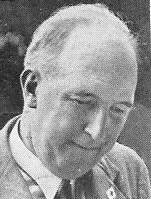
Ion Gudju

    
Ion Gudju (1897 – 1988) was a Romanian master. He was the son of Hercules Anton Gudju (1846-1920), one of the early promoters of Romanian chess. 
    Ion was a gifted player and promoter of chess in Romania, mainly between 1914 and 1932; in 1914 he founded and edited the first Romanian chess magazine. He represented Romania in the 1st unofficial Chess Olympiad in Paris, where he became one of 15 founders of FIDE. He served as Honorary Vice President of FIDE from 1982 to 1988. 
    He played in Chess Olympiads at The Hague 1928, Hamburg 1930, and Prague 1931. In 1971, he was elected honorary president of the Romanian Chess Federation and was awarded the title of Honored Master of Sports. According to Chessmetrics, Gudju's highest rating was only 2276, but that rating was obtained on a very small number of games. 
    In 1984 at the age of 87, Gudju was invited to the Chess Olympics by the then president, Florencio Campomanes, where he served on the appeals committee, but he did not play any games. 
    As an interesting aside, the book The Story of the Olympic Torch recounts how prior to the 1980 Summer Olympics in Moscow, when the Olympic torch arrived in Romania and was handed off to Dumitru Pyrvulescu Roman, a fly-weight Greco0Roman wrestling gold medallist from 1960, that when it arrived at the Dynamo Stadium in Bucharest filled with 40,000 people inside and thousands more outside, Roman passed the torch off to the 83 year old Gudju who was serving as president of the Romanian Chess Federation who then passed it off to Leon Rotman, a double canoeing gold medalist from 1956. 
    In the real world Gudju held a PhD in Chemistry from the Sorbonne.As promised, here is a nice win of his from the 1924 Olympics. 

  A game that I liked (Fritz 17)

[Event "Paris Unofficial Olympiad"] [Site ""] [Date "1924.07.??"] [Round ""] [White "Ion Gudju"] [Black "Stanislaw Kohn"] [Result "1-0"] [ECO "B30"] [Annotator "Stockfish 18"] [PlyCount "53"] [EventDate "1924.??.??"] {B73: Sicilian Dragon: Classical} 1. e4 c5 (1... c6 {This disaster is Gudju's best known game.} 2. d4 d5 3. Nc3 dxe4 4. Nxe4 Bf5 5. Ng3 Bg6 6. Nf3 e6 7. h4 h6 8. Ne5 Bh7 9. Bc4 Nd7 10. Qe2 Ngf6 {Eliminatuing the N on e5 with 10...Nxe5 was an absolute must!} 11. Nxf7 Bb4+ 12. c3 Qa5 13. Qxe6+ Kf8 14. cxb4 Qxb4+ 15. Bd2 {1-0 I, A. Horowitz-Ion Gudju Prague 1931}) 2. Nf3 Nc6 3. Nc3 g6 4. d4 cxd4 5. Nxd4 Bg7 6. Be3 Nf6 7. Be2 {Today 7.Bc4 is far more popular.} O-O 8. O-O d6 9. f4 {This move has mostly been replaced by 9.Nb3.} Ng4 {This move, which forces the trade of white’s B pair isso mewhat inferior to 9...Qb6} 10. Bxg4 Bxd4 {Black is going to feel the absence of his dark squared B.} 11. Bxd4 Bxg4 12. Qd2 Nxd4 {Naturally, with his own dark squared B missing, black wants to trade off white’s.} (12... e5 {is inderior.} 13. Be3 exf4 14. Rxf4 Be6 15. Rd1 {White is better. Zutobradic,T (1732)-Gvozden,N (1951) Belgrade 2025}) 13. Qxd4 Bd7 {Played with the intention of playing ...Bc6 pressuring white’s e-Pawn} 14. f5 ({exf5} 14. Rad1 {[%eval 57,21] [%wdl 72,928,0] [%emt 0:00:02]} Bc6 15. h4 Qb6 16. Qxb6 axb6 17. a3 {is equal. Mitkov,N (2481)-Smirnov,A (2567) chess.com INT 2019 (1)}) 14... f6 {Weakening the K-side in this manner is risky, but not fatal.} (14... Bc6 15. f6 Qb6 16. Qxb6 axb6 17. fxe7 {White has a promising position. Honfi,K-Kluger,G, Budapest 1950}) 15. Rf3 gxf5 {More consistant would have been 15...Bc6, but black gets sidetracked.} 16. exf5 Kh8 17. Re1 {[%mdl 32]} Rg8 {[%mdl 8192] This seems logical, placing the R on the semi-open file. But his e-Pawn is exposed to attack. Watch how Gudju does it; it’s very instructive. His best defense was 17...Rf7 guarding the e-Pawn.} 18. Nd5 Rg7 {Black is weak on the dark squares} 19. Rg3 Rf7 {Just a couple of moves too late} 20. Rxe7 $3 {[%mdl 512] A nasty surprise.} Qa5 (20... Rxe7 21. Qxf6+ Rg7 22. Qxg7#) 21. b4 (21. Rxf7 $4 Qe1#) 21... Qxa2 22. Rxf7 Qb1+ 23. Kf2 {[%mdl 32]} Qxc2+ 24. Ke1 Qb1+ 25. Kd2 Qa2+ 26. Ke3 {[%cal Rd4f6]} Qa3+ 27. Qc3 {Black resigned. White took control after the opening and played very precisely.} 1-0

Friday, July 19, 2013

Horowitz-Gudju Miniature


Miniatures are the jokes of chess.
 
      Gudju?! Never heard of him aside from this game but it turns out Ion Gudju (14 July 1897 – 1988) was a Romanian master who represented Romania in the first unofficial Olympiad at Paris.

      The first Team Chess Tournament had been held by coinciding with the 1924 Summer Olympics in Paris, 12–20 July 1924. At the core of the organizing committee were the Frenchmen Pierre Vincent and Alexander Alekhine. Fifty-four players representing 18 countries arrived to Paris. They were decided to be split into nine preliminary groups of six, a winner of each qualifying into the Championship Final while the rest joined eight-round Swiss consolation tournament. The winner of the individual tournament earned the title of the Amateur World Champion. Gudju became one of 15 founders of FIDE and he played in three Olympiads (The Hague 1928, Hamburg 1930 and Prague 1931)
      He took 4th at Hastings 1926/27 in the “B” tournament which was won by George Koltanowski. In Bucharest 1927 he finished second behind a player named Wechsler. Other results: 4th at Bucharest 1928 (Sigmund Herland and Wechsler won), shared 2nd, behind Alexandru Tyroler, at Jassy 1929 (Romanian Championship), took 5th and won at Bucharest 1929, and tied for 2nd-5th at Bucharest 1930 (Iosif Mendelssohn won). He was the Honorary Vice President of FIDE in 1982–1988.
 

Monday, November 2, 2015

The Chess Playing Golmayos

Who they were:
Celso Golmayo y Zúpide (1820-1898)

Celso (Celsito) Golmayo y de la Torriente (1879-1924)

Manuel Golmayo y de la Torriente (1883-1973)


Celso
     Celso Golmayo y Zupide (24 April 1820, Logroño, Spain – 1 April 1898, Havana), was a Spanish–Cuban master. A neat, calm man, he was known for his kindness, but when he sat down to play, it was a different story. Morphy said that Golmayo was one of the few players that he was unable to give the odds of a Knight. One prominent Cuban master of the day wrote of Golmayo that he was the best endgame player in the world. Golmayo played a lot of matches against prominent players of his day, losing most of them, but winning some nice games in the process. His best moment also came in a match he lost...to Blackburne. Golmayo's supporters always regretted that he never dedicated himself more seriously to chess.
     He was generally accepted as Cuban champion since his 1862 match defeat of Felix Sicre and he participated in the famous Paris 1867 tournament where he tied for 7–8th. In matches, he won against Paul Morphy 3-2 at Havana 1864 although it needs to be pointed out that this was a blind simultaneous where Morphy gave odds of a Knight).


In Paris in 1867 he lost a match to Gustav Neumann with a score of 0-3.

He lost twice to Wilhelm Steinitz 2-9 in 1883 and 0-5 in 1888

He twice defeated Andres Clemente Vázquez: 7-0 in 1887 and 7-4 in 1890

He lost three matches to George Henry Mackenzie: 3-6 and 0.5 -5.5 in 1887 and 4.5-7.5 in 1888

In 1891 he lost to Blackburne 4-6

In 1893 he lost to Emanuel Lasker 0.5-2.5


Manuel
     Celso (Celsito) Golmayo y de la Torriente (1879 in Havana – 22 January 1924 in Seville) was a Cuban–Spanish master. He was the brother of Manuel Golmayo y de la Torriente.  Celsito won the 1897 Cuban championship in Havana after a play-off against Andrés Clemente Vázquez. In that tournament Enrique Ostolaza came third, Juan Corzo fourth and Manuel Golmayo fifth. Golmayo's victory was unusual because national championships were rarely won by teenagers in the 19th century. Edit: According to readers there are no known photos of Celsito.


Manuel
     Manuel Golmayo y de la Torrienter (12 June 1883, Havana, Cuba – 7 March 1973, Madrid) was a Cuban-Spanish master.  Born into a chess family (father Celso Golmayo Zúpide, elder brother Celso Golmayo Torriente), he was Spanish Champion on numerous occasions (1902, 1912, 1919, 1921, 1927, 1928) and in 1929/30 he lost the title in a match (+1 –4 =2) to Ramón Rey Ardid.
     In 1922, he lost a mini match to Alexander Alekhine (+0 –1 =1) in Madrid. in 1924, he took 8th in first unofficial Chess Olympiad (Championship Final) at Paris 1924 (Hermanis Matisons won). In 1928, he took 4th in the Amateur World Championship in The Hague (Max Euwe won).
     He played for Spain in three official Chess Olympiads: 1927, at first board in 1st Chess Olympiad in London (+2 –4 =9); In 1930, at second board in 3rd Chess Olympiad in Hamburg (+3 –4 =3); In 1931, at first board in 4th Chess Olympiad in Prague (+3 –5 =7).
     In tournaments, he took 6th at Barcelona 1929 (Capablanca won), took 7th at Sitges 1934 (Andor Lilienthal won), took 3rd at Madrid 1934, took 4th at Paris 1938 (Hönlinger won), tied for 9-10th at Barcelona 1946 (Najdorf won), took 6th at Gijon 1948 (Antonio Rico won), tied for 8-9th at Almeria 1948, and won both at Madrid 1947 and Linares 1951. In 1951, FIDE awarded Golmayo the title International Arbiter.
     Manuel was also a strong bridge player and the author of Bridge Contratado, published in Madrid, 1946. Edward Winter's Chess History site has a really nice photo from 1928 that includes Manuel Golmayo de la Torriente, Ion Gudju and many others.

This game features Manual's win against Ion Gudju; I posted Gudju's famous miniature loss to Horowitz a couple of years ago. Perhaps it's about time to post one of his wins! Edward Winter's Chess History site has a very nice 1928 photo of Manuel Golmayo de la Torriente and Gadju along with many other players HERE.

Let me make some comments about the Open Ruy Lopez used in this game. The Open Ruy is an lively defense where Black loosens his position, but it can give him active play. Like any opening, to play it well black must be familiar with the ideas and tactical themes. A few years ago one reviewer of a book on the Open Ruy Lopez commented that for lower-rated players getting into a passive position often leaves them doomed because they don't have the positional skills to hold the game, so he recommended the Open Ruy as a great starter opening. Let me add that it might also be said we lower rated players often are doomed when we get into tactical situations because we don't have the tactical skills to hold the game. So much for hype trying to peddle another opening book.