Random Posts

Saturday, July 7, 2018

Lionel,Shirley, Roger, Jonathan and Oliver

     Lionel Penrose (June 11, 1898 – May 12, 1972) was a British psychiatrist, medical geneticist, pediatrician and mathematician who carried out pioneering work on the genetics of mental retardation. He was the Galton professor of eugenics at University College London, and later emeritus professor. 
     Most sources he was also a chess theorist. Exactly what that means, I have not been able to discover. He seems to have played chess only on a casual basis, but it appears he did dabble in composing two movers. 
     Lionel's daughter is Professor Shirley Victoria Hodgson DM, D(Obst), RCOG, DCH, FRCP, FRSB (nee Penrose, born February 22, 1945) is a British geneticist. She worked as a GP, then became Senior Registrar in Clinical Genetics for the South Thames (East) Regional Genetics Centre and Honorary Senior Registrar at Hammersmith Hospital, London, from 1983 to 1988; then Consultant Geneticist at Addenbrooke's Hospital from 1988–1990. In the 1990s and led the regional cancer genetics service at Guy's and St Thomas' Hospital. In 2003 she became Professor of Cancer Genetics at St George's, University of London. 

     Sir Roger Penrose (born August 8, 1931), is a mathematical physicist, mathematician and philosopher of science. He is Emeritus Professor of Mathematics in the University of Oxford and Emeritus Fellow of Wadham College, Oxford. He is known for his work in mathematical physics, in particular for his contributions to general relativity and cosmology. He has received several prizes and awards, including a 1988 Wolf Prize for physics, which he shared with Stephen Hawking. 
     Sir Roger composed a problem devised "to defeat an artificially intelligent computer but be solvable for humans". The position itself and the logic behind the experiment is not compelling. Still, you may enjoy checking it with a chess engine.  
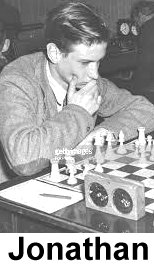
     Jonathan Penrose, OBE (born 7 October 1933) is a GM, both over the board and correspondence, who won the British Chess Championship ten times between 1958 and 1969. He is a psychologist and university lecturer by profession, with a PhD.  
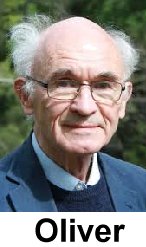
     Oliver Penrose (born 6 June 1929) is a British theoretical physicist. He was associated with the Open University for seventeen years and was a Professor of Mathematics at Heriot-Watt University in Edinburgh from 1986 until his retirement in 1994 where he holds the title of Professor Emeritus. 
     His areas of interest include statistical mechanics, phase transitions in metals and physical chemistry of surfactants. He is particularly known for present-day understanding of superfluids and superconductors. 
     Other more abstract topics in which he has worked include understanding the physical basis for the direction of time and interpretations of quantum mechanics. He is the author of Foundations of Statistical Mechanics and his recreations include music and chess. 
     The following game was played by Oliver in round nine of the inaugural British Universities Chess Association individual championship, held at Trinity College, Cambridge in July of 1950. 

Wednesday, July 4, 2018

A Brilliant Positional Attack by Nimzovich

Nimzovich
     From January 26 to April 19, 1931 Nimzovich was living in Switzerland as a guest of the Berne Chess Club thanks to the support of an anonymous member. During the three months he lived in Berne, Nimzovich taught two chess courses lasting 2 to 2-1/2 hours for 9 evenings, gave talks and played simuls. 
     In addition, he played seven matches against Swiss players. His stay culminated in by his winning a Swiss masters tournament with a score of 7.5-0.5. 
    Nimzovich described the course he taught as being for stronger players he he covered centralization or some other strategy. At the end of the lecture the players had to play a game against each other under his supervision and he pointed out their errors with special emphasis on applying whatever strategy he had just lectured about. 

Training Match Results: 
Defeated Zimmermann 1.5-0.5 
Defeated Voely 1.5-0.5 
Defeated Gygli 2.0-0.0 
Drew Johner 1.0-1.0 
Defeated Michel 2.0-0.0 
Lost Naegeli 0.5-1.5 
Defeated Grob 2.0-0.0 

     In 1931 Nizovich would have been coming off his second place finish behind Alekhine at the 1930 San Remo tournament. That was to be his last great result. He played in Zurich in 1934, but only managed to score +6 -3 =6 which was only good enough to tie for sixth place with Bernstein. He lost to Alekhine, who finished first ahead of Euwe and Flohr, but losses to Johner and Henneberger ruined his chances of a better showing. 
     Then in February of 1934, he played an eight game match against Stahlberg in Gothenburg, Sweden. After four games Nimzovich was leading 2.5-1.5, but then collapsed, losing three in a row and drawing the last game. There is a good account of the match at Chessgames.com HERE. 
     Although he had long history of heart trouble, at the end of the year (1934) he became ill and was bedridden for three months before dying of pneumonia at the young age of 49. 
     Out of the training matches he played in Berne, one of his games against Walter Michel (November 26, 1888 – September 30, 1969) was of special interest. Michel was Swiss Champion is 1926 and played for Switzerland in four Olympiads: 1927, 1931 and 1935., 1928.
     In the following game the boring looking position at move 15 turns out to be fascinating and is an exceptional display of Nimzo's positional skill. In How To Reassess Your Chess author IM Jeremy Silman stated it was one of his favorite positions.  By the way, I rate HTRYC very highly and only wish I had it 50 years ago. Generally I find Silman's advice first rate. 
Michel
     Silman is on record as saying that an engine is not the non-master's friend and most players would be better served trying to understand things themselves, in human terms. Ideas are what's important, not engine evaluations. His point is that players are so intent on watching engine evaluation numbers that they fail to notice the game’s beauty and instructional value and miss the chance to learn something. And, he is correct. Dennis Monokroussos' blog has an interesting discussion on this subject HERE. 

     The Michel-Nimzo game is a perfect example. Silman wrote How To Reassess Your Chess back in 1993 when engines were nowhere near as good as they are today, so it's not surprising that he missed some of the nuances of the game. Also, I suspect that authors are sometimes silent on moves that may upset the apple cart when they are trying to make a point, especially in opening books on risky gambits. In the final analysis though, Nimzovich's concept in this game was brilliant and is deserving of all the accolades it's been given. 

Tuesday, July 3, 2018

David G. Baird

 
    Baird (December 3, 1854 in New York City – October 8, 1913 in Elizabeth, New Jersey) lived most of his life in New York City. He won the New York State championship in 1895 and the Manhattan Chess Club championship in 1888, 1890, 1891, and 1895. 
     A writer for The New York Times described him as follows: He plays with characteristic Scotch carefulness, for he is of Scotch descent. Of medium height, he is inclined to stoutness, and is of light complexion. His brother John W. is very thin, although he looks like his brother in the face. He was one of the slowest players in the tournament. 
     His brother, John W, Baird (February 22, 1852 – 1923) was a minor American master, who played in a number of American and international chess tournaments between 1880 and 1906. He played in the 1892 Hauptturnier in Dresden, scoring 4.0-2.0, finishing in 2nd-3rd place and qualifying for the final, where he scored 4.0-4.0 finishing tied 4th-6th. 
    At a strong tournament at New York 1893, Baird finished with 4.5-4.5 (a half point more than his brother), tying for 5th-6th. Baird played in the very strong Meisterturnier (Master Tournament) at Leipzig 1894, scoring a respectable 7.5-9.5 and finished 12th. He also competed in international tournaments at Barmen 1905 and Nuremberg 1906. Chessmetrics assigns John a high rating of 2556 (Number 30 in the world) on the 1895 rating list.
     David participated at Vienna 1898 which was a huge double-round event with 19 players. Tarrasch and Pillsbury tied for first with 27.5-8.5 scores. There were four Americans participating: Pillsbury, Steinitz (4th place with 23.5 points), Jackson W. Showalter (14th place with 15.0 points) and David Baird who finished in 18th (next to last) place with 8 points. 
     In its description of the tournament the American Chess Magazine observed that the 44-year old Baird seemed to have lost the strength of his former years, adding that between 1880 and 1889 he made steady and consistent progress and his games promised a fine future. This description seems rather harsh. He did score wins over Chigorin, Walbrodt, Alapin, Showalter and Trenchard (of England). He also held Maroczy to two draws. So, for an amateur player he did pretty good.
     Chessmetrics assigns him a high rating of 2546 on its 1885 rating list placing him number 27 in the world. His performance rating at Vienna was 2483 against opposition rated 2663. 
     He also played in an international tournament in New York 1922 that was won by Marshall ahead of Capablanca, where he finished next to last, scoring +2 -8 =2. 
     In the following game Baird slaughters Amos Burn in New York, 1889, which was the Sixth American Chess Congress, US Championship and World Championship Candidates Tournament. 
     It was a huge 20-player double round tournament that at the time was one of the longest tournaments in history. In the first half of the tournament, draws were counted as a half point. In the second half, they were replayed once. Between the 38 regular rounds, 8 replay rounds, and 4 game playoff for first at the end, there were 50 rounds.
    This tournament consisted largely of foreign masters and the top American finisher was Solomon Lipschutz, who finished in 6th place with a score of +22-9=7. Lipschutz's supporters in the Eastern US tried to push his claim to being US Champion as a result of this tournament.
     The organizers of this event had announced that the winner would bear the title of US Champion and had made every effort to include the strongest players in the country. After winning the title in this event, in the future the title was to be defended in match play and the champion had to accept all reasonable challenges at proper intervals.
     Everybody didn't accept Lipschuetz's claim because Jackson W. Showalter was amaking a name for himself and their rivalry ended in a short match in 1890 which was won by Showalter, who claimed the title of US Champion.
     In addition to naming a US Champion, the organizers planned to finance the winner in a World Championship match against Steinitz. Max Weiss and Mikhail Chigorn tied for first and remained tied after drawing all 4 games of a playoff.
     Chigorin was not interested in challenging Steinitz again so soon and Weiss was not interested in playing at all, so there was no challenger to Steinitz.
     Isidor Gunsberg, the 3rd place finisher, was interested and the following year he drew a 10 wins match against Tchigorin (9-9 with 5 draws). As a result, Steinitz accepted his challenge and managed to win it with some difficulty. Read about the match HERE.

1-2) Weiss and Chigorin 29.0 – 9.0
3) Gunsberg 28.5-9.5
4) Blackburne 27.0-11.0
5) Burn 26.0-12.0
6) Lipschuetz 25.5-12.5
7) Mason 22.0-16.0 
8) Judd 20.0-18.0 
9-10) Delmar and Showalter 18.0-20.0
11) Pollock 17.5-20.5 
12-13) Bird and Taubenhaus 17.0-21.0
14) Baird, David 16.0-22.0 
15) Burille 15.0-23.0 
16) Hanham 14.0-24.0
17-18) Gossip and Martinez 
19) Baird, John 7.0-31.0
20) MacLeod 6.5-31.5

Monday, July 2, 2018

London 1922 and Buyer's Remorse

     We recently visited a nearby shopping plaza and dined at Texas de Brazil, an upscale Brazilian eatery featuring all-you-can-eat grilled meat carved table side by “gauchos” and a salad bar. 
     It's for meat lovers; if you are looking for anything else, there's not much to offer. Meats included herb marinated pork loin, picanha, garlic pichana, Brazilian sausage, leg of lamb, chicken breast wrapped in bacon, alcatra, lamb chops, filet mignon, filet mignon wrapped in bacon, Parmesan crusted pork loin, braised beef ribs, barbecued pork ribs, Parmesan drumettes and flank steak. Very good!
     You also get a dish of garlic mashed potatoes and some fried bananas. The bananas are meant to cleanse the palate between tasting different cuts of meat, but they were too sweet for my taste. Avoid the coffee, drinks and desserts which cost extra. The coffee is $6 a cup and the desserts $8. Not worth it and they caused the $44.99 per person bill to add up a lot! Generally, not a place you'd visit on a regular basis and don't go there unless it's your intention to gorge yourself. 
     From there we moseyed over to Barnes and Noble book store where I bought some "$5 special" spy novels and history books. I also made an impulse purchase when I spent $10 on the tournament book London 1922 by Geza Maroczy with a forward by Andy Soltis. Why, I don't know. 
     All the games are available for download and Soltis' forward is superfluous and contains nothing much of real interest. In fact, if you want a round by round account of the tournament you can read the British Chess Magazine's account HERE, starting on page 319 and running to page 342. Edward Winter's site also has an article on the tournament by Capablanca. 
     Playing over the games using an engine will also reveal that Maroczy's notes are, I don't know how else to say this, just plain bad...short and riddled with errors. All in all, the book is a hack job. You can download 68 games with Maroczy's crappy notes HERE.  
     As for the tournament itself, it was something else. Unfortunately Borislav Kostic and Frank Marshall had problems with obtaining traveling expenses and couldn't attend, but the lineup was formidable: Capablanca, Alekhine, Vidmar, Rubinstein, Bogoljubov, Reti, Tartakover, Maroczy, Yates, Atkins, Euwe, Znosko-Borovsky plus lesser luminaries Wahltuch, Morrison, Watson and Marotti. 
     A lot of the games will be found in the collections of several of the players; they were that good. The tournament was important because the new world champion, Capablanca, played in his first serious event since winning the title in 1921 and he scored an impressive 13.0-2.0. Alekhine was also undefeated but yielded too many draws. 
     It was at this tournament that Capa introduced the conditions challengers would have to meet to get a match that came to be known as the London Rules.
     What I like about this tournament was that it not only contained some of the biggest names of the time, but there was also enough players to serve as cannon fodder which allowed for some brilliant crushes! There were also very few draws. 
     Speaking of draws, in the penultimate round Capablanca and Rubinstein were paired against each other and a lot of spectators showed up expecting a titanic struggle. Instead they were left indignant when they witnessed a 13 move draw. 
 
Tartakower, a favorite player
    In the following game Tartakower makes some pretty sacrifices against Wahtuch who made the mistake of leaving his King in the center a tad too long. The game really isn't all that great, but it once against demonstrates the ease with which a GM can outplay a master. I have posted this anecdote before concerning this matter: I once witnessed GM Miguel Quinteros playing time handicap games at $20 a game against a local master. The master had 5 minutes on his clock while Quinteros had only one. In the 3-4 games I watched the master lost all of them. 


1) Capablanca 13.0 
2) Alekhine 11.5 
3) Vidmar 11.0 
4) Rubinstein 10.5 
5) Bogoljubov 9.0 
6-7) Reti and Tartakover 8.5 
8-9) Maroczy and Yates 8.0 
10) Atkins 6.0 
11) Euwe 5.5 
12-13) Znosko-Borovsky and Wahltuch 5.0 
14-15) Morrison and Watson 4.5 
16) Marotti 1.5 

Saturday, June 30, 2018

A Game From the 8th American Congress and a Bunch of Other Stuff

Vladimir Sournin
     The American Chess Congress was a series of chess tournaments held in the United States, a predecessor to the current US Championship. It had nine editions, the first played in 1857 and the last in 1923. I posted on this event in detail a few years back, but recently came across the following interesting game between Stasch Mlotkowski and Samuel Factor from that event. 
     Factor (September 22, 1883 - January 11, 1949, Chicago) was born in Lodz, Poland and during World War I was one of the strongest players in the city. In 1920 he emigrated to Holland and from there to the United States. 
     Towards the end of 1919, he drew a mini-match with Richard Reti in Rotterdam in which they both scored one win. In March 1920, he tied for 2nd-3rd with Abraham Speijer, behind Akiba Rubinstein, in Rotterdam. 
     By 1921 he had emigrated to the United States and settled in Chicago. During his lifetime he was a prominent player in the Midwest. In 1928, Factor represented USA at third board (+4 –2 =5) in the 2nd Chess Olympiad in The Hague. 
     Factor was also an organizer who helped in the development of the original Western Chess Association, was one of the organizers of the National Chess Federation and later of the American Chess Federation. 
     Factor was a nephew of Max Factor; his father Daniel was a brother of Max. Maksymilian Faktorowicz (September 15, 1872 – August 30, 1938) was a Polish-Jewish businessman, entrepreneur and inventor who founded the cosmetics giant Max Factor and Company which largely developed the modern cosmetics industry. He is also known for doing makeovers for Hollywood stars and giving them their signature looks; Jean Harlow's platinum hair, Clara Bow's bob, Lucille Ball's false lashes and red curls, and Joan Crawford's overdrawn lips.  Clara Bow has an interesting history in Hollywood.
Clara Bow

     Max's mother died in 1874 and his father, a grocer, rabbi or textile mill worker (depending upon the source), could not afford a formal education for his four children, so by the age of eight Max was working as an assistant to a dentist and pharmacist. At the age of nine he was apprenticed to a wig maker and cosmetician in Łodz. That enabled him to gain a position at a leading hairstylist and cosmetics creator in Berlin. 
     By the age of fourteen, he was working for a Moscow wig maker and cosmetician to the Imperial Russian Grand Opera. He completed his compulsory service in the Imperial Russian Army from the age of 18 to 22 where he served in the Hospital Corps. After discharge, he opened his own shop selling hand-made rouges, creams, fragrances, and wigs. 
     He became well-known when a traveling theatrical troupe wore Factor's cosmetics to perform for Russian nobility who appointed him the official cosmetics expert for the royal family and the Imperial Russian Grand Opera. Having such a position had it disadvantages...he was closely watched. 
     He eventually married and had three children, but by 1904 there was increasing anti-Jewish persecution developing in Poland, so he and his wife decided to follow his brother and uncle to America. But, he couldn't just pack up and leave. With the assistance of a friend he arranged to take a rest cure at Karlovy Vary. After meeting up with his family they traveled in the steerage class on board the S.S. Moltke III and were processed at Ellis Island on February 25, 1904; he had $400 in his possession. That's actually a little over $10,000 purchasing power in today's dollars. He became a United States citizen in 1916.
     In 1902 Factor made a new start in St. Louis, Missouri. He sold his rouges and creams at the 1904 World's Fair, operating under the newly re-spelled name Max Factor. Unfortunately, his partner in the venture stole all of his stock and the profits. With assistance from his brother and uncle, Factor recovered and opened a barber's shop. 
     On March 17, 1906, his wife collapsed and died from a brain hemorrhage leaving him with now four children. He quickly remarried and had another child, but the marriage was short lived and ended in a prolonged court battle, as result of which Factor obtained custody of all of his children. On January 21, 1908, Factor married his neighbor Jennie Cook and the family moved to Los Angeles where he established a shop that provided made-to-order wigs and theatrical makeup to the film industry. 
     Founding Max Factor and Company in 1909, he soon became the West Coast distributor of two leading theatrical make-up manufacturers. He began experimenting with various compounds in an effort to develop a suitable make-up for the new film medium. By 1914 he had perfected the first cosmetic specifically created for motion picture use—a thinner greasepaint in cream form, packaged in a jar, and created in 12 precisely-graduated shades. Thus, Factor became the authority on cosmetics for film making and movie stars were eager to sample the flexible greasepaint, while producers sought Factor's human hair wigs. He allowed the wigs to be rented to the producers of old Westerns on the condition that his sons were given parts. The boys would watch the expensive wigs. 
     He began marketing cosmetics to the public during the 1920s. His selling point was that every girl could look like a movie star by using his cosmetics. At the start Factor personally applied his products to actors and actresses and developed a reputation for being able to customize makeup to present them in the best possible light on screen. Virtually all of the major movie actresses were regular customers and his name appeared on many movie credits, and Factor appeared in some cameos. 
     In 1938 Factor was traveling in Europe on business with his son when during a stopover in Paris he received a note demanding money in exchange for his life. An attempt was made by the police using a decoy to capture the extortionist but no one turned up at the agreed drop-off point to collect the money. Factor was so shaken by the threat that on the advice of a local doctor he returned to America, took to his bed. Factor died at the age of 65 in Beverly Hills in August of 1938. 
     Max Factor had six children. Amit Kochavi, an Israeli entrepreneur, is Max Factor's great-great-grandson. Andrew Luster is his great-grandson and heir to the Max Factor cosmetics fortune. In 2003 he was convicted of multiple sexual assaults using the date-rape drug GHB to render his victims unconscious. He was caught by a bounty hunter.  Max's half-brother John (October 8, 1892 – January 22, 1984) was a Prohibition-era gangster and con artist affiliated with the Chicago Mob. You can read all about them HERE. 
     The congress was won by Janowski who suffered one defeat at the hands of Whitaker, but Whitaker lost three games: Jaffe, Sournin and Turover. Marshall played poorly, losing to Janowski, Whitaker and Sharp. He drew with Hago, Factor, Turover and Mlotkowski. 
     When this tournament was played Marshall was in his forties and was semi-retired. He played not at all in 1919 and in 1920, at the age of 43, he played in a small tournament in Atlantic City, which he won. Mostly his play was limited to games in the Metropolitan Chess League where he met poor competition. 
     It wasn't until 1923 when Marshall, who had been US champ for 14 years, met serious competition when Edward Lasker challenged him to a match for the championship. Marshall barely managed to win by a score of 9.5-8.5. See my post How Edward Lasker Almost Won the US Championship. 
     Looking at the crosstable, you're probably dying to know who Vladimir Sournin was; I know I was! You can read about him HERE. 

1) David Janowski 8.5 
2) Norman T. Whitaker 8.0 
3) Charles Jaffe 7.0 
4) Martin D. Hago 6.5 
5-7) Samuel Factor, Frank Marshall and Vladimir Sournin 6.0 
8-9) Sydney T. Sharp and Isador S. Turover 5.5 
10) Stasch Mlotkowski 5.0 
11-12) J. B. Harvey and E.S,Jackson 1.0
 

Friday, June 29, 2018

Revisiting Claude Bloodgood

     I recently read an interesting Murderpedia article on Claude Bloodgood. He has been described as both a nasty, scary guy, and also as gentle, even generous to others, depending on when you knew him. 
     In 1969, Bloodgood brutally killed his mother. He surprised her on the porch of her one-story home in the East Ocean View area of Nrofolk, Virginia, jumped her, beat her head in with a blunt object (some reports say he used a hammer, others say it was a screwdriver) then strangled her with his hands. Then, just to make sure she was dead, he then smothered her with a pillow. He then rolled her body inside a porch rug, drove 70 miles to New Kent County, and gently laid her corpse along a wooded road near West Point, Virginia, thoughtfully placing a pillow under her head. 
     At his trial in 1970, he spit in his lawyer's face in jail, threatened witnesses, lawyers and the judge. Of course he was convicted and sentenced to death, but his sentence was later reduced to life in prison. You can read the particulars on his death sentence appeal HERE and his denial of parole and minimum security status HERE and HERE. 
     When Bloodgood escaped prison in 1974 some of those he had threatened were scared. So scared that police offered round-the-clock protection to everyone he had threatened. 
     The former prosecutor who helped put Bloodgood away, Franklin A. Swartz, said, "He was an evil man...He forged his mother and father's checks. He stole. He was brutal to them. He abused them." 
     While in prison guards occasionally let him out to organize and play in tournaments. The one day in 1974 Bloodgood was being escorted by a prison guard to a tournament.  When they stopped by the guard's home, Bloodgood and another inmate who was also a convicted murderer overpowered the guard, cuffed him to a bed, stole his guns and fled to New York with their girlfriend. They were captured several weeks later. The resulting scandal brought down the state's prison bureaucracy. 
Powhatan Correctional Center

     Bloodgood was a pathological liar. He was born Klaus Frizzel Bluttgutt III on July 14, 1937, but claimed he was born in 1924 in order to make his story about being a Nazi spy during World War II believable. 
     He claimed to have played over 100 postal games with celebrities such as Humphrey Bogart, Charlie Chaplin, Gary Cooper, Marlene Dietrich, Albert Einstein, Clark Gable, Edward R. Murrow, and John Wayne. All fake, of course.
     Bloodgood was famous for pumping up his rating while in prison to the point that he was rated number two, at Elo 2700, in the US behind Gata Kamsky. It wasn't a case of fraud though. 
     At the time, players were complaining of rating deflation...everybody's rating was drifting downward. It was because there was such an influx of rapidly improving young players. The rating system was like a poker game where a player sits down at the table with no money and wins from those already in the game. In order to “fix” the problem, officials (who were not mathematicians) introduced bonus points, feedback points and fiddle points. You were awarded points just for entering a tournament and in some cases could even gain points with a minus score. Bloodgood warned the USCF what was happening and pumped up his rating by playing against fellow prisoners. The USCF hurled charges of rating fraud, erased his rating, kicked him out of the USCF and changed the system. In the process the chess program at the prison got destroyed.
     I also discovered an article published on page 36 in the August/September 1981 issue of Moves, the Magazine for War Games that bears Bloodgood's name.
     Bloodgood died in Powhatan Correctional Center of lung cancer on August 4, 2001. Attached is one of Bloodgood's legitimate OTB games from 1957. His real rating was probably 1900 to the low 2000's.    Murderpedia article
 

Thursday, June 28, 2018

That Was Weird

     This morning I did a post on the instructive game Fischer vs. Gadia from Mar del Plata, 1960 and after posting it, I checked it out and discovered that Blogger was no longer posting three columns; it was only posting one column with the two sidebars appearing at the bottom of the page. 
     After spending time off and on all day experimenting with various Blogger styles, etc. I finally discovered the problem...sort of. After deleting the post the three columns returned. Why, I have no idea. 
     In any case, I am not going to re-post the game, but instead refer you to GM Danny King's analysis of the game, which deals with N outposts, HERE. Another instructive game dealing with N outposts is Smyslov vs. Rudakowsky, USSR Championship 1945, which I did a post on HERE. Both games are instructive to play over.

Wednesday, June 27, 2018

Otto Blathy, an Extraordinary Man

     Otto Titusz Blathy (August 11, 1860 – September 26, 1939) was a Hungarian electrical engineer who was the co-inventor of the modern electric transformer, the tension regulator, the AC watt-hour meter, motor capacitor for the single-phase AC electric motor, the turbo generator and the high-efficiency turbo generator. 
     Born in Tata, Blathy was educated in Hungary and Vienna. He received his diploma of mechanical engineering at the Technical University of Vienna in 1882. Between 1881 and 1883 he worked at the machinery workshop of the Hungarian Railways. He began working at the Ganz factory as a mechanical engineer in 1883 and his activities tied him to the factory for the remainder of his life. 
     A remarkably talented man, Blathy quickly recognized problems and his intellect was characterized by an exceptionally long memory as well as a command of languages. 
     He was the first to outline the practical application of Ohm's law of magnetism. Attracted by the successes of Karoly Zipernowsky, he joined his team on 1 July 1883. 
     Blathy admitted he had learned nothing about electro-technics at the university, so he started to learn about the theory himself. Using the Maxwell equations he invented a practical approach of sizing magnetic coils. 
First high efficiency transformer
     His most important invention was the transformer, developed jointly with Zipernowsky and Deri in 1885. On Blathy's recommendation, the transformers were produced with a closed iron core. Their joint effort resulted in one of the most important electronic inventions of that period. He had more than one hundred patents, mostly relating to electric machinery. 
     From 1887 he experimented with alternating current generators connected in parallel, an arrangement which was implemented one year later at an Italian power station. It was a worldwide sensational event that he connected a thermal plant with a hydroelectric power station for the first time. 
     In 1889 he designed the kilowatt hour meter named after him. Many similar devices had been known, but only Blathy's proved reliable and in 1912, he even improved on his original model. The kilowatt hour meters used today operate on the same principle as his original invention. 
     Among other distinctions, Blathy was an honorary member of the Hungarian Academy of Sciences from 1927, held honorary PhD degrees from the Technical Universities of Budapest and Vienna. 
     Blathy's contributions were important because the development of the electrical industry was hindered by the fact that the dynamo could only supply electricity trouble-free only over short distances; over longer distances a large portion of electric energy got "lost" through overheated cables. Blathy was the first to investigate the heat dissipation problems of electric motors, and at that time the connection between current density and heat was determined. Electrical engineers of the period were aware that cheap transmission of electricity could only be achieved by increasing the voltage, but experiments with direct current constantly ended in failure. 
     Between 1884 and 1885 three of them, working at the Ganz factory, developed a new current distribution system based on the use of a transformer. Based on their invention, it became possible to provide economical and cheap lighting for industry and households. Even the name "transformer" was created by Blathy. He also invented the electric meter which was first introduced to the market in 1889. 
     Besides his scientific work, Bláthy is well known as an author of chess problems. He specialized in the field known as long-movers and grotesque problems. Grotesque problems feature a particularly unlikely initial position, especially one in which white has a very small number of pieces against a much larger number of black pieces; they are generally intended to be humorous. Most famous is probably his 292 move problem although it should be noted that the position is not legal. You can read about this problem HERE and HERE. Here is a problem he composed and placed on Christmas cards he sent out in 1938.