Random Posts

Sunday, September 30, 2018

Russia's (Fake) Bobby Fischer

     We have all read stories about young players who were claimed to be prodigies and who were destined for greatness, but they never lived up to the hype. One of the most hyped prodigies of all times was Ernest Kim who popped up in Russia at the end of 1950s. Video of young Kim.
     When Bobby Fischer was making a splash in the late 1950s the Soviets got worried and hoped to find a Fischer of their own, so they recruited thousands of children for their chess schools. The Union of Sports Societies and Organizations ordered the recruitment of 2,300 kids, both boys and girls, to various chess training programs. In addition, physical education teachers were to under go chess instruction training and special trainers in Moscow, Leningrad, Kiev and Minsk were recruited. Besides Fischer, the Soviets were worried because their student and junior players had lost world titles in recent years. Just as a “throw in” in case anyone is interested, there is a site cataloging Bobby Fischer's newspaper articles starting in 1955 that makes interesting browsing. Visit site.
     One of those recruits was a 5-year-old named Ernest Kim from Tashkent, who supposedly was beating everybody in town. Six months after learning the game his rating under the Soviet category system was third category which is equivalent to an Elo rating of about 1400. 
     Not everybody agreed with the idea of the mass recruitment of kids to be trained in chess. Vasily Panov was opposed to the attempt to manufacture chess champions. He felt that too many young people were being put through the Soviet chess mill which meant sacrificing future doctors or engineers. In an interview with The New York Times, in speaking about Kim, Panov didn't like the idea that Kim was being dragged off to chess training sessions instead of being allowed to play with other children. He quoted Lenin who said chess was only a recreation and not an occupation. When the Russian newspaper Tass sought an assessment from Botvinnik, he concurred noting that the boy had talent, but advised that he first get an education “to develop his mind and body” and added that the boy should totally abstain from chess for 3-5 years. 
     When Fischer visited Moscow on invitation of the USSR chess authorities in 1958 he wanted to play Kim, but Kim was nowhere to be seen even though the Soviets had been publishing a glut of articles and documentaries on him. There was a report that a group of American journalists who had visited the Soviet Union were introduced to Kim and the editor of the Michigan Telegraph (Kalamazoo, Michigan) played him and lost in 15 moves causing him to state, “So it’s not propaganda ...” The Chess Drum makes mention of FIscher's Moscow visit in THIS article.
Fischer playing in 1958 US Championship

     After that Kim seems to have pretty much vanished. When British player C.H.O'D. Alexander wrote about Kim in 1973 he thought that Kim must be about 20 years old. There is a game in which Kim played GM Alexander Kotov that was supposedly played in Tashkent in 1953, but that can't be right because 1953 is the approximate year that Kim was born. 
     The FIDE website has a profile for an Ernest Kim from Russia whose year of birth is given as 1945; is it the same person? If so, in 1953 Kim would have been 8 years old and 13 years old when Fischer visited in 1958. It's also been reported that he played in the 1968-69 USSR Schools Championship and received a special prize for being undefeated. Alexander Beliavsky was first with 7.5-1.5 and Kim from Uzbekistan finished joint fourth with a score of 6.0-3.0. Aside from the game supposedly played against Kotov the only other game by Kim that appears in databases was played against a Tashkent second category (Elo 1600) player Suvorov, who was supposed to have said he would quit chess if he lost. 

Friday, September 28, 2018

A Clock Anecdote Denker Never Told

     The 1942 US Championship was controversial for a couple of reasons. It was the tournament that was almost won by Isaac Kashdan and it was also the tournament where the director, L. Walter Stephens, incorrectly forfeited Denker after Reshevsky exceeded the time limit then refused to change his decision.  There was another clock incident in the tournament that Denker never mentioned.
     Prior to the start of the tournament the director, L. Walter Stephens who was also the vice president of the USCF, had called a players' meeting that was attended by only half of the players. At the meeting it was agreed that the clocks must not be stopped under any circumstances. 
     The third round game between Arnold Denker and Norman Lessing, which was won by Denker, resulted in Lessing filing an appeal. As there was no official referee to make a decision, the appeal went to the USCF president George Sturgis. At that time the USCF's headquarters was in Boston. Sturgis' decision would be important because if he reversed Stephens' decision it would affect the standings. 
Lessing
     Although players were required to keep score, as Herman Helms put it in the New York Times, “there (was) no power short of a sergeant-at-arms to make this compulsory.” Both Denker and Lessing were in time pressure and weren't recording their moves; they were putting check marks on their scoresheets. Still, neither of them were sure of exactly how many moves had been made. 
     After what was most likely his 42nd move, Denker said to Lessing, “That's the 45th move, Lessing, isn't it?” Apparently Lessing knew it wasn't the 45th move as claimed by Denker. Instead of stopping the clocks and summing the director, Lessing continued to play until they reached what he thought was move 45. 
     In the scramble, he blundered away a piece and lost. Lessing then claimed that his blunder wasn't due to time pressure, but rather that Denker's remark at a critical moment had interfered with his concentration. Stephens wouldn't allow the claim and Lessing appealed to Sturgis, who eventually denied Lessing's claim. 
     Norman Lessing (June 24, 1911, New York City – October 22, 2001, Santa Monica, California) was a television screenwriter and producer, playwright, chess master and chess writer. Lessing grew up in New York City and played a great deal of chess as a youth, reaching national master strength. 
     At the age of 19, in the 1930 New York State Championship he scored 6.5-1.5 to tie for first with Anthony Santasiere who was awarded the title on tiebreaks. 
     Lessing played mostly at the Stuyvesant Chess Club, on the lower east side of Manhattan.  But, there was a May, 1941 Brooklyn Daily Eagle mention about Lessing, who was described as “formidable ace of the Steinitz Chess Club” taking on 50 opponents in a simultaneous for a one dollar fee. 
     After moving to California he won the 1967 Santa Monica Chess Club championship and the 1967 United States Senior Open at which time he had a rating of 2207. He was the Senior champion at the American and National Opens several times in the 1960s. His last tournament appears to have been the Santa Monica Masters Invitational in 1971. 
     Lessing wrote for television from its pioneering days in 1950 in New York and moved to California to continue his career until 1979. Shows he wrote screenplays for include: 
Hawaii Five-O 
The Fugitive 
Lost in Space 
Bonanza 
The Nurses 
The F.B.I. 
Baretta 
Cannon 
Dragnet 
Eight is Enough 
Shirley Temple's Storybook 
The Adventures of Ellery Queen 
The Man from U.N.C.L.E. 
He also wrote the play 36 which was performed all over the United States. 

     In the following game against Reshevsky, Lessing almost succeeded in hanging on for a draw, but the game also demonstrates Denker's observation that playing Reshevsky was like having a bulldog hanging on to you pant leg; he just wouldn't let go. 
     Lessing, along with IM Anthony Saidy, wrote the book The World of Chess, published in 1974. It was a coffee-table chess book, featuring many photos players and exotic chess sets and a chapter by each writer about their chess experiences. It was not a great book. 
    He died at his home at age 90 of congestive heart failure and complications from Parkinson's disease. At the time of his death Lessing was working on a book about his chess experiences to be titled The Stuyvesant Chess Club. Upon his death the USCF called him “the last link to the Golden Age of Coffeehouse Chess." 

Final Standings 1943 US Championship:
1-2) Isaac Kashdan and Samuel Reshevsky 12.5-2.5 
3-4) Arnold Denker and Albert Pinkus 10.5-4.5 
5) Herman Steiner 10.0-5.0 
6) Al Horowitz 9.0-6.0 
7) Herbert Seidman 7.0-8.0 
8-9) Jacob Levin and Louis Levy 6.5-8.5 
10-11) Irving Chernev and Carl Pilnick 6.0-9.0 
12-13) Harry Baker and Norman Lessing 5.5-9.5 
14-16) Boris Altman, Matthew Green and Harold Hahlbohm 4.0-11.0 
Green withdrew and forfeited 7 games 
Reshevsky won the playoff 7.5-3.5
 

Thursday, September 27, 2018

President Trump and Chess


The article reads: 
     In a 2016 at a rally in Ambridge, PA President Trump stated, "We don't win anymore. We don't win! We don't win on anything." And, speaking about multilateral pacts he commented, "...you can't terminate -- there's too many people, you go crazy. It's like you have to be a grand chess master. And we don't have any of them." 
     Now he is doing something about it. Mr. Trump has asked Congress to allocate $1 Billion to a Facebook GoFundMe site called “Kindergarten Chess.”
     Fellow politician Garry Kasparov, who once criticized the president for his remarks saying he knows as little about chess as he does everything else has admitted he has changed his mind and recently tweeted, “President Trump ranks right up there with George Washington and Honest Abe Lincoln.” 
     The USCF will administer the funds as soon as legal issues wherein the USCF has to promise not to squander the money have been resolved.

Chess Problems...A Different World

     I never cared much for tournament play; toiling away non-stop all weekend playing chess seemed more like work than work in the real world. Throw in travel time, rushed meals and hotel stays and it was just not that appealing.
     Consequently, I concentrated on postal play and later email. The advent of strong engines pretty much killed that endeavor though. I don't have the gumption to painstakingly assemble a strong correspondence opening book, have no desire to spend money on a powerful dedicated desktop computer and don't have the patience to watch engines churning away for days at a time waiting for the best move to bubble up to the top then testing and retesting to see if it really is the best move. Read more about modern correspondence play at CCLA. 
     I prefer to while away my chess time playing over the old masters' pre-engine games rather than the sterile games of today's players. Even with the mistakes that engines point out in seconds, I admire their imagination. 
     Chess problems never appealed to me...until recently. What I have discovered is that the problem world is, well...a whole other world with a language all its own. 
     There are problems known as Albinos, Allumwandlungs, anti-Bristols, Babson tasks, direct mates, Excelsiors, fairy chess, Grimshaws, helpmates, maximummers, Novotnys and many more. There are terms like block, clearance, cook, dual, doubling and duplex. Interference, phase and proof game. 
     I am talking about chess problems (or compositions), not puzzles. Puzzles are usually tactical exercises taken from actual games and the solution usually starts with a forcing move (check and capture). Chess problems (mate in 2, mate in 3, endgame studies, etc.) are quite often a whole lot harder; they rarely start with a forcing move. 
     In the few times in the past when I tried solving a problem, I did it pretty much the same way I would approach finding the best move in any position, but that didn't work because problems seldom resemble familiar patterns. That left a hit or miss approach; try this, try that. But, I have discovered solving has its own technique and there are things you have to look for in order to know what to look for! 
     I downloaded a small pamphlet about "constructing and solving chess problems made easy", but it wasn't and I am starting problem solving from scratch just like when I learned to play chess at the beginning. 
    What got me interested in this new world was the book The Chess Mysteries of Sherlock Holmes: Fifty Tantalizing Problems of Chess Detection by Raymond M. Smullyan. In the book Sherlock Holmes and Dr. Watson examine interrupted games at clubs and country homes, examining the positions to identify previous moves. The focus is on past moves using logical reasoning just like Holmes used to solve all his mysteries. Holmes instructs Watson in retrograde analysis in order to deduce on which square the white Q was captured, whether a P was promoted or which piece was replaced by a coin. The puzzles grow increasingly complex, culminating in a double murder perpetrated by Professor Moriarty. 
     If you're looking for something different and challenging, try solving chess compositions. They won't improve your chess, but reading all those opening books and solving tactical puzzles apparently doesn't work for most of us either. For more information on chess problems visit The Problemist of the British Chess Problem Society.  
     Problems are different because most composers and solvers consider them to be an art form. There are no official standards by which to distinguish a beautiful problem, but they generally must meet the following conditions: 
1) The position must be legal. 
2) The key move must be unique. A problem is called cooked and therefore considered unsound if there is more than one solution. 
3) The solution should illustrate a theme. 
4) The key move should not be obvious. 
5) No promoted Pawns in the initial position. 
6) The problem should be economical, meaning every piece should serve a purpose, either to enable the actual solution, or to exclude alternative solutions. Extra pieces should not be added to create "red herrings" (this is called dressing the board).

     Here's a little two-mover by Paul Maxacoulin of Russia that won first prize in 1899 in something called the Kentish Mercury Problem Tourney that was conducted for that paper by English master Samuel Tinsley. Once you find the Key move, black has 28 legal replies and each one allows mate on the next move. I find that amazing. 

White to play.  Mate in two moves.

Tuesday, September 25, 2018

Fischer Puts the Vulcan Nerve Pinch On Bazan

     Speaking of Bobby Fischer, Kasparov wrote that if you judge a player's strength by comparing him to is contemporaries, then the gap between him and his closest rivals was the widest there ever was between a World Champion and the other top ranking players of his time. 
     Recently I have been browsing a forgotten book in my library, Bobby Fischer, His Approach to Chess, by Elie Agur. First off, who is/was Elie Agur? My copy published by Cadogan says the book was copyrighted by Julie Hodgson in 1996 and reprinted in 1995 (sic!), 1996 and 1999, which makes no sense and there's nothing “About the author.” 
     As near as I could determine, Agur was a national master from the Netherlands who lived in The Hague and at some point he was affiliated with Israel with a modest 2285 rating. A lookup on the current FIDE rating list didn't turn up anything. 
     Jeremy Silman wrote that when the book first came out an IM made the snide comment that because Agur was a mere master, he could not have possibly written a good book on Fischer. Silman disagreed and stated that Agur had written a modern classic! 
     The book itself is more than just a collection of Fischer's games, it's more like a middlegame treatise, and to a lesser extent endings, taken from Fischer's games. For example, Agur examines the way Fischer handled the center in the King's Indian, the types of P-formations Fischer liked and his ability to seize the initiative, etc. What I especially like about the book is rather than just give a lot of variations, Agur uses verbal explanations which is more profitable for one's understanding. 
     One reviewer complained that Agur's analysis was “too superficial to provide any real deep insight into the positions” and that the book doesn't really clearly define Fischer's technique and that “most examples and characteristics could be found for most top GMs. The author did very little to contrast the effectiveness Fischer's style against the players of his time.” Pish! Silman is closer to the truth when he stated that while he didn't agree with all of Agur's analysis or opinions, he tried to understand the games and pass it along to the reader. 
     I am sure Agur's analysis was helped by the use of an engine, but a lot of it gets shot down by today's engines. That's not to say they played bad chess in the mid-1990s! 
     In 1994 Kasparov lost to Fritz 3 in a blitz tournament in Munich. Fritz also defeated Anand, Short, Gelfand, and Kramnik. GM Robert Huebner refused to play it and lost on forfeit. Kasparov got is revenge in a match against Fritz 3 by scoring +4 -0 =2. 
     At the 1994 Intel Speed tournament in London, Kasparov was eliminated from the knockout tournament when he lost to Chess Genius 2.95. In November 1995, Kasparov beat Fritz 4 and Genius 3.0. 
     The 6th Harvard Cup Human vs. Computer chess challenge was held in New York in December, 1995. The GMs won with a score of 23.5-12.5 score. In February 1996, Kasparov beat DEEP BLUE by a score of 4-2 in Philadelphia. But, Deep Blue won the first game, becoming the first computer to beat a world champion in serious tournament conditions. 
     If had any complaint it's that the book has important positions, not complete games, but that just me; I like to see how they players arrived at the critical position. 
     One position that caught my eye was Fischer's game against Bazan was played at Mar del Plata in 1960.  Soltis called this game a forgotten gem. Fischer puts the Vulcan nerve pinch on Bazan who never knew what hit him. 
     Osvaldo Bazan the chess player is not to be confused with Osvaldo Bazan, the Argentine musician or Osvalso Bazan the Argentine journalist and writer. 
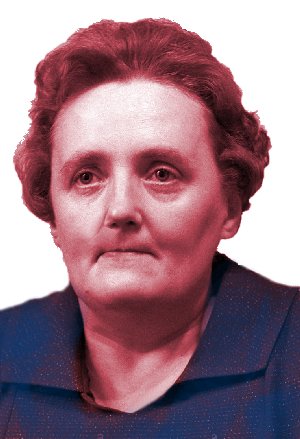
     The chessplaying Bazan was born in 1934 in Cordoba, Argentina. His mother, Ernestina Vergara de Bazan was female the champion of Argentina several times and it was she who taught him how to play. 
Bazan

     Bazan's best result in the Argentine championship was second in 1959 and he won the championship of Cordoba ten times. Suffering from poor health all of his life, he passed away in 1997 at age 63. 
     At Mar del Plata in 1960 the relatively new to international chess, 17 year old Fischer and 23 year old Spassky, dominated the tournament and tied for first with 13.5-1.5. The undefeated Spassky gave Fischer his only loss in their individual game. Fischer drew with 3rd place Bronstein (who was undefeated) and won all the rest of his games. Olafsson was 4th and Bazan finished 5th. 
     This game demonstrates Fischer's ability to play actively when in came to defense. As Agur observed, it was often difficult to tell if Fischer was defending or attacking. 

Monday, September 24, 2018

Valentina Borisenko

Valentina Borisenko
     Valentina Mikhaylovna Belova-Borisenko (January 28, 1920 – March 6, 1993) was a Soviet lady player who was a five-time winner of the Women's Soviet Championship (a record shared with Nona Gaprindashvili): 1945, 1955, 1957, 1960, and 1961. She also won the Leningrad women's championship seven times (1940, 1945, 1950, 1951, 1954, 1955, and 1956) and was he RSFSR women's championship four times. 
     In 1977 FIDE awarded her the Honorary WGM title for her results in the years 1945-1970. Her husband was Russian correspondence player Georgy Borisenko, who served as her trainer; he also trained Nona Gaprindashvili.
     On December 3, 2012 Gregory Borisenko, a great theorist, passed away at the age of 91 in Tashkent, Uzbekistan. In 1965 he was offered a job to train the players in Armenia, Ural and Uzbekistan. He chose Tashkent. Among his pupils are GM Anton Filippov and GM Timur Gareev. 
Gregory Borisenko

 
Karakas-Ladanyike
    Valentina's opponent in this games was Eva -Karakas-Ladanyike (nee Furst, February 15, 1922 – May 7, 1995), a Hungarian WGM. She was Hungarian female Champion seven times: 1954, 1956, 1962, 1965–66 and 1975–76 and the World Ladies Senior Championship in 1991, 1992 and 1994. 

     In 1959 the Women's Candidates Tournament was held in Plovdiv, Bulgaria. It was won decisively by Kira Zvorykina of the Soviet Union, who was undefeated when she scored 3.5-2.5 against the top 6 finishers then mowed down all the other players to score 11.5-2.5, finishing a full point ahead of Verica Nedeljkovic of Yugoslavia. The U.S. representative was Gisela Kahn Gresser who scored 5.5-8.5 and finished in 11th place (out of 15). Later in the year, in Moscow, in the match for the women's world championship Zvorykina was destroyed by Elisaveta Bykova who won decisively +6 -2 =5. 

Friday, September 21, 2018

Hans Mueller's Opponent Makes A Faulty Assumption

Mueller, the chess player
     There have been a lot of Hans Muellers! The name may refer to a well known German politician, two World War I flying aces, a physicist, a professor, a German film and television director, a physician working in China, a Swiss figure skater and coach, a Swiss Olympic pentathlete, a Swiss Grand Prix motorcycle racer, a German football player, an Austrian mathematician, a Dutch water polo player and the Austrian chess player. 
     It's the chess player who is the subject of this post. According to a post in Edward Winter's site, besides chess, Mueller was a master of fencing, skiing and lawn tennis and also published works on graphology, microscopy and Hindu philosophy, but I was unable to find more information on any of his accomplishments in those areas. 
     Mueller (December 1, 1896, Vienna – February 28, 1971, Vienna) was an Austrian master (both over the board and correspondence), theoretician and author of books. He was one of the best players in Austria until the end of the Second World War. He was also an opening theorist and authored books on Alekhine and Botvinnik. Awarded the IM title in 1950, his career began in the 1920s and lasted until 1970. 
     Mueller's father was a military Kapellmeister (leader or conductor of an orchestra or choir) who was wounded in World War I and returned home to find little left. Hans was forced to abandon his studies in mechanical engineering in order to earn a living and worked various jobs which included laborer, banker, chess instructor, language, music, tennis and skiing. Once he managed to establish himself he was able to pursue his other interests: graphology (handwriting analysis), gardening, meteorology, fish farming and sports. 
     His chess career started in 1921 when he won his first tournament in Vienna and in 1922 he won the Austrian championship. Most of his successes came in the 1930s, mostly in Austrian tournaments, but he also had some good results in international events. 
     Mueller also represented Austria at the Olympiads in 1928, 1930, 1933, 1935, 1936 and 1950. He was also successful in correspondence chess. In 1932-33 he won the first unofficial World Correspondence Championship which was conducted by the forerunner of the ICCF. He represented the Austrian national team at the first Fernschach Olympiad of the IFSB in the years 1937-39 and scored with 4.5-0.5 on third board in the final round. 
     After the annexation of Austria into Nazi Germany in March 1938, Austrian chess was reorganized and affiliated with the Greater German Chess Federation (GSB) and during that time Mueller was one of the best players in Austria until the end of the Second World War. 
     During the Nazi years many Jewish Austrian players (the "Aryan" paragraph of the GSB forbade them from playing) and non-chess players faced an uncertain future or managed to escape. In 1939, in Aachen, Mueller, a non-Jew, was awarded the newly created title "Reichsschachmeister" after winning the first Official Championship Tournament of the National Socialist organization Kraft durch Freude. 
     During the occupation Mueller won the Vienna City Championship, which included Ernst Gruenfeld, in 1938, 1939 and 1941. He also participated in the German Championships in 1939, 1941, 1942 and 1943. In 1942 he finished second behind Ludwig Rellstab. 
     After the end of the Second World War, Viennese players no longer occupied places of prominence as the old timers were no longer able to keep up with a new generation players. That included Mueller whose results began to slip in the late 1940s and 1950s. 
     His active tournament career came to an end in the mid-1950s and he began writing instructional chess books which enjoyed great popularity. However, in 1954 he did win San Benedetto del Tronto, Italy. Until the late 1960s he participated in team events and Vienna City Championships where his best result was was third in 1964. 
     For decades, Mueller was a leading chess columnist in various Austrian daily newspapers, wrote articles for numerous chess magazines and was also a respected trainer and chess teacher. 
     Mueller's opponent in this game did what many of us do. When we analyze we make assumptions: I play here, he plays there. Then I capture and he retakes, etc. 
     What often happens is that amateurs calculate moves where they assume their opponent will make moves that fall in line with their plans. Masters on the other hand look for ways their opponent can upset their plans. 
     Those “ifs” and “thens” are our assumptions, but if we are assuming wrong, we are likely to have an accident when the opponent throws a monkey wrench (as Andrew Soltis called them) into our plans. That's exactly what happened to white in this game when he played 21.Qc7?? 
     He most likely assumed that his opponent would take the Q and white would recapture with a R on the 7th which is almost always a good thing. These accidents happen because we never stop to ask, “What other useful move does he have?”
     When we realize we've made a false assumption, assuming it doesn't lead to immediate disaster as in this game, there's also a psychological factor...we start second guessing ourselves. Instead of forgetting the past and making a new evaluation of the situation we keep reliving it. I remember reading a note by Rossolimo in which he explained his poor play because he suddenly realized his situation was critical. Instead of reassessing the new situation, he spent his time inveighing against his previous play. 
     These false assumptions frequently involve captures; we assume they are obligatory. Take the following position from Yusupov vs. Short played in Barcelona, 1989. 
 
White to move

     Yusapov's strategy has been to attack the P on d5 and he now assumed it was now time to take it which is made possible because of black's unguarded R on e8 and so he played 31.Rxd5?? 
     Yusupov's assumption was that black had to take the R with 31...Rxd5, then he could play 32.Qxe8 Qxb3 33.Qe7 and his strategy has successfully resulted in a tactical sequence that wins the d-Pawn. Likewise, if black plays 31.Bxd5 32.Qxd7 also picks up material. It was a bad assumption. Short didn't recapture; he played 31...Red8 which wins a piece and white had to resign. 

Thursday, September 20, 2018

Fun With Queens

     For whatever reasons studying endings isn't something most amateurs concern themselves with, but they actually can be quite enjoyable as well as instructive. My guess is that if most players spent as much time studying endings as they do openings they would be more advanced. 
     When I played over the following game in which white had a Q+3Ps vs. a Q+2Ps with all the Pawns on the same side, I thought there was no way white could win, but Averbakh managed to win in just a handful of moves. 
     What makes endings tough to study is that there are rules that must be remembered, lots of them. For example, in the case of a Q vs. a single P, the P always wins unless her K is not nearby and the P is a BP or a RP. Of course, there are exceptions. 
     Generally, in Q+P vs Q endings, the Q moves in a zig-zag fashion, checking and pinning until the K is forced to block its P allowing the opposing K to approach. 
    In a R and P ending where there are Ps on one side of the board, the game is almost always drawn, but with Qs there are winning chances. The reason is that with Qs there are mating chances. 
     In the following game, black also has a weak P, so combined with the mating possibilities, white was able to win fairly quickly.  
     Averbakh's opponent in this game was Alexey Suetin (November 16, 1926 - September 10, 2001) who was a Russian GM and author. A Muscovite and a mechanical engineer by profession, his philosophy was always that "mastery is not enough; you must dare, take risks." 
     Suetin was a strong GM and for many years one of the most respected coaches in Moscow; he guided the ultimate strategist, Tigran Petrosian, to the World Championship and numbered Vassily Ivanchuk among his many pupils. 
    He achieved many excellent results in tournaments in the 1960s and 1970s and participated in seven USSR Championships from 1958 to 1966. His playing career stretched into the 1990s, but he was a chain-smoker,and found it difficult to adjust to FIDE's ban on smoking in tournament halls that went into effect in 1990. 
     Suetin was married to WGM Kira Zvorykina; He died aged 74 of a heart attack shortly after returning home from the Russian Senior Championship. Two of his books that are worth reading are: Soviet Chess Strategy - a collection of Suetin's best writings covering things like strategy, play in the center, accurate evaluation, attack and defense and the relationship between strategy and tactics, etc. An excellent book. Plan Like A Grandmaster - how to formulate a plan in the opening and early middle game 
     This game was played in the 21st (1954) Soviet Chess Championship which was held in Kiev. Twenty of the Soviet Union's best players participated. Vladimir Simagin quailfied, but was unable to play and his place went to Salo Flohr. Four places were awarded on merit to Averbakh, Geller, Petrosian and Taimanov.
     Averbakh's play was surprising...he was undefeated, drawing with Taimanov, Korchnoi, Lisitsin, Petrosin, Kholmov, Nzehmetdinov, Flohr, Borisenko and Shamkovich. Both Taimanov and Petrosian were also undefeated, but had too many draws. 

1) Averbakh 14.5 
2-3) Taimanov and Korchnoi 13.0 
4-5) Lisitsin and Petrosian 11.0 
6) Kholmov 10.5 
7-9) Suetin, Furman and Nezhmetdinov 10.0 
10-11) Byvshev and Geller 9.5 
12-13) Flohr and Borisenko 8.5 
14-16) Bannik, Ilivitsky and Lilienthal 8.0 
17-18) Shamkovich and Ragozin 6.5 
19) Livshin 6.0 
20) Sokolsky 5.0 

     The year 1954 had some interesting events: Actress Marilyn Monroe eloped with baseball player Joe DiMaggio in an ill-fated marriage that lasted only nine months. DiMaggio quit his job on August 1, 1962 because he had decided to ask Monroe to remarry him, but she was found dead in her home on August 5th.
     The seeds of the Vietnam War had already been planted. In early 1954, President Eisenhower authorized the release of $385 million over the $400 million that was already budgeted for military aid to Vietnam and at the same time warned against United States intervention in Vietnam. Nevertheless, in April, Vice President Richard Nixon announced that the United States would be “putting our own boys in Indochina regardless of Allied support.” 
     Four Puerto Rican nationalists opened fire in the House of Representatives and wounded five people. The Supreme Court ruled that segregated schools were unconstitutional. Elvis' first single, That's All Right, was released. 
     The Senate voted 67–22 to condemn Joseph McCarthy for "conduct that tends to bring the Senate into dishonor and disrepute” because of his witch hunt for Communists. Too bad they don't condemn members today for "conduct that tends to bring the Senate into dishonor and disrepute”, but I suppose that's because if they did, just about everybody in the Senate would be censured. TV dinners were introduced. 
     In chess, the Russian team pummeled the American team by a score of 19-13 in New York. As if that wasn't bad enough, Keres beat Reshevsky 21-19 in ping-pong, in team play Bisguier and Kaminsky lost two matches to Keres and Geller, Tainanov beat Evans and Kotov beat Abe Turner. 
     Arthur Bisguier won the U.S. Championship with an undefeated 10-5. Defending champ Larry Evans was second a point back. The U.S. Open was a tie between Larry Evans and Arturo Pomar of Spain.