Random Posts

Wednesday, January 10, 2024

A Stunning Attack by R.C. Griffith

    
We should probably be glad we didn’t live in 1922. Life expectancy was only 58.4 years for men and 61.0 years for women! 
    In those days (in fact, in my early days) Walgreens Drug Store had lunch counters and in 1922 they introduced the malted milkshake. Christian K. Nelson patented the Eskimo Pie ice cream treat and over in England, Gummy Bears were invented. A case of 24, 8 ounce bottles of Dr. Swift’s Root Beer was $2.25. 
    Dr. Swett's Root Beer was a brand of root beer that was created in 1845 by Dr. George W. Swett. Dr. Swett was born in 1834 in New Brunswick, Canada, though he was sometimes listed as being from Massachusetts. 
    His root beer was being sold by 1885 as a type of medicine and beverage. The drink was originally sold in 5 gallon packages at the price of $1.00 and was available only in Boston and New York. 
    By 1890, it was being sold at drugstores, soda fountains, sporting events around the US and began being sold in earthenware bottles by 1893. 
    I am not a drinker, but I can't imagine root beer that had alcohol in it, but this stuff did, so it was affected by the 1906 Pure Food and Drug Act, which had intended to stop companies from selling fake medicines and required companies to list their ingredients. 
    In 1922, the Bureau of Public Roads commissioned General John J. Pershing to make a map for construction purposes and to highlight which roads in the US were the most important in the event of war. The “Pershing Map” was the first official topographic road map of the United States.
    Speaking of war, Mussolini and the Fascist Party came to power in Italy and the world would feel the effects of it in a couple of decades. Also, America’s first aircraft carrier, The USS Langley, was commissioned. 
    In 1922, Emanuel Lasker wrote Mein Wettkampf mit Capablanca (My Match with Capablanca). In it, he believed that chess would exhaust itself in short order and that draws would kill chess. He was wrong.
    In August 1922, the London victory tournament was won by Capablanca. In December, Alekhine won the Hastings International Tournament with the score of 7.5-2.5. 
    That year Szmul Rzeszewski (later known as Samuel Reshevsky) was making headlines. In April, he visited Washington, D.C. where played chess with several congressmen and met President Warren G. Harding. The 10-year-old Reshevsky played in the New York Master tournament and finished +1 -2 =2.

    Reshevsky was not attending regular school and in October a late-night simultaneous exhibition when it got raided by the New York police! Child welfare officials were behind the raid because they were concerned about his apparent lack of education and probably that he was being exploited. His parents were charged with improper guardianship. In the end, it was shown that the boy was receiving religious education in a rabbinical school in New York and the case was dismissed. 
    Over in England there was a long forgotten match played in London between Middlesex and Essen in the Southern Union championship. 
    Playing on board 1 for Middlesex was Richard C. Griffith (1872-1955), a metallurgist for an assaying company by profession, he was a player, author and editor. 
    In 1912, he was the original co-author along with John H. White of the famous Modern Chess Openings, aka “The Chessplayers’ Bible.” Before computers MCO was THE opening book. Griffith serve as the editor of the British Chess Magazine, 1920–1937 and again for some months in 1940. He won the British Chess Championship in 1912 in his only appearance in the event. 
    His opponent was Henry H. Cole (1873-1953). In late December 1898, Cole's was committed to London's Bethlem Hospital due to a bout with mental health problems. They were possibly the result of his brother sudden death, followed soon after by his mother’s death, his best friend’s suicide and then the his father died the following year. Eventually he managed to get things back on track and by 1901 he was living with an aunt and her family and working as a clerk. In 1910, he got married and began raising a family.

  A game that I liked (Fritz 17)

[Event "Southern Union Chp, London"] [Site "?"] [Date "1922.12.??"] [Round "?"] [White "Richard Griffith (Middlesex)"] [Black "Henry H. Cole (Essex)"] [Result "1-0"] [ECO "D00"] [Annotator "Stochfish 16"] [PlyCount "69"] [EventDate "1922.??.??"] {D05: Colle System} 1. d4 d5 2. e3 e6 3. Bd3 Nf6 4. Nd2 c5 5. b3 {The development of white's B on b2 is generally refered to as the Zukertort Variatin; white tries to solve one of the problem of his hemmed in dark squared B.} (5. Ngf3 Nc6 6. O-O Bd7 7. b3 Rc8 8. a3 cxd4 9. exd4 Bd6 10. c4 O-O 11. c5 Bb8 {was played in Capablanca,J-Villegas,B Buenos Aires 1911. White stands slightly better.} 12. Bb2 {1-0 (42)}) 5... b6 6. Bb2 Nc6 7. Ngf3 Bd6 8. Ne5 Bb7 9. O-O {[%mdl 32]} O-O 10. a3 Qe7 11. f4 {My database has 7 games with this position and white scores +2 -3 =2.} Rad8 12. Rf3 {This R is destined to play an important role in the game.} (12. Qe2 Ne8 13. Ndf3 f5 14. c4 Bxe5 15. dxe5 Nc7 16. Rfd1 Rd7 17. cxd5 Nxd5 18. Bc2 {Martinovic,S (2415)-Abramovic,B (2480) Bor 1984 is equal.}) 12... Nb8 {This retrograde move is a poor choice. Black does not haw time to dawdle} (12... cxd4 13. Rh3 h6 14. exd4 Ne4 { is a dead end where it looks like neither side will be able to accomplish much. }) 13. Rh3 {White's position is very good and it's hard to suggest a decent move mor black.} Bxe5 {This eliminates white's well placed N, but at the same time his own pieces are pretty much helpless bystanders. Nevertheless, a better move is hardly available.} (13... g6 {wa essential.} 14. Ndf3 {Black's best practical option is probably to seek counterplay with} c4 15. bxc4 Ne4 ( 15... dxc4 16. Nxc4 Be4 17. Ng5 {White;s advantage should prove decisive.}) 16. cxd5 exd5 17. c4 dxc4 18. Bxc4 {Black's position is not very promising.}) 14. Bxh7+ {[%mdl 512]} Nxh7 15. Qh5 f5 {This creates a squre on which the K can flee. Additionally, it makes capturing the N with check look impossible because the Q can get trapped.} 16. Qxh7+ {Brillaint!} (16. fxe5 {throws away the advantage.} g5 17. dxc5 bxc5 {White's attack is over and black has the advantage.}) (16. dxe5 {After this wgite's advantage is minimal.} g6 17. Qxg6+ Qg7 18. Qxe6+ Kh8 19. Nf3 Bc8 20. Qh6 Qxh6 21. Rxh6 Kg7 {The materially unbalanced position slightly favors white's P's, but there is a lot of play left.}) 16... Kf7 {Now ...Rh8 looks to be a strong threat.} 17. dxe5 {[%mdl 128]} (17. Qh5+ g6 18. Qh7+ Bg7 {and black is better.}) (17. Qh4 {actually loses.} Qxh4 18. Rxh4 Bf6 {and black is a piece up.}) 17... Rh8 {Winning the Q, but watch what happens.} 18. Qxh8 Rxh8 19. Rxh8 Qc7 (19... Nc6 20. Nf3 { Here, too, black is helpless.} Qc7 21. Ng5+ Ke7 22. Rg8 Kd7 23. Nh7 Ne7 24. Nf8+ Kc6 25. Nxe6 Qd7 26. Rd8 Qxe6 27. Rd6+ Qxd6 28. exd6 Kxd6 29. Bxg7 { and white wins.}) 20. Nf3 {It's simply amazing how active white's R and N are.} Nd7 21. Ng5+ Ke7 22. Rg8 Qc6 23. Rxg7+ Kd8 24. Rg8+ Ke7 {Of course white jas no intentions of repeating moves.} 25. Rg6 Nf8 {Defending the e-Pawn, so now what does white do?} 26. Rg7+ Ke8 27. Nf7 {The N on d6 will be even stronger.} Nd7 28. Nd6+ Kf8 29. Rg6 c4 (29... d4 {creating the possibility of a mate on g2 is met by} 30. Rf1 Qd5 31. exd4 cxd4 32. Rf3 Bc6 33. Rfg3 {and thge game is over.}) 30. Bd4 {White is clearly winning.} Nc5 31. b4 Ne4 32. Rxe6 c3 33. Re8+ Qxe8 34. Nxe8 Kxe8 35. g4 {Black resigned. A stunning attack by Griffith.} 1-0

Tuesday, January 9, 2024

The Elusive Charles B. Snow

    Today is, not to use a meteorological term, crappy if you live on the US east coast...blizzard conditions, rain and lots of wind with plummeting temperatures. It’s a good day to poke around some old chess magazines.
    In the 1800s there was an group of strong players in the Boston area known as the Order of the Mandarins of the Yellow Button. In order to join, a prospective member had to be an amateur who had beaten a recognized Master of international repute in an even game i.e. no odds. 
    The group met on Saturday afternoon for skittles and in the evenings they had diiner and discussed chess. Members included: Franklin K. Young, Constant F. Burille, F. H. Harlow, Dr. E.M. Harris, C. F. Howard, Major Otho.E. Michaelis, General W. C. Paine, Dr. Horace Richardson, Henry N. Stone, Preston Ware, Jr. and Charles B. Snow.
Weather radar at Noon

    The elusive Charles B. Snow Snow was born on Orleans, Massachusetts and passed away in his home in Roxbury, a Boston suburb, on February 28, 1924 at the age of 76. 
    For many years he was one of the leading players in Boston. For more than half a century he had been a member of the Boston Chess Club. His obituary described him as a man with a cordial and amiable disposition who was ever ready for a game with anybody. 
    He was a successful merchant in the stove and hardware business, and later he owned a carpet and crockery store. 
    What made him so elusive is that he never sought notoriety or any titles in the chess world, although many times he won first place in the Boston club championship. He just loved the game and found great pleasure in it. 
    It was in 1874, when a player of some ability named Reverand Benjamin M. Neill (1853-1922) of Philadelphia was residing in Boston, Snow discovered that he and a group were playing chess at the Y. M. C.A. and so Snow invited Neil to the Boston Chess Club. There 
    Neill 1 caused a sensation when he easily whipped all the club members, Neill was a strong player and problemist, whose chess career spanned almost 50 years.
    In 1873, he began to compose problems. In 1874, while living in Boston, he won the New England Championship by beating Preston Ware in a match with the score of 7-3. 
    He also won a tournament held in Boston tournament in1874 with the score +15 -1 =2. He traveled to New York in 1874, where he defeated Eugene Delmar in a short match. 
    After returning to Philadelphia in 1875, he won the Philadelphia Chess Club Tournamentin1875). 
    Neill participated in few tournaments only, since he didn't want chess to interfere with his ministerial duties. He even published his chess problems under the name Benjamin Milnes, as long as he was active in church work.
    In 1888, in a special four-round tournament between five of Boston's strongest players, Snow finished second (15-5) behind Burille whose scored 15.5-4.5. In rghwie individual games in the tournament Snnow scored _1 1 =2 against Burille. Snow defeated the third place finisher, Franklin K. Yong, 2.51.5. He acored 4-0 against Preston Ware and Henry Stone who were 4th and 5th respectively.
    Besides the aforementioned humility, what makes Snow so elusive is that never kept any written records of his games so only a very few are now available from other sources. The following is taken from the Boston Globe's weekly chess column dated October 11, 1876. The tournament is unknown as is the full identity of his opponent. 

A game that I liked (Fritz 17)

[Event "Bostin"] [Site "?"] [Date "1876.??.??"] [Round "?"] [White "Charles B. Snow"] [Black "Sawyer"] [Result "1-0"] [ECO "C51"] [Annotator "Stockfish 16"] [PlyCount "55"] [EventDate "1876.??.??"] {C51: Evans Gambit} 1. e4 e5 2. Nf3 Nc6 3. Bc4 Bc5 4. b4 {Fashionable at the time, the Evans Gambit fell out of fasjion for decades until Garry Kasparov used it in a few games in the 1990s which which prompted a brief revival of interest in it.} Bxb4 {Declining the gambit with 4...Bb6 makes it little harder foir white to score the point, but the gambit's acceptance is much more popular.} 5. c3 Bc5 6. O-O d6 7. d4 exd4 8. cxd4 Bb6 9. Bb2 Nf6 $11 (9... Nge7 10. d5 Na5 11. Bxg7 {Losing. 11.Bd3 equals} Rg8 12. Bf6 Nxc4 13. e5 Bg4 14. exd6 Qxd6 15. Bxe7 Kxe7 16. Re1+ Kf8 17. Re4 Qf6 {White resigned. Prill,D (2181)-Sanchez Jerez,E (2291) Calvia ESP 2013}) 10. d5 Ne5 (10... Ne7 {is superior.} 11. Bxf6 gxf6 12. a4 O-O {In spite of apperances the chances are equal. Bird,H-Steinitz,W London 1883}) 11. Nxe5 dxe5 12. Ba3 Nxe4 13. Qe2 { Black's position looks precarious, but in reality he can actually claim to be a bit better.} Qh4 {Not really bad, but it's risky.} (13... f5 {The position of black's K in the center of the board is probably enough to scare most players away from this position, but Stockfish is certain that the position is exactly equal. After 5 minutes analysis this is its best line...} 14. Nd2 Nxd2 15. Qxd2 Bd7 16. Rfe1 e4 17. d6 Qf6 18. dxc7 Bxc7 19. Bb2 Be5 20. Bxe5 Qxe5 21. Bf7+ Ke7 22. Bd5 Bc6 23. Bxc6 bxc6 24. Rac1 Rac8 25. f3 Rhd8 26. Qg5+ Kf7 27. fxe4 Qd4+ 28. Kh1 fxe4 29. Qh4 Kg8 30. Rxe4 Qd2 31. Rce1 c5 32. h3 Kh8 33. Re7 Rg8 34. Qc4 a5 35. R1e4 Qd8 36. Kg1 Qd6 37. Kh1 Rgf8 38. R4e6 Qd1+ 39. Re1 Qd8 40. Qc3 Rg8 {[%eval 0,0] Evaluation}) 14. Nd2 f5 {This is a mistake. It's possible that black miscalculated to consequenses of capturing in f3.} (14... Bxf2+ {Or 14...Nxf2} 15. Rxf2 Qxf2+ 16. Qxf2 Nxf2 17. Kxf2 Bf5 {This is the type of unbalanced material situation that is theoretically equal, but in practice the stronger player can probably win from either side.}) 15. d6 (15. g3 {won't do because after} Qf6 16. Nxe4 fxe4 17. Bb5+ Kd8 18. Qxe4 Bh3 { Black is better.} 19. Bb2 Rf8 20. Bxe5 {Let's get tactical!} Bxf2+ 21. Kh1 Qf5 22. Qxf5 Rxf5 23. Bxg7 Ke7 24. Bd3 Rf7 25. Bc3 Bxf1 26. Bb4+ (26. Rxf1 { is a blooper.} Bc5 {and black is better.}) 26... Ke8 27. Rxf1 Bb6 28. Rxf7 Kxf7 29. Bxh7 Re8 {In Shootouts white drew one game and lost 4.}) (15. Bb5+ { This is actually white's best mive.} Bd7 16. Bxd7+ Kxd7 17. Nxe4 fxe4 18. Qb5+ Kd8 19. Kh1 {White is better. Black must avoid} Bxf2 20. Qxb7 Rc8 21. d6 { and wins.}) 15... Bd7 {This is wrong.} (15... Nxd2 {is a loser...} 16. Qxe5+ Kd8 17. Qxg7 {Threatening mate on c7} Re8 (17... cxd6 18. Qxh8+ Kc7 19. Qg7+ { also wins}) 18. Bb2 cxd6 19. Bf6+) (15... cxd6 {After this black nakes it out of the woods.} 16. Rae1 Nc5 17. Nf3 Qf6 18. Nxe5 dxe5 19. Qxe5+ Qxe5 20. Rxe5+ Ne6 21. Rfe1 Bd8 22. Rxf5 Bf6 {with equal chances.}) 16. Nxe4 (16. g3 {is still a poor choice as it allows black to equalize.} Qf6 $11 17. Nxe4 fxe4 18. dxc7 Bxc7) 16... fxe4 (16... Qxe4 {offering a trade of Qs loses quickly.} 17. Qh5+ g6 18. Qg5 cxd6 19. Qf6 Qxc4 (19... Rf8 20. Qxd6 O-O-O (20... Qxc4 21. Qxf8#) 21. Rac1 {wins}) 20. Qxh8+ Ke7 21. Qxa8 {wins easily.}) 17. Bd5 { [%mdl 8192] This slip should have reversed the situation and allowed black to gain the advantage!} (17. dxc7 Rc8 18. Rad1 Rxc7 19. Bd6 Qg4 20. Qxg4 Bxg4 21. Bxc7 Bxd1 22. Rxd1 Bxc7 {The Bs of opposite color give white drawing chances.}) 17... O-O-O {While this does not lose by any means it makes black defense difficult.} (17... c6 {shuts out white's B on a3 and allows black's K to reach safety.} 18. Bxe4 O-O {and black is better.}) 18. dxc7 {As bad as things may look for black he is hanging on by the skin of his teeth.} Bxc7 {[%mdl 8192] Very logical...and very wrong! It loses almost at once.} (18... Kxc7 {This paradoxical move exposing the K is realtively safe.} 19. Rac1+ Bc6 (19... Kb8 20. Bd6+ Ka8 21. Qa6 {wins}) 20. Bxe4 Qf6 {and clack is hanging on.}) 19. Rab1 {The final assault begins...and a vicious one it is!} Bb6 20. Rfc1+ Kb8 { This allows a maye in 9, but he was lost anyway.} (20... Bc6 21. Rxc6+ bxc6 22. Qa6+ Kc7 23. Rxb6 axb6 24. Qa7+ Kc8 25. Qa8+ Kc7 26. Qxc6+ Kb8 27. Qb7#) 21. Bd6+ Ka8 22. Rxb6 $1 {[%mdl 512]} Bc6 23. Rbxc6 e3 24. Rc8+ $3 Rxc8 25. Bxb7+ { [%mdl 512]} Kxb7 26. Qb5+ Ka8 27. Qd5+ Rc6 28. Qxc6# 1-0

Monday, January 8, 2024

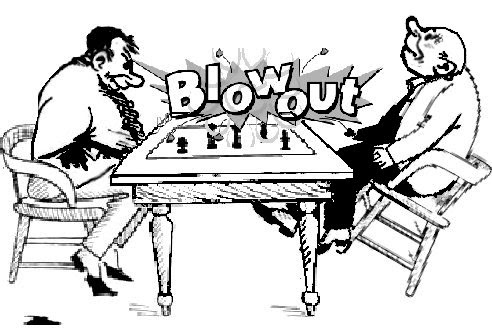
Reinfeld Blows Out Smirka

    
The Marshall Chess Club Championship of 1937 was notable because of the participation of Frank Marshall himself. Before the tournament started there was some speculation about how the 60-year-old veteran who was at the end of his career would do. 
  There were no ratings in those days, but Chessmetrics estimates Marshall’s highest ever rating to have been in 1917 when he was rated 2762 ranking him number 3 in the world. In 1937 (the last year the site has a rating for him) his estimated rating was down to 2494 positioning him at number 96 in the world.
    Adding to the interest was that this was the first time Marshall had competed in the championship of his own club! 
 
 
    Not only did he win the tournament, but he won it in a manner which left no uncertainty about his clear superiority over the rest of the field. He was, well, Frank Marshall when tactical complications arose, but he also showed that he was a fine strategist when he wanted to be. 
    Reinfeld’s results were modest, but he was the only one to defeat Marshal when the latter underestimated the dangers in the position. The staid Reinfeld also conducted a sharp attack against Smirka in the following game.
     Attacking games are always entertaining...the kind of chess that makes the pulse faster and gives us greatest pleasure. One such game was the one between Reinfeld and Smirka.
    Fred Reinfeld (1910-1964) was a scant 54 years old when he supposedly died from a ruptured cerebral aneurysm. He was born in New York and is best remembered as a chess author. His early books were superb, but eventually he realized the money was in writing potboilers, books written merely to make the writer a living by catering to popular taste. 
    Reinfeld could play chess though. Chessmetrics estimates his highest ever rating to have been 2532 in 1942; that ranked him number 70 in the world (Botvinnik was first ay 2771 and Reshevsky 2nd at 2749). Reinfeld was ranked sixth with a rating of 2593 on the first rating list issued by the USCF in 1950.
    Reinfeld won the New York State Championship twice (1931 and 1933) and played in seven US Championships before abndoning play for writing. 
    Little is known of his opponent, a journeyman Master named Rudolph Smirka (1887-1947, 60 years old) except that he was born in Vienna, Austria. He won the New York State chess championship in 1923 and 1927. Smirka was one of the strongest members of the Marshall Chess Club and won the club championship in 1929-1930 after a play-off with Sidney Bernstein. 

A game that I liked (Fritz 17)

[Event "Marshall CC Championship"] [Site "New York, NY"] [Date "1937.??.??"] [Round "?"] [White "Fred Reinfeld"] [Black "Rudolph Smirka"] [Result "1-0"] [ECO "D11"] [Annotator "Stockfish 16"] [PlyCount "55"] [EventDate "1937.??.??"] [Source "British Chess Ma"] {D46: QGD, Semi-Slav} 1. c4 Nf6 2. Nf3 c6 3. d4 d5 4. e3 e6 5. Bd3 {[%mdl 32]} Nbd7 6. Nbd2 Bd6 {The strategu for both players is to advance their e-Pawn.} 7. O-O O-O 8. e4 dxe4 9. Nxe4 Nxe4 10. Bxe4 h6 {It's well known that 10...e5 at this time loses a P, bur even today a lot of players fall for it. My fatabase has 3 games in which players rated over 2500 played 10...e5?} (10... e5 11. dxe5 Nxe5 12. Nxe5 Bxe5 13. Bxh7+ Kxh7 14. Qh5+ Kg8 15. Qxe5 {Black might be able to hold the draw if he fights hard and has some luck.}) 11. Bc2 Nf6 12. Bd2 {A good alternatiuve is 12.Ne5} Qe7 (12... c5 {is considerably better.} 13. Bc3 b6 (13... Re8 14. dxc5 Bxc5 {Infante,M (2301)-Puntier,W (2312) Santo Domingo DOM 2012. White is better.}) 14. Qe2 Bb7 15. Rad1 Qe7 16. dxc5 Bxc5 17. a3 Rfd8 18. b4 Bd6 19. Ne5 Rac8 20. Rd4 Qc7 {Draw agreed. Soppe,G (2469) -Chemin,V (2316) Sao Paulo 2002}) 13. Re1 {In addition to the text white had played 13.Bc3 and 13.Qe2, but 13.Qc1! is the hardest for black to handle.} (13. Qc1 Nh7 (13... b6 {This is a pass to show what happens if black allows the sacrifice on h6.} 14. Bxh6 Ng4 (14... gxh6 15. Qxh6 Re8 16. Ng5 Qc7 17. Qxf6 Bxh2+ 18. Kh1 Bf4 {White is winning.}) 15. Bg5 Qc7 16. h3 Nh2 17. Nxh2 Bxh2+ 18. Kh1 {White is up a P and has good attacking chances. Again, black migh be ab;e to hold the game if he avoids arrors and has some luck.} Bd6)) 13... Rd8 14. a3 {12.Qc1 was still a good alternative.} c5 {A good move making a bid to free his game and get some play.} 15. d5 {Equally good! Other move allow black equality.} Qc7 16. Bc3 {lapse, White has all the play and his Bs look menacing to black's K.} Be7 {Black's lagging development tells against him, but instead of this retreat he should have went in for complications.} (16... b5 17. b3 bxc4 18. bxc4 exd5 19. Bxf6 gxf6 20. cxd5 c4 21. Qd4 Kg7 {Clearly white is better, but black may be able to defend himself. In Shootouts whites scored +4 -0 =1, but the games were long (70-100 moves), so OTB a draw would be a possibility.}) 17. Qd3 $18 {Black's position is bery difficult.} b5 {A bold bid for freedom, which fails because of the inferiority of Black's game. I} ( 17... exd5 {This is simply not possible because of} 18. Bxf6 Bf5 (18... Bxf6 19. Qh7+ Kf8 20. Qh8#) 19. Qxf5 g6 20. Be5 {and wins}) (17... g6 {is met by} 18. Ne5 Nxd5 19. cxd5 Rxd5 20. Qf3 Bd6 21. Ng4 Rd4 22. Qf6 Bf8 23. Bxd4 cxd4 24. Rac1 Qe7 25. Nxh6+ Kh7 26. Qxf7+ Qxf7 27. Nxf7 {and wins.}) 18. b3 (18. cxb5 {woukd play into black's hands.} Rxd5 19. Qe2 a6 {Black has equalized. White sould now play 20.Bxf6, but not} 20. bxa6 Bxa6 21. Qe3 Bb7 22. Be5 { with planty of play.} Qc6) 18... Qb6 19. Rad1 Ba6 {This threatens 20...Nxd5, but white has prepared for the final assault.} (19... Kf8 20. Ne5 b4 21. Ba1 exd5 {and now...} 22. Nxf7 Kxf7 23. Qg6+ Kf8 24. Rxe7 Kxe7 25. Qxg7+ Kd6 26. Bxf6 Kc6 27. Bxd8 Qxd8 28. cxd5+ Kb5 29. axb4 Kxb4 30. Qxh6 {etc.}) 20. Bxf6 Bxf6 21. Qh7+ Kf8 22. d6 {It does black no good to take this P.} g6 (22... Rxd6 23. Rxd6 Qxd6 24. Qh8+ Ke7 25. Qxa8) 23. Ne5 {Even after this which is less forceful thanv23.Bxg6 blacvk is already crushed.} (23. Bxg6 fxg6 24. Rxe6 Qb8 ( 24... Rxd6 25. Rdxd6 Bg7 26. Rd7 Qxe6 27. Rxg7 bxc4 28. Qh8+ Qg8 29. Qxg8#) 25. Rxf6+ Ke8 26. Qe7#) 23... Bg7 (23... Bxe5 {is met by} 24. Bxg6 fxg6 25. Qe7+ Kg8 26. Rxe5 {White is now ready to go for the kill.} Bc8 {Just a sample line.. .} 27. Qf6 Rd7 28. Rxe6 Bb7 29. Qe5 Kh7 30. Rxg6 Kxg6 31. Qe6+ Kg7 32. Qxd7+ Kh8 33. Qe6 bxc4 34. Qxh6+ Kg8 35. Qg5+ Kh7 36. Re1 Qxd6 37. Re7+) 24. Nxf7 { [%mdl 512] Crushing. Stockfish announces a mate in 11.} Kxf7 (24... Rxd6 { allows a mate in 9.} 25. Nxd6 Qc7 26. Rxe6 Qd7 27. Rde1 Bb7 28. Rf6+ Bxf6 29. Qxd7 Bd5 30. cxd5 Be7 31. Rxe7 b4 32. Rh7 bxa3 33. Qf7#) 25. Qxg6+ Kf8 26. Re3 {Threatens 27.Rf3+, but there are many ways to win.} (26. Rxe6 {with a mate in 9 is the most precise.} Rxd6 27. Rdxd6 Qxd6 28. Rxd6 Re8 29. Qf5+ Kg8 30. Re6 Rf8 31. Qh7+ Kf7 32. Qg6+ Kg8 33. Re7 Rf7 34. Qxf7+ Kh8 35. Qxg7#) 26... Bb7 27. Rxe6 {This wins, but he missed a pretty move.} (27. Rd5 {Nice. It's mate in 5} Bxd5 28. cxd5 Rxd6 29. Rf3+ Bf6 30. Rxf6+ Ke7 31. Qg7+ Kd8 32. Rf8#) 27... Qc6 {Black is lost, but he hopes to be able to play 28...Qxg2#} 28. Rd5 { Less flashy was 28.f3 with a mate in 17. After the text black resigned.} (28. Rd5 Rxd6 29. Qf5+ Kg8 30. Qh7+ Kf7 31. Rexd6 Qxd6 32. Rxd6 Ke7 33. Rg6 Rg8 34. Qxg8 Bf6 35. Qh7+ Ke6 36. Qg7 bxc4 37. Qxf6+ Kd7 38. Rg7+ Kc8 39. Qf8#) 1-0

Friday, January 5, 2024

Ljubojevic Smashes Durao

    
Fifty years ago, in 1974, players lost that year were former British Champion C.H.O'D. Alexander who died in Cheltenham, England at the age of 64. Josef Lokvenc (1899-1974) died in Sankt Polten, Austria. He was German Champion in 1943 and Austrian Champion in 1951. Soviet attacking genius Rashid Nezhmetdinov (1912-1974) died in Kazan, Tatarstan, at the age of 61. Former Swiss Champions Henri Grob (1904-1974) died in Zurich at the age of 70. 
    Pal Benko and Vastimil Hort tied for 1st in the US Open, held in New York. The first World Cadet (under 16) Championship was won by England’s Jonathan Mestel. Mikhail Tal and Alexander Beliavsky won the Soviet Championship, held in Leningrad. In Chicago, Walter Browne won the first of his six US Championships. Kaissa, a Russina computer, won the first computer world championship that was held in Stockholm.  
    Convicted murderer Claude F. Bloodgood III (1937-2001) escaped from a chess tournament after he and another fellow inmate player named Lewis Carpenter overpowered their fusrd. They was captured a few days later. 
    While in the Virginia State Penitentiary Bloodgood gained notoriety for for artificially pumping up his rating to the point that he was rated number two, at Elo 2700, in the US behind Gata Kamsky. 
    At that time players were complaining of rating deflation...everybody's rating was drifting down, something that’s anathema to chess players! The cause of the deflation was an influx of rapidly improving young players. The rating system was like a poker game where a player sits down at the table with no money and wins from those already in the game. 
    In order to “fix” the problem, officials (who were not mathematicians) introduced bonus points, feedback points and fiddle points. You were awarded points just for entering a tournament and in some cases could even gain points with a minus score! 
    Bloodgood warned the USCF what was happening and pumped up his rating by playing against fellow prisoners. The USCF hurled charges of rating fraud, erased his rating, kicked him out of the USCF and changed the system. In the process the chess program at the Virginia Penitentiary was destroyed. 
     On the international scene Walter Browne won at Wijk aan Zee. At the Olympiad held in Nice, France it was no surprise that the oviets (Karpov, Korchnoi, Spassky, Petrosian, Tal and Kuzmin) took first. Yugoslavia was second and the United States (Kavalek, Byrne, Browne, Reshevsky, Lombardy and Tarjan) was third.

    The really big news happened on May 10th when Anatoly Karpov defeated Boris Spassky in Moscow, eliminating Spassky from the world challengers’ competition. Karpov went on to beat Viktor Korchnoi to become Bobby Fischer’s challenger. Fischer hemmed and hawed, made excuses and chickened out of meeting Karpov who was then awarded the title. 
    You’ve probably never heard of Ourense, a city in northwestern Spain that’s known for its hot springs; they held an international tournament there in 1974 that was won by Yugoslavia’s Ljubomir Ljubojevic (born 1950). 
 

    Ljubojevic was awarded the IM title in 1970 and the GM title in 1971. He was Yugoslav Champion in 1977 (jointly) and 1982. By the early 1980's he was ranked third in the world, but he never succeeded in reaching the Candidates stage of the World Championship. He was always dangerous, he lack consistency. 
    His opponent in the following game was IM and International Arbiter Joaquim Durao (1930-2015) who won the Portuguese championship 13 times. 
    The game was well played by both players and it only took one small slip for Durao to quickly find himself in a hopeless position. 

A game that I liked (Fritz 17)
[Event "Orense"] [Site "Ourense ESP"] [Date "1974.01.??"] [Round "?"] [White "Ljubomir Ljubojevic"] [Black "Joaquim Durao"] [Result "1-0"] [ECO "C64"] [Annotator "Stockfish 16"] [PlyCount "49"] [EventDate "1974.01.14"] {C64: Ruy Lopez} 1. e4 e5 2. Nf3 Nc6 3. Bb5 Bc5 {This is the Classical (or Cordel) Defense which is the oldest defence to the Ruy Lopez, and has been played occasionally by Boris Spassky and Boris Gulko.} 4. O-O {White's most common reply is 4.c3,} (4. Nxe5 {This old fork trick does ot offer white amy advantage.} Nxe5 5. d4 c6 6. Be2 Bd6 (6... Bxd4 {is inferior...} 7. Qxd4 d6 8. Bf4 {with the advantage.}) 7. dxe5 Bxe5) 4... Nd4 5. Nxd4 Bxd4 6. c3 Bb6 7. d4 c6 8. Ba4 d6 9. Na3 Bc7 10. d5 (10. Nc2 Nf6 11. Qe2 Bd7 12. Ne3 O-O 13. dxe5 dxe5 14. Nf5 Bxf5 15. exf5 {is equal. Shirov,A (2719)-Fedorchuk,S (2619) Khanty-Mansiysk RUS 2009}) 10... Bd7 (10... Ne7 {was preferrable.} 11. Bg5 Bd7 12. dxc6 bxc6 13. Nc4 {equals. Volokitin,A (2627)-Musat,A (2398) Calimanesti-Caciulata ROU 2014}) 11. dxc6 bxc6 12. Nc4 Qe7 13. f4 Nf6 14. fxe5 dxe5 15. b3 Bb6+ (15... Nxe4 {at once was better.} 16. Ba3 {is adequately met by} Qe6 17. Qf3 f5 18. Rad1 O-O-O {Black is at least equal.}) 16. Kh1 (16. Nxb6 axb6 {The B on a4 in danger so...} 17. b4 Nxe4 {Black is ever so slightly better.}) 16... Nxe4 17. Ba3 {[%mdl 2048] White has strong initiative.} Qe6 18. Qd3 {Prevents ...Ng3+. It also sets a trap which Durao does not fall for.} (18. Bb2 {A pass to demonstrate the threat.} Ng3+ 19. hxg3 Qh6+ 20. Qh5 Qxh5#) 18... f5 (18... Nf2+ {This juicy looing check loses.} 19. Rxf2 $1 Bxf2 20. Nd6+ Kd8 21. Qa6 f6 (21... c5 22. Bxd7 Qxd7 23. Rf1 Be3 24. Rxf7 {wins}) 22. Rf1 Bb6 ( 22... Be3 23. Bxc6 Bxc6 24. Qxc6 Rb8 25. Rd1 {is fatal for black.}) 23. Qb7 Rc8 24. Nxc8 Bxc8 25. Rd1+ Bd4 26. Qb4 Ke8 27. cxd4 {White is winning.}) 19. Rae1 Bc7 {A measure against Nd6+} (19... Kd8 {is actually a better defense. White's best continuation is then} 20. Rxe4 fxe4 21. Qxe4 Kc7 22. Bd6+ Kb7 {and it's going to be nearly impossible to get at black's K.}) 20. Rxf5 {Although this works out well in the end, it actually allows black equality.} (20. Rxe4 { leaves white slightly better after} fxe4 21. Qe3 (21. Qxe4 O-O-O {and it's black that is better.}) 21... c5 (21... O-O-O 22. Qxa7 {wins for white}) 22. Qxe4 Rd8 (22... O-O-O 23. Qa8+ Bb8 24. Bxc5 {White is winning.}) 23. Bxd7+ Rxd7 24. Bxc5 {White is better.}) 20... Qxf5 (20... Nf6 21. Rfxe5 Bxe5 22. Rxe5) ( 20... Ng3+ {might have been worth a try, but with best play it leads to a lost ending.} 21. hxg3 Qxf5 22. Qxf5 Bxf5 23. Bxc6+ Kf7 24. Bxa8 Rxa8 25. Bd6 Bxd6 26. Nxd6+ Kf6 27. Rf1 g6 28. g4 Ke6 29. Nxf5 gxf5 30. Rxf5) 21. Rxe4 {Black's position looks precarious (and it is), but he has an aderquate defense in 21... Rf8} O-O-O {[%mdl 8192] Whereas this move was satisfactory in the past, at this time it loses quickly.} (21... Rf8 $1 $11 22. Bxf8 Kxf8 23. Qf3 Qxf3 24. gxf3 {with equal chances.} Re8) 22. Nd6+ Bxd6 23. Qa6+ {Obviously overlloed by Durao, this move wins.} (23. Bxd6 {This is probably what Durao expected. Then after} Be8 24. Qa6+ Kd7 25. Bc5 (25. Qxc6+ {loses} Ke6 26. Qc4+ Kxd6 {Black is winning.}) 25... Qxe4 26. Qxa7+ Kc8 (26... Ke6 27. Qe7+ Kf5 28. Qxd8 Qe1+ 29. Bg1 {with an unclear position. Shootouts from this position resulted in white scoring +2 -0 =3} h5) 27. Qa8+ {White is forced to take the draw byu repeating moves.}) 23... Kc7 (23... Kb8 24. Bxd6+ Ka8 25. Bxc6+ Bxc6 26. Qxc6#) 24. Qxa7+ Kc8 25. Bb5 {[%mdl 512] Black resigned. Stockfish inforns us that it's mate in 32.} (25. Bb5 Rdf8 (25... Qf1+ 26. Bxf1 Rdf8 27. Ba6+ Kd8 28. Bxd6 Rf1+ 29. Bxf1 Ke8 30. Rxe5+ Kf7 31. Qxd7+ Kg6 32. Qe6#) 26. Qa8+ Bb8 27. Ba6+ Kc7 28. Qb7+ Kd8 29. Qxb8+ Bc8 30. Bc5 Qf1+ 31. Bxf1 Rxf1+ 32. Bg1 Ke7 33. Rxe5+ Kf7 34. Qc7+ Kg6 35. Qxc6+ Rf6 36. Qe4+ Bf5 37. Rxf5 Rxf5 38. Qg4+ Kf6 39. Bd4+ Ke6 40. Qe4+ Kd6 41. Qxf5 Re8 42. Qc5+ Ke6 43. Qe5+ Kf7 44. Qxg7+ Ke6 45. Qe5+ Kd7 46. Qb5+ Ke7 47. Bc5+ Kd8 48. Qb8+ Kd7 49. Qb7+ Ke6 50. Qc6+ Kf7 51. Qd7+ Kf6 52. Qxe8 Kg7 53. Bd4+ Kh6 54. Qe6+ Kh5 55. Be3 h6 56. Qxh6+ Kg4 57. Qg5#) 1-0

Thursday, January 4, 2024

A Flawless Gem by Dr. Joseph Platz

 
    Joseph Platz (April 11, 1905, Cologne, Germany – December 30, 1981, Manchester, Connecticut) was a German-American master. 
Platz moved to the United States because of Nazi policies in Germany in the 1930s.
    Platz learned the game at the age of thirteen and for over a year he devoted himself to the intensive study of the games of Lasker, Anderson, Morphy, Steinitz and Tarrash. With this firm foundation in fundamentals, his progress was such that at age 16 he had the reputation of being one of the best players in Cologne. 
    In high school, he devoted the same intensity to his studies that he devoted to his chess games and graduated with the intention of entering medical school. The early death of his father and the insecure position of the family's economic situation caused a change in plans and he worked as a bookkeeper for a banking firm from 1923 to 1926. 
    An important milestone in Platz's life was the re-marriage of his mother to an man whose urging convinced Platz that at the age of 21 it was not too late to start studying medicine and so he entered medical school. 
    His first major tournament was an invitational event sponsored by the Cologne Chess League in which he scored 7-0. This win was not a one-shot victory because Platz went on to win the Cologne Chess Club Championship seven times in a row. 
    Chesswise, 1926 could be considered a successful year for him. He won the City of Cologne Championship with a score of 11.5-0.5 and when Rudolf Spielmann, one of the greatest attacking player of all times, was returning from winning an international tournament in Austria, he visited Cologne and a five game match with Platz was arranged.
    The results of proved that Platz was no ordinary player. To put it in his own words, "What chance did I, an amateur chess player, have against the famous master? To everyone's surprise, including my own, I won two games, drew two and only lost one and won the match with a 3-2 score.” 
    In 1928, after a two year absence from serious chess due to his medical studies, Platz entered and won the tournament for the Championship of the Rhine (i.e. Western Germany). 
    More tournament successes followed, then in 1931, having passed the Medical Board examinations Dr. Platz served his internship in Hannover where he played a six-game match with H. Matthai, Lower Saxony Champion, and won with a +3 -1 =2 score. 
    1932 was spent as resident in surgery in the city of Offenburg where the busy schedule left little time for chess. When Hitler came to power in 1933, Dr. Platz left Germany and came to the United States where, after a year's internship at Fordham Hospital in New York City, he passed all of the Medical Board exams and went into general practice in the Bronx. 
    In 1934, with all the uncertainty contingent with emigrating to a new country, learning a new language, setting up a medical practice and having to adopt a new way of life, Dr. Platz still managed to return to competitive chess and joined the Manhattan Chess Club where he took part in many tournaments. 
    As a member of the Manhattan team in the Metropolitan Chess League, he went undefeated for seven years and won a record setting Best Game Prize four times. During his stay in New York, Platz was also a member of the Bronx Chess Club and did not suffer a single loss in the six club championships that he won.
    In 1948, he played in the US Championship (won by Herman Steiner). It was a 20-player event and Platz scored +4 -8 =7, landing him in 14th place. 
      In 1952 Dr. Platz, with a desire to live in a smaller and quieter community, moved his family to Manchester, Connecticut. Building up a new practice left very little time for anything else much less chess. Therefore, Platz decided to retire from active chess, but his retirement only lasted two years and in 1954 he was back in action. 
    In 1978 he wrote Chess Memoirs: The chess career of a physician and Lasker pupil. I do not have this book, but you can download the games in pgn from Bill Walls’ fantastic site HERE. For some reason Platz only included one game from his match with Spielmann and quite a few miniature games where his opponents made real howlers…one move blunders. Perhaps there was a story behind them.
     In the game below he defeats Irving Chernev who got into trouble when he brought his Q out too early and neglected to castle.

  A game that I liked (Fritz 17)

[Event "New York ch"] [Site "New York ch"] [Date "1939.??.??"] [Round "?"] [White "Joseph Platz"] [Black "Irving Chernev"] [Result "1-0"] [ECO "E34"] [Annotator "Stockfish 16"] [PlyCount "57"] [EventDate "1939.??.??"] {E34: Nimzo-Indian: Classical} 1. d4 Nf6 2. c4 e6 3. Nc3 Bb4 4. Qc2 d5 5. cxd5 Qxd5 6. Nf3 c5 7. a3 Bxc3+ 8. bxc3 {[%mdl 32]} (8. Qxc3 {This is equally good.} Ne4 9. Qc2 Nc6 10. dxc5 Nxc5 11. Be3 {equals. Schmidt,W (2370)-Rozentalis,E (2602) Warsaw POL 2012}) 8... Nc6 9. e3 Bd7 10. c4 Qd6 (10... Qh5 {This leaves the Q slightly vulnerable.} 11. Be2 O-O 12. O-O Rfd8 13. Rb1 b6 14. Ne5 { White is slightly better. Lomineishvili,M (2350)-Timmermans,I (2225) Schwaebisch Gmuend 1999}) 11. Bb2 Rc8 12. Bd3 cxd4 13. exd4 Qf4 {This leaves his Q somewhat exposed plus his delay in castling is going to be a problem. 13. ..O-O was better.} 14. O-O Ne7 {This was his last chance to castle.} 15. Ne5 Bc6 16. Rad1 h5 {[%mdl 8192] A fatal error; black has zero prospects of conducting a successful K-side attack. 16...O-O, or possibly 16...b5 were better. In that case white's advantage is only a modest one.} 17. g3 {This highlights the problem with black's 13th move.} Qh6 18. Bc1 g5 19. h4 Ng4 20. Bxg5 Nxe5 {Very nice! This may look like desperation, but it's actually a neat little trap!} (20... Qg7 21. Rfe1 f6 22. Nxc6 Rxc6 23. Bc1 O-O 24. Be4 { White is clearly calling the shots.}) 21. dxe5 {[%mdl 32] Avoiding Chernev's crafty trap and securing the point.} (21. Bxh6 Nf3+ 22. Kg2 Nxd4+ 23. Kh3 Nxc2 24. Bg7 (24. Bxc2 Rxh6 {and black is winning!}) 24... Rg8 25. Bb2 Ba4 26. Rd2 Rd8 27. Bxc2 Rxd2 28. Bxa4+ Nc6 {and the advantage lies with black.}) 21... Qg7 22. Rfe1 Rg8 23. Be4 Bxe4 24. Qxe4 {With the powerful threat of Bxe7 and Qxb7+} Nc6 (24... a6 25. Bxe7 Kxe7 26. Qxb7+ Ke8 27. Qxc8+ Ke7 28. Rd7#) (24... Qg6 25. Qxb7 Kf8 26. Bf6 {Black gets mated.} Re8 27. Rd8 {Black can only delay mate by giving away material.} Qxg3+ 28. fxg3 Rxg3+ 29. Kh2 Rxd8 30. Qxe7+ Kg8 31. Qxd8+ Kh7 32. Qh8+ Kg6 33. Kxg3 a6 34. Qg7+ Kf5 35. Qg5#) 25. Qd3 { Threatening mate with Qd7+.} f5 26. exf6 Qf7 27. Qd6 Nd8 28. Rd3 b6 29. f4 { Black resigned, Flawless play by Platz.} (29. Rde3 {is just a bit quicker.} Rc5 30. Rxe6+ Nxe6 31. Rxe6+ Qxe6 32. Qxe6+ Kd8 33. Qxg8+ Kd7 34. Bf4 Rxc4 35. Qxc4 a5 36. Qd5+ Ke8 37. Qe6+ Kd8 38. Qd6+ Kc8 39. Qc7#) (29. f4 Rh8 30. Rde3 Rh7 31. Rxe6+ Nxe6 32. Rxe6+ Qxe6 33. Qxe6+ Kd8 34. Qd6+ Ke8 35. f5 a5 36. Qe6+ Kd8 37. f7+ Kc7 38. Bf4+ Kb7 39. Qd7+ Rc7 40. Qxc7+ Ka6 41. Qc8+ Ka7 42. Qb8+ Ka6 43. Qa8#) 1-0

Tuesday, January 2, 2024

Pollock’s Masterpiece

    
Wilhelm Steinitz and Mikhail Chigorin played their first World Championship match in Havana from January 20th until February 24th in 1889. Steinitz won 10.5-6.5. 
    The big New York tournament in1889 started a month later. Steinitz was scheduled to play, but much to the horror of the organizing committee, he withdrew but remained available for administrative tasks and as a tournament reporter. 
    The schedule called for six games played per week with play began at 1pm and continued until 5pm with a break for dinner and then resumed as necessary at 7pm. Games were adjourned at 11pm and completed on rest days. The time limit of 15 moves per hour. 
    Draws added to the tournaments toughness. They counted as a half a point in the first cycle, but in the second cycle they had to be replayed and it was the second result that counted! 
    As a result of the weird treatment of draws, the congress had 38 normal rounds, 8 replay rounds, and 4 playoff rounds, for a grand total of 50 rounds. 
    This event can be regarded as the first Candidates' Tournament because the winner was obligated to play match against Steinitz within a month.
    That obligation was something either Weiss nor Chigorn wanted to do and as a result the tournament committee decided to cancel the match idea. 
    The third prize winner Gunsberg was interested in a match against Steinitz that was to be played in New York. But, before that Gunsberg drew a match against Chigorin in Havana at the beginning of 1890 (11.5-11.5). Based on that result, Steinitz agreed to a match against the under-appreciated Gunsber. It was played at the Manhattan Club and Steinitz won with 10.5-8.5. 
 
View Crosstable HERE
 
    The following game from the tournament was played between Max Weiss and W. H. K. Pollock. The game was awarded the special prize of 50 dollars (a little over $1,700 in today’s buying power) as the most brilliant of the tournament. 
    It’s claimed that play from the 17th move on makes it one of the finest examples of chess ingenuity and one of the most brilliant gems ever played. Actually, I think the key move was the surprising 12...Nb4. See what you think and we’ll also see what Stockfish thinks of the game! 
    Max Weiss (1857-1927) was an Austrian player born in the Kingdom of Hungary who had a short, but brilliant, career. Chess metrics places him at number 3 in the world 8 different months between the August 1887 and June 1890. They estimate his highest ever rating to have been 2727 on the July 1889 rating list. 
    William Pollock (1859-1896, only 37 tears old) was born in Cheltenham, England. A player of IM strength, he was Irish Champion in 1885. He died of tuberculosis (consumption). Chess metrics ranks him number 26 in the world 3 different months between October 1886 and the June 1887. His highest ever rating is estimated to have been 2541 on the July 1889 rating list. 

A game that I liked (Fritz 17)

[Event "6th American Congress, New York"] [Site "New York, NY USA"] [Date "1889.05.11"] [Round "35"] [White "Max Weiss"] [Black "W.H.K. Pollock"] [Result "0-1"] [ECO "C77"] [Annotator "Stockfish 16"] [PlyCount "58"] [EventDate "1889.03.25"] {C77: Ruy Lopez} 1. e4 e5 2. Nf3 Nc6 3. Bb5 {[%mdl 32]} a6 4. Ba4 Nf6 5. d3 { Instead of 5.O-O. White steers clear of the Marshall Attack and threatens 6. Bxc6 winning the e5-Pawn.} b5 {Defending the P with 5...d6 is sldo s good alternative.} 6. Bb3 Bc5 7. c3 d5 8. exd5 (8. Nbd2 O-O 9. O-O Be6 10. exd5 Bxd5 11. Qe2 {is equal, but white's opportunities for attacking are limited. Moussard,J (2686)-Yilmaz,M (2621) Zagreb CRO 2022}) 8... Nxd5 {[%mdl 32]} 9. Qe2 (9. Nxe5 {is not quite sound.} Nxe5 10. d4 Be6 11. dxc5 c6 12. O-O Qh4 { Black has a promising attack and eventually won in Braun,G (1887)-Wiebusch,M (1901) Tuebingen 2007}) (9. O-O O-O 10. Re1 Bg4 11. h3 Bxf3 12. Qxf3 {White stands quite well. Englisch,B-Von Minckwitz,J Hamburg 1885}) 9... O-O 10. Qe4 Be6 {This should have allowed white to get the upper hand.} (10... Nde7 { should be played and then after} 11. Nxe5 Nxe5 12. Qxe5 Bd6 13. Qh5 Bf5 { Black's lead in development is well worth the P.}) 11. Nxe5 {The cost of winning the P is not worth it!} (11. Ng5 {is another story.} g6 12. Nxe6 fxe6 13. O-O {White stands quite well.}) 11... Nxe5 12. Qxe5 {So far the game hasn't been all that interesting, but now things change.} Nb4 {With the obvious threat of a fork on the Q and K, but it goes beyond that.} 13. O-O { Strange...castling leaves white lost!} (13. cxb4 {is the only way!} Bxb4+ 14. Nc3 Bxb3 15. O-O (15. axb3 Re8) 15... Re8 16. Qf4 Bd6 17. Qf3 Bc2 18. Be3 Bxd3 19. Rfd1 Qh4 {White should survive the attack, but he is a P down.}) 13... Nxd3 14. Qh5 Bxb3 15. axb3 Re8 {[%mdl 32] Black has a strong threat in ...Qf6. In any case, the mounting pressure on f2 is becoming unbearable.} 16. Nd2 (16. Be3 {was worth a try.} Re5 17. Qf3 Bxe3 18. fxe3 Qe8 {But even here white's position is very difficult.}) 16... Qe7 17. b4 {Rather pointless, but he had to make a move. Now black executes a classic attack.} (17. Nf3 {is not much better.} Qe2 (17... Bxf2+ 18. Rxf2 Nxf2 19. Kxf2 Qe2+ 20. Kg3 Re6 {and white is in dire straits.}) 18. Be3 Bxe3 19. fxe3 Rad8 20. h3 Rd6 {is also very dangerous for white.}) 17... Bxf2+ 18. Kh1 (18. Rxf2 Qe1+ 19. Rf1 Qe3+ 20. Kh1 Nf2+ 21. Rxf2 (21. Kg1 Nh3+ 22. Kh1 Qg1+ 23. Rxg1 Nf2#) 21... Qxf2 22. h4 Re1+ 23. Kh2 Qf4+ 24. g3 Qf2+ 25. Kh3 Rh1+ 26. Kg4 {Black has a forced mate in 8.} Rg1 27. Ne4 Qe2+ 28. Kf4 Rf1+ 29. Kg5 h6+ 30. Qxh6 gxh6+ 31. Kxh6 Qxe4 32. h5 Qf5 33. Bg5 Qh7#) 18... Qe1 19. h3 {This gives the K an escape square so now black has to move his Q, but he really doesn't!} Nxc1 20. Rxe1 (20. Rxc1 Qxd2 { is no salvation for white.}) 20... Rxe1+ 21. Kh2 {The way black finishes off the game is bot instructive and entertaining.} Bg1+ 22. Kg3 Re3+ 23. Kg4 Ne2 24. Nf1 g6 (24... Rae8 {is even prettier!} 25. Nxe3 {Taking the N would result in no more than equality, but watch this...} Re4+ (25... Rxe3 26. Rd1 Re4+ 27. Kf3 {There's no mate and black must take the draw by repeating moves with 27... Re3+ otherwise this happens...} g6 28. Kxe4 (28. Qg5 Re6 29. Rd8+ Kg7 30. Qd2 Rf6+ 31. Kxe2 Rf2+ 32. Kd3 Rxd2+ 33. Kxd2 {White wins.}) 28... gxh5 {wins a peice and the game.} 29. Kf3) 26. Kf3 Rxe3+ 27. Kg4 g6 28. Qd5 Bf2 29. Qd8+ Kg7 30. Rf1 h5+ 31. Kg5 Re5#) 25. Qd5 h5+ {Black mates in 9 moves.} 26. Kg5 Kg7 { [%mdl 512] A very nice in-between move!} 27. Nxe3 (27. Qd4+ {olds out a bit longer...} Nxd4 28. cxd4 Re4 29. g4 f6+ 30. Kh4 Bf2+ 31. Ng3 g5+ 32. Kxh5 Rh8# {Very nice.}) 27... f6+ 28. Kh4 Bf2+ 29. g3 Bxg3# {The best game ever played? Not really, but still a masterpiece, The engine assigns black's play with a weighted score of a precise 0.22 meaning that his moves came very near to matching those of Stockfish. Pollocks final attack was a joy to behold.} 0-1

Saturday, December 30, 2023

Tactics, the Pornography of Chess

    
Tactical play covers such a wide area that it is hard to define it exactly. It's like pornography; hard to define, but you know it when you see it. 
    Many amateurs like to think they have a tactical style and, having heard the saying “chess is 99 percent tactics,” think that by playing tactical chess they are bound to win more games. What exactly is meant by tactics? Most players can't come up with an adequate description of what a tactical style is and from what I've seen online, some consider blundering away a piece to be sacrificing it. According to Wikipedia, a blunder is a very bad move usually caused by a tactical oversight. Especially among amateur and novice players, blunders often occur because of a faulty thought process where they do not consider the opponent's forcing moves. 
    Was Paul Morphy a strategist or a tactician? Morphy's play was revolutionary for his era and his combinations were amazing, but what made all those fantastic tactics we see in his games possible? His play in the openings emphasized positional development which lead to advantages that allowed him to dominate the position and often finish off the game with a brilliant attack. 
    And what of Alekhine? Spielmann observed that he could see combinations as well as Alekhine, but he just couldn't get the positions Alekhine got. Why? Alekhine knew how to build up overwhelming positions. 
    There's more to tactics than just willy-nilly sacrificing something. So, what is a combination or tactic? The Encyclopedia of Chess Middlegames gives the following tactics categories:
 
 Double Attack 
 Pawn Breakthroughs 
Blockades 
Decoys 
Discovered Attacks 
Passed Pawns 
X-ray Attacks 
Interception 
Deflection 
Pins 
Demolition of Pawns 
Overloading 
Annihilation of Defense 
Perpetual Attack 
Intermediate Move 
Space Clearance 
 
That's a long list of motifs one has to be able to recognize if one is going to adapt a successful tactical style. Even if one prefers to play in a strategic style, you still have to be able to recognize all that stuff to avoid making a tactical blunder yourself or to take advantage of one by your opponent. 
`According to Wikipedia, a combination is a sequence of moves, often initiated by a sacrifice, which leaves the opponent few options and results in tangible gain.
    Combinations are sufficiently forcing that one can calculate exactly how the advantage will be achieved against any defense. Indeed, it is usually necessary to see several moves ahead in exact detail before launching a combination, or else the initial sacrifice would not be undertaken. 
    Describing exactly what constitutes tactical play isn't easy though as seen by the definitions of some of the greats: 
 Emanuel Lasker: A variation which leads to a desirable issue by force. 
 Znosko-Borovsky: A maneuver distinguished by surprise (usually springing from a sacrifice) which brings about a sudden change in the position, and should gain some advantage. 
Euwe: A short part of the game within which a certain purpose is attained by force. 
Fine: A double attack. 
Botvinnik (a forced variation with sacrifice) disagreed with...
Romanovsky’s definition (a variation in the course of which both sides make forced moves and which ends with an objective advantage for the active side) because in Botvinnik's opinion it would include things which come under the category of maneuvers. Botvinnik’s definition covers most combinations, but not all according to CJS Purdy. 
    For example, consider a Queen in enemy territory that doesn't have an escape route. A series of threats that have to be met by the “threatened” side ends up with his losing the trapped Queen, but there may not have been any sacrifice at all. Purdy said tactics are characterized by violent moves, but not necessarily sacrifices. 
    In some positions there is a winning tactic and either the player finds it and wins, or doesn’t and the game goes on, but in most positions there are no tactics at all. And, here's the point many amateurs fail to understand, spectacular, forcing moves may be unsound because nothing can be forced and the opponent has a wide choice. That approach may work for a strong player like Tahl or Nezhmetdinov, but for most of us, entering such positions also means we have just as good a chance of blundering away the game as our opponents! 
    The trick is to find a move that will give the best results no matter what the opponent does. That is position play; it deals with small improvements in a position and you are not likely to get the chance for a combination unless you can build up an advantage in little ways like Morphy and Alekhine did. Obviously, a sound tactic trumps all positional considerations whenever it comes up, so you have to be on the lookout for tactics at every move. 
    Purdy recommended that when (if) you see an opponent’s threat try to imagine that he could not execute it and examine possible attacking moves because one of them could render the threat harmless. The danger is that when you see an opponent's threat, the natural reaction is to start looking for a defense and suddenly find yourself just reacting to your opponent's moves. On the other hand, if you don’t ask yourself if he has any threats, you will constantly be making blunders. 
     It's also necessary to realize that a positional advantage is not always necessary to be able to pull off a tactical coup. It is true that tactics are usually brought off by the player with the superior position, but many tactics arise when the stronger side misses something. We've all blundered in won positions! Never be deterred by what appears to be a positional disadvantage. Every part of the board must be examined for some accidental feature that may give rise to a combination. That means you have to be able to recognize all those 16 motifs The Encyclopedia of Chess Middlegames sets out when you see them. So, there's more to playing tactical chess than just sacrificing something.

Friday, December 29, 2023

Magnus Smith

    
Today’s game is another one played by Roy Fitzgerald, also from the 1905 Western Championship only this one it is one he lost. The winner was three-time Canadian chess champion Magnus Smith (1869–1934) who won the championship in 1899, 1904 and 1906. Smith was also the North West Champion in 1899, 1900, 1903, 1904, 1905 and 1906. He was inducted into the Canadian Chess Hall of Fame in 2000. 
    Myron Samsin who wrote an e-book titled In from the Cold: The Life and Chess of Magnus Smith says he was born in Raudhamel, Iceland as Magnus Magnusson in and immigrated to Manitoba in 1885 then moved to British Columbia in the fall of 1889. He eventually moved to Titusville, Pennasylvania which is about 45 miles south of Erie. He passed away on September 12, 1934.It's my understanding that members of Chess Cafe can download the book HERE.
    In 1899, Harry Nelson Pillsbury came to Winnipeg to play a simultaneous exhibition and Smith defeated him in 56 moves. In 1907, Smith defeated Emmanuel Lasker in a simultaneous exhibition in Winnipeg. 
    At some point Smith was living in the United States because he joined the staff of Lasker’s Chess Magazine in New York. He joined the Brooklyn Chess Club and won the club’s championship in 1908. Also, in 1908, Smith, W.E. Napier and Charles Nugent started a publication, The Chess Weekly. 
    In 1911, in the National Masters Tournament in New York (won by Marshall ahead of Capablanca, Smith finished 7th-8th with a 5-7 score. In 1912m he switched to the Manhattan Chess Club in and won its championship in 1912 and 1913. 
     He is probably the most famous for The Magnus Smith Trap, trap in the Sicilian Defense, but chess historian Edward Winter was unable to locate any games or analysis to justify naming the trap after Smith. 

A game that I liked (Fritz 17)

[Event "6th Western Championship"] [Site "Excelsior, MN USA"] [Date "1905.08.21"] [Round "2"] [White "Magnus Smith"] [Black "Roy G Fitzgerald"] [Result "1-0"] [ECO "C01"] [Annotator "Stockfish 16"] [PlyCount "57"] [EventDate "1905.??.??"] {[%evp 15,57,1,14,-24,147,-91,-52,-92,-81,-82,-36,-83,76,-17,-1,-2,382,390,387, 385,392,379,565,550,703,765,1025,942,29990,29991,29991,1107,911,815,789,688, 834,693,1011,866,3633,1517,29996,29997] C01: French: Exchange Variation} 1. e4 e6 2. d4 d5 3. exd5 {Simple and clear cut, this variation makes no atteptt at gaining any advantage.} exd5 4. Bd3 Bd6 5. Nf3 Nf6 6. Nc3 O-O 7. O-O Nc6 8. Bg5 Bg4 9. Kh1 (9. Nxd5 {is met by} Bxh2+ 10. Kxh2 Qxd5 11. Bxf6 gxf6 12. c3 Ne7 ( 12... Bxf3 13. Qxf3 Qxf3 14. gxf3 {and the ending favors black.}) 13. Rh1 { The idea ia toi attack h7m but there is really no way to take advantage of black's weakened K-side.} Rfe8 14. Qd2 Ng6 (14... Bxf3 15. gxf3 Qxf3 16. Rag1+ Ng6 17. Rg3 Qc6 18. Qh6 {with the advantage.}) 15. Ne1 (15. Qh6 Bxf3 16. gxf3 Qxf3 17. Kg1 Qxd3 {wins}) 15... Qg5 {equals}) 9... Re8 {This is a tactical error. Both 9...Ne7 and 9...Bd6 re satisfactory.} 10. Ne2 (10. Nxd5 Be7 11. Nxe7+ Qxe7 12. c3 {and white has won a P.}) 10... Nb4 11. c3 Nxd3 12. Qxd3 c6 13. Ng3 Bc7 {Instead of this passive move, black should have played 13...h6} ( 13... h6 14. Be3 Ne4 {with an active position.}) 14. Rae1 (14. Ne5 {was better. } Bxe5 15. dxe5 Rxe5 16. f4 {with good play.}) 14... Qd6 15. Ne5 Be6 {[%mdl 8192] The losing move. mith now gets a winning attack.} (15... Ne4 {results in complete equality.} 16. Nxe4 dxe4 17. Qxe4 Be6 18. Bf4 Bxa2 {is equal as there is no way white can take advantage of a discovery on the Q/}) (15... Ne4 16. Bf4 {is a bit more complicated, but it, too, leads to equal chances after} f6 17. f3 fxe5 18. dxe5 Nxg3+ 19. Bxg3 Qd7 20. fxg4 Qxg4) 16. Bxf6 {This works now because white is in a position to whip up a decisive attack on black's K.} gxf6 17. Nh5 fxe5 18. dxe5 Qc5 (18... Bf5 {was not much better.} 19. exd6 (19. Qxf5 {is less effective.} Rxe5 20. Rxe5 Qxe5 {White can keepo a slight advantage with...} 21. Qg4+ Kf8 22. f4 Qe6 23. Qg7+ Ke7 24. Qxh7) 19... Bxd3 20. Nf6+) 19. f4 {[%mdl 32]} Kf8 20. f5 Bc8 21. Qg3 Ke7 22. Qg5+ Kd7 23. Nf6+ { This is plenty good enough, but he missed a mate.} (23. e6+ fxe6 24. fxe6+ Rxe6 25. Nf6+ Kd6 26. Qg3+ Ke7 27. Qxc7+ Bd7 28. Qxd7+ Kf8 29. Rxe6 h6 30. Nh5+ Kg8 31. Qg7#) 23... Kd8 24. Nxe8+ Kxe8 25. e6 Qf8 26. Qh5 Ke7 27. exf7+ Kf6 28. Re8 (28. Qxh7 $142 Be5 29. Qh4+ {[%eval 32752,29] [%wdl 1000,0,0] [%emt 0:00:06]} Kxf7 30. Rxe5 Kg8 31. f6 Bf5 32. Rfxf5 Qf7 33. Rg5+ Qg6 34. Rxg6+ Kf8 35. Qh8+ Kf7 36. Qg7#) 28... Qxf7 29. Qh6+ {Black resigned.} (29. Qh6+ Qg6 30. fxg6+ Bf5 31. g7+ Kf7 32. g8=Q#) 1-0

Thursday, December 28, 2023

Congressional Representative Roy G. Fitzgerald

    
Roy Gerald Fitzgerald (August 25, 1875 – November 16, 1962) was an attorney, soldier, preservationist, and a member of the United States House of Representatives from Ohio. He was also an amateur chessplayer of some ability.
    He was born in Watertown, New York and moved to Dayton, Ohio with his parents in 1890 when his father's employer, the Davis Sewing Machine Company, was purchased by George P. Huffman and relocated from Watertown to Dayton.
    Fitzgerald attended Dayton public schools, read law under John M. Sprigg of Dayton and was admitted to the Ohio bar in 1896. He commenced practice in Dayton as a partner in Sprigg & Fitzgerald that later became Fitzgerald & Sprigg.
    In 1900, Fitzgerald married and thebcouple had two daughters and a son. Their son, Roy Jr., was a Major in World War II, survived the Battle of the Bulge, but died five months after VJ Day. 
    Fitzgerald’s first wife, Caroline, suffered with ill health and she died in 1935 during her husband's Congressional service. He remarried after her death. 
    During World War I, Fitzgerald enlisted in the Army and was later commissioned as an Infantry Captain of infantry and was the commanding officer of Headquarters Company, 329th Infantry Regiment. In 1928 he was promoted to the rank of Lieutenant Colonel of Infantry, United States Army Reserve Corps.
    Fitzgerald was elected as a Republican from Ohio and served five terms. He was defeated for reelection in 1930. 
    During his decade in Congress, Fitzgerald fought for a number of causes that dismayed his more conservative colleagues, including child labor laws, reorganization of the U S Army Air Corps as an independent body and Federal care of the needy aged, the forerunner of Social Security. 
    A licensed pilot and early advocate of flying, Fitzgerald was acquainted with Wright brothers. His interest in flying led him, in 1927, to urge that the Air Force be reorganized as an independent military force. 
    After his Congressional service, he resumed practicing law in Dayton with two partners. From 1927 to 1930, he was a delegate to an organization that studied methods of classifying international law and served in Paris, Berlin, Geneva and London. 
    He also found time to climbed 14,410 foot Mount Rainier in Washington state. Then, in 1929, he swam the Bosphorus Strait from Europe to Asia in a cold rain. The swim took him 30 minutes. 
    Fitzgerald was a director of the Merchants National Bank & Trust Company in Dayton for more than 50 years, and president of the Montgomery County Historical Society for 22 years. 
    Fitzgerald died in Dayton in 1962 after a long illness and is interred with his family at Woodland Cemetery in Dayton, Ohio. 
    His opponent in the following game was James Abbott (1852-1932). He was President of the Western Chess Association from 1906-1907. 
     The game was played in the 6th Western Championship (US Open) in Excelsior, Minnesota in 1905. It was very close and hard-fought event, in which the top five finishers did not draw any of their games with each other. Playing three games a day had to be a grind! 
 

    There was also a controversy when one player, Charles Rosen, defaulted several games and the tournament committee decided to cancel his score because he had played less than half of his games. This action benefited Blake, who had drawn with Rosen, and penalized Schrader who had received a point on forfeit.
    However, just before the last round they changed their mind and declared that Blake's draw with Rosen would have to stand. That left Blake and Schrader tied for first. In the final round Schrader defeated Fitzgerald while Blake could only draw against Stacy. 

A game that I liked (Fritz 17)

[Event "Western Champ, Excelsior, Minnesota"] [Site "Excelsior, MN USA"] [Date "1905.08.23"] [Round "?"] [White "Roy G Fitzgerald"] [Black "James Abbott"] [Result "1-0"] [ECO "D37"] [Annotator "Stockfish 16"] [PlyCount "61"] [EventDate "1905.??.??"] {D37: Queen's Gambit Declined} 1. d4 d5 2. c4 e6 3. Nc3 Nf6 4. Bf4 {This move is not seen very often, but it's a dynamic move that gives white an aggressive position. In recent times it's been used by Shirov, Kramnik, So and Anand.} Be7 5. e3 O-O 6. Nf3 b6 7. Rc1 c5 8. cxd5 exd5 9. Bd3 Ba6 {Not really bad, but the modern was is either 9...Bb7 or 9...Nc6} 10. O-O {Taking on a6 was equally good.} Bxd3 11. Qxd3 c4 12. Qf5 Qd7 {The exchange of Qs does not turn out well. His best choices were either 12...Bc6 or 12...Bb4} 13. Qxd7 Nbxd7 14. Ne5 Nb8 { This retreat is not a desirable move to have to make, but in this situation it is blacks' best choice.} (14... Nxe5 {A superficial glance might give the impression that this is OK, but after} 15. dxe5 Nd7 16. Nxd5 Bd8 17. Rxc4 { White has a decisive advantage.}) 15. b3 cxb3 16. axb3 Bb4 17. Nb5 {[%mdl 2048] } Nbd7 {With this move black's position collapses, but white's somewhat imprecise play that follows lets black back in the game.} (17... a5 18. Nc6 Nxc6 19. Rxc6 Rfc8 20. Rfc1 Rxc6 21. Rxc6 a4 22. bxa4 h6 23. Nc7 Rxa4 {While this position favors white, in Shootouts white scored +2 -0 =3. so blacl does have reasonable drawing chances OTB.}) 18. Nc6 a5 19. Nxb4 {After this white's position deteriorates to the point that his advantage is minimal (or even just theoretical) without his making any obviously bad moves!} (19. Nc7 {is the only move that keeps his winning chances at a high probability.} Rac8 (19... Nh5 20. Nxa8 Rxa8 21. Nxb4 axb4 22. Ra1 {wins}) 20. Nxb4 axb4 21. Bd6 Rfd8 22. Be7 {wins}) 19... axb4 20. Bd6 {Illustrating what was wrong with 17...Nvd7} Rfc8 21. Bxb4 g6 22. Rc7 (22. Nc7 {was even better.} Rab8 23. Rc6 {Black is left without a reasonable move.}) 22... Rxc7 23. Nxc7 Ra2 (23... Rc8 24. Bd6 Ne4 25. Nxd5 Nxd6 26. Ne7+ Kf8 27. Nxc8 Nxc8 {with a difficult ending...white should prevail, but it will require considerable technique.}) 24. Be7 {24.Rc1 was a very good move.} Rc2 {Going after the b-Pawn would have result in an ending where black had better practical chances.} (24... Rb2 25. Rc1 Rxb3 26. g4 h6 27. Rc6 Ne4 28. Nxd5 Kg7 29. Rc7 Ndf6 30. Bxf6+ Nxf6 31. Nxf6 Kxf6 32. h4 {Theoretically white has a won position.} Ke6) 25. Nb5 Ne4 26. b4 Rb2 {[%mdl 8192] This harmless looking move loses a couple of Ps and, of course, the game. } (26... f6 {A virtually impossible move to spot!} 27. Bd6 Kf7 28. Bg3 Ke7 29. Ra1 Rc4 30. Na7 Rc3 (30... Rxb4 31. Nc6+) 31. Kf1 {And a draw seems a reasonable outcome.}) 27. f3 Nd2 28. Rc1 {Hoping for Rc7.} Kg7 (28... Nc4 { puts up stouter resistance.} 29. Re1 f6 30. Nc7 Kf7 31. Nxd5 Ke6 32. e4 Rd2 { and a hard struggle remains.}) 29. Nc7 {White is winning.} Nf6 30. Bxf6+ Kxf6 31. Nxd5+ {Another P falls, so black resigned.} 1-0

Wednesday, December 27, 2023

Sneaky Pawn Sacrifices

    
Subtle and skillfully executed Pawn sacrifices are always pleasing especially if the point is not so obvious and in the following game Tartakower pulled off a sly one. 
    Dr. Savielly Tartakower (1887-1956) was born in Russia and moved to Vienna at age 17. He became a Doctor of Law in 1909, but he never practiced law. During World War I, he served in the Austro-Hungarian army. In 1918, after the collapse of the Austro-Hungarian Empire at the end of World War I, he became a Polish citizen and moved to Paris. 
    During World War II, he served in the Free French Army under General Charles de Gaulle. His French colleagues found his name too difficult to pronounce, so he changed it to Lieutenant Dr. Georges Cartier. He became a French citizen after World War II. 
    Tartakower is regarded as one of the founders of the Hypermodern School of Chess (along with Reti, Nimzovich and Breyer) and was a prolific writer. In addition to chess books, he also wrote a screenplay and a collection of poems. He worked for more than 30 chess magazines in multiple countries and his newspaper correspondence appeared in 11 languages. 
    His opponent was Geza Maroczy (1870-1951). Born in , Hungary, he was educated at the Polytechnic School of Zurich, where he became librarian of the Hungarian Society and where he first learned chess. Later he was appointed to a government position at Budapest and became a civil engineer. 
    Not greatly appreciated today, Chessmetrics considers Maroczy to have been the No. 1 player in the world for 30 months in 1904-07. In 1906 he agreed to terms for a World Championship match with Lasker, but there were political problems in Cuba, where the match was to be played. Maroczy failed to make the $500 (something over $16,000 today) deposit by the deadline and the negotiations ended.