Random Posts

Tuesday, February 15, 2022

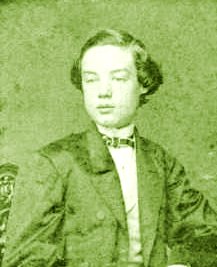
George Derrickson, a Potential Second Morphy

     Life expectancy was a scant 41.8 years in 1860 and shrunk to 40.0 during the Civil War. Although tuberculosis and dysentery were the big killers of the day, George Derrickson died from rheumatic fever. 
     Rheumatic fever, which is not contagious, may develop after strep throat or scarlet fever infections. It usually takes about 1 to 5 weeks after strep throat or scarlet fever for rheumatic fever to develop. 
     It begins with a sore throat and progresses to extremely painful swollen joints. More seriously, rheumatic fever can involve inflammation of the sac around the heart and the heart valves, leading to abnormal heart function or even heart failure and death. The illness usually last about two months.
     During the Civil War era patients were treated with opiates, quinine, baths and compresses to reduce the pain and inflammation. Even if a person survived they were often left with heart problems.
     From Philadelphia, George H. Derrickson possessed great talent and it was believed that Morphy's mantle would fall upon him, but he died on April 16, 1862 at either the age of 17 (based on contemporary reports) or 18 (based on official records). Although he was no doubt a very talented player, looking at the minuscule game sample that has survived, the claim that he would be Morphy's successor seems debatable.
     His obituary stated that "he had mastered as if by intuition the most abstruse problems in his scholastic pursuits, and had won the highest honors of his class."
     At the time he was considered one of the best players in the country and was a regular contributor to the chess column of the New York Clipper magazine. He also excelled in the area of problem composition and his problems often appeared in the Clipper.
     The magazine described him as "eminently social, affable, and unaffected" and physically they described him as, "tall and straight, with an appearance of more beauty of person than falls to the lot of most men." The magazine also admired his "chirography," that is to say, handwriting. 
     Another description described him as, "Gentle as a girl, sympathetic, affectionate. Large hazel, thoughtful eyes; plump red cheeks, round, full forehead, and a well-balanced head. Grave and judicial in manners and speech – too much so, we think, for one of his years." 
     At some point Derrickson spent time in New York City where made an impression on members of the Morphy Chess Club and Billiard Room. You can read more in the The British Chess Magazine, August 1893, beginning on page 338 HERE.
     The following game which appeared in the New York Clipper, July 21, 1860 edition, does not give the name of his opponent. Derrickson should have lost, but after some slips by his opponent he managed a strong conclusion and scored a nice win.
Games
[Event "Casual game, Philadelphia"] [Site "?"] [Date "1860.??.??"] [Round "?"] [White "Anonymous"] [Black "George H. Derrickson"] [Result "0-1"] [ECO "C53"] [Annotator "Stockfish 14.1"] [PlyCount "59"] [EventDate "2022.02.14"] {Giuoco Piano} 1. e4 e5 2. Nf3 Nc6 3. Bc4 Bc5 4. c3 Qf6 {This early Q development is far riskier that the standard 4...Nf6} 5. d3 {More challenging to black was 5.d4} h6 6. O-O d6 7. Be3 (7. b4 Bb6 8. a4 a6 9. Be3 Nge7 10. Nbd2 Ng6 11. Bb3 {equals. Mons,L (2435)-Bosiocic,M (2555)/Austria 2015}) 7... Bg4 ( 7... a6 8. b4 Ba7 9. a4 Nge7 10. b5 Nb8 11. Nbd2 Nd7 12. d4 O-O {White is better. Jovanovic,Z (2557)-Rogic,D (2477)/Sibenik 2008}) (7... Nge7 {The most often seen.} 8. b4 Bb6 (8... Bxe3 9. fxe3 O-O 10. Qe1 Be6 {Equals. Rabiega,R (2499)-Jussupow,A (2633)/Altenkirchen 2001}) 9. a4 Be6 10. Nbd2 Rd8 {White has the better chances. Tishin,P (2440)-Khruschiov,A (2440)/Tula 2004}) 8. h3 h5 { Very aggressive play. Much safe would have been the double exchange on f3.} 9. Bg5 (9. Nbd2 {Meeting black's K-side ambitions by playing for d4 was indicated. } Bd7 10. d4 exd4 11. cxd4 Nxd4 {White has two promising continuations: 12.e5 and 12.Nxd4. Both of them lead to white having the better prospects.} 12. Nxd4 (12. e5 dxe5 13. Ne4 {Here things get a bit tricky!} Nxf3+ 14. Kh1 (14. Qxf3 Qxf3 15. gxf3 Bxe3 16. fxe3 {Black has not only won a P, but his position is vastly superior.})) 12... Bxd4 13. Qb3 {threatening both f7 and b7.}) 9... Qg6 10. Nbd2 Nge7 11. Qb3 {Up to this point white's play has resulted in reaching a position that is equal, but this move should have resulted in black's gaining the upper hand. Correct was 11.b4 and 12.a4} O-O-O {Slap this move with two question marks!!} (11... f6 12. Be3 Bxe3 13. fxe3 Bxh3 {with a nice advantage.}) 12. Bxf7 {...and wins.} Qh7 13. hxg4 {While this move is perfectly OK, it's not the strongest he had.} (13. d4 {launches a very strong attack.} Bb6 14. a4 a6 15. d5 Na5 (15... Nb8 16. Bxe7 Rd7 17. Bxd6 Rxf7 18. Nxe5 Rf6 19. Be7 {white is winning.}) 16. Qa2 Rdf8 17. Be6+ Bxe6 18. dxe6 Re8 19. b4 Nac6 20. b5 Na5 21. bxa6 bxa6 22. Bxe7 Rxe7 23. Qd5 c6 24. Qxd6 { is winning for white.}) 13... hxg4 14. Qe6+ (14. Nh4 {was a heavier blow.} g6 15. Be6+ Kb8 16. Bxg4) 14... Kb8 15. Nh4 Nc8 (15... Rdf8 {Puts up stouter resistance.} 16. Bg6 Nxg6 17. Qxg6 g3 18. Qxh7 Bxf2+ 19. Rxf2 gxf2+ (19... Rxh7 {[%emt 0:00:02] is not advisable because of mate in} 20. Rxf8+ Nd8 21. Rxd8#) 20. Kh2 Rxh7 {White has the superior ending and, in fact, won all five Shootouts. With humans the results could be different!}) 16. Bg6 Qg8 17. Qxg8 Rdxg8 {There can be little doubt that white has a dominating position.} 18. Bf5 {Not bad at all, but even stronger was 17.Bf7!} (18. Bf7 {winning the exchange. } Rf8 19. Ng6 Rxf7 20. Nxh8) 18... g3 {Once again, not the mst precise move.} 19. d4 (19. Ng6 gxf2+ 20. Rxf2 Rh5 21. Nf3 Rxg5 22. Nxg5 N8e7 23. Be6 Bxf2+ 24. Kxf2 Rd8 25. Nxe7 Nxe7 26. Rh1 {and wins.}) 19... exd4 20. cxd4 (20. Nb3 { makes it even easier for White} Bb6 21. Nxd4 Nxd4 22. cxd4 Bxd4 23. Ng6 gxf2+ 24. Rxf2 {which is very similar to the note to 19.d4}) 20... Bxd4 21. Be6 { Yet another imprecise move. Much better was 21.Ng6} Bxf2+ {Black should not have taken the f-Pawn yet.} (21... gxf2+ 22. Rxf2 Bxf2+ 23. Kxf2 Re8 24. Ng6 Rxe6 25. Nxh8 {White is a piece up.}) (21... Re8 {This is best even though here, too, white is still winning.} 22. Ng6 gxf2+ 23. Rxf2 Ne5 24. Nxh8 Nd3 25. Bh4 Rxe6 26. Nf3 Bxf2+ 27. Bxf2 Rxe4 {and black can at least play on.}) 22. Kh1 {This move earns a gaggle of question marks because it's a mistake that loses all of his advantage and leaves his opponent slightly better.} (22. Rxf2 gxf2+ 23. Kxf2 {Materially white has 2Bs vs. a R+P. Two Bs are much stronger than a R and an extra P is not enough to compensate..One author claimed two Bs are as strong as a R and N (assuming the opponent has no Bs). The reason is that the two Bs can cover a lot more squares than a R.}) 22... Re8 23. Bf7 {Another move that earns a gaggle of question marks because this one is a bunder that results in a lost game!} (23. Bh3 {Blocking the R would have kept black's advantage at a minimum.} Ne5 24. Nf5 Nb6 25. Bf4 {and black's advantage is minimal.}) 23... Re5 24. Ndf3 Rxg5 {The beginning of a decisive attack.} 25. Nxg5 Rxh4+ 26. Nh3 N8e7 (26... g5 {keeps an even firmer grip} 27. Be6 Rh6 28. Bf5 Ne5 29. Rad1 Ne7 30. Rd2 g4 31. Rdxf2 gxf2 32. Rxf2 gxh3 33. gxh3 {and black is winning.}) 27. a4 {Pointless, but he had to either resign or make a move.} (27. Rxf2 {is not much help} gxf2 28. Rf1 g5 29. Rxf2 g4 30. Rf4 { Oddly, the R finds itself pinned after this, but there was nothing better.} Ne5 31. Kg1 Nd3 {wins}) 27... Ne5 28. Be6 N7g6 29. b4 (29. Bf5 {is no help as after } Nf4 30. Rxf2 gxf2 31. Rf1 g6 32. Rxf2 Nfd3 33. Rf1 gxf5 {wins.}) 29... Nf4 30. Bb3 {Derrickson announced mate in 3. A nice finale by Derrickson, but hardly of Morphy quality.} 0-1

Monday, February 14, 2022

Here's A Problem For You

     I recently came across the below diagram and found it quite interesting. It originally appeared in the August 1953 issue of C.J.S. Purdy's magazine Chess World in an article titled How To Tackle Wild Positions. 
     The article discussed positional play versus tactics. Purdy always insisted that tactics ruled. However, he was also quick to point out that in most positions there won't be a tactical shot available so you also have to know how to play those positions where there aren't any sound tactics possible...a fact that seems to be lost on a lot of players who have heard the saying "Chess is 99% tactics." It's also noteworthy that Purdy always emphasized "sound." 
     So, take a gander at the position with black to move. Note that white threatens to win black's Q with 1.Bg5 Qf5 2.e4 or 1.Bg5 Qe5 2.f4. But, it's black's move so decide what you would play and then check it out HERE.


Friday, February 11, 2022

Browsing An Old Reinfeld Potboiler

     Fred Reinfeld stated that there was no money in writing good chess books, but when he started writing potboilers the money came pouring in. 
     One of the first chess books I ever owned was one of those potboilers, Attack and Counterattack in Chess, published by Barnes & Noble in 1958. I still have a copy and as I remember, I never got much out of it, but that may have been because at that stage it was too advanced...about all I knew was what I had picked up in the Encyclopedia Britannica. 
     For me it's annoying that the names of the players, the event and the date are not given, only the game scores. Reinfeld says little about the openings, but gives explanations behind the moves at critical points. Needless to say, as with almost all books written before engines, there are mistakes in the analysis and his notes are a bit lacking in depth. However, he was trying to teach principles by example not dissect the games to the nth degree. 
     I honestly can't say beginners would find this book totally without value, but there are plenty of more modern books that do a better job of teaching the rudiments of attack. The book is divided into two sections. 
     Part 1 looks at how white attempts to make use of the first move by taking advantage of typical mistakes by black. Conversely, part 2 shows how black succeeds in seizing initiative when white errs. 
     The first seven chapters cover how control of the center, exploiting superior mobility, how to exploit black’s premature opening of the position, exploiting premature counterattacks, how to exploit weakening Pawn moves, taking advantage of errors in judgment and, finally, how take advantage of irregular defenses. 
     The last five chapters are from black's point of view and cover how to seize the initiative, how to play against gambits, how to defend against an attack, how to counterattack and how to exploit unusual openings. Many of the games are miniatures, so at least they are entertaining! 
     Reinfeld explains the following game as one in which black sees his opportunity to seize the initiative when white condemns his B to lasting inactivity and black then continues to build up the pressure on white's position in an instructive manner.
     That said, it turns out that black's win was not the one sided strategic thumping Reinfeld claimed and it should not be a surprise because Stockfish reveals hidden resources. I don't want to be too harsh on Reinfeld because he was a stronger player than I will ever be. However, we armchair Grandmasters, armed as we are with Stockfish and Komodo, are privy to resources in every position that Reinfeld was not. 
     Speaking of the initiative, what is it? According to Wikipedia, the initiative belongs to the player who can make threats that cannot be ignored. He thus puts his opponent in the position of having to use his moves responding to threats rather than making his own. 
     A player with the initiative will often seek to maneuver his pieces into more and more advantageous positions as he launches successive attacks. The player who lacks the initiative may seek to regain it through counterattack. 
 
Games
[Event "Unknown"] [Site "?"] [Date "????.??.??"] [Round "?"] [White "Anonymous"] [Black "Anonymous"] [Result "0-1"] [ECO "A00"] [Annotator "Stockfish 14.1"] [PlyCount "70"] {Sicilian Najdorf} 1. e4 c5 2. Nf3 d6 3. d4 cxd4 4. Nxd4 Nf6 5. Nc3 a6 6. Be2 { This is the Opocensky Variation of the Sicilian Najdorf and it remains popular even today .Back in the 1950s and 1960s, more aggressive variations such as the Fischer-Sozin (Bc4), the Main Line (6.Bg5) and 6. f4 were favored. Over time sufficient sources of counterplay for black were discovered and so in the early 1970s Karpov began to have success with the positional Opocensky Variation. In his games play revolved around the strategic dominance of the d5 square. In the 1980s and 1990s, Kasparov demonstrated that black could maintain good chances by playing for rapid activity on the Q-side and in the center. As in this game black attempts to take the initiative with the thematic ...b5 and ...d5 breaks.} e5 {Playable with about the same results, though much less popular is 6...e6.} 7. Nb3 Be6 8. O-O Nbd7 {Much more frequent, but not necessarily better, is 8...Be7} 9. f4 {Frequently seen is 9. Be3, but white's best move is probably 8.a4} (9. a4 Be7 10. a5 O-O 11. Be3 Rc8 12. Qd2 Qc7 13. Rfd1 {with equal chances. Voitsekhovsky,S (2527)-Alexikov,A (2384)/St Petersburg 2002}) 9... Qc7 10. f5 {Reinfeld was quite critical of this move because with Ps on the white squares e4 and f5 white has reduced the mobility of his light squared B to an alarming extent. Another disadvantage to this move is that it releases the pressure on the center and enable black to eventually play ...d5. However, this move is the most often seen and in practice the results favor white by better that two to one! That said both 10. Be3 and 10.Kh1 give even better results!} (10. Kh1 b5 11. a4 b4 12. Nd5 Bxd5 13. exd5 {Oll,L (2625)-Labuckas,A (2435)/Vilnius 1997. WHite is a little better.}) (10. Be3 Be7 11. Nd5 Bxd5 12. exd5 Rc8 13. c4 b6 14. Kh1 O-O 15. Rc1 {White is slightly better. Kravtsiv,M (2653)-Rozhok,A (2135)/Lvov 2017}) 10... Bc4 11. Bd3 (11. a4 Be7 (11... Rc8 12. Be3 Be7 13. a5 h5 14. Bxc4 Qxc4 15. Ra4 {White is considerably better. Geller, E-Najdorf,M/Zuerich 1953/Candidates}) 12. Be3 O-O 13. a5 b5 14. axb6 Nxb6 15. Bxb6 Qxb6+ {is equal. Unzicker, W-Fischer,R/Varna 1962}) 11... b5 (11... d5 {is premature.} 12. exd5 Bxd5 13. Nxd5 Nxd5 14. Qf3 {is equal.}) 12. Be3 (12. Bxc4 Qxc4 13. Be3 {is equal after either 13...Be7 or 13...b4, byt absolutely not...} Nxe4 14. Qf3 d5 15. Na5 Qc7 16. Nxd5 Qxa5 17. Qxe4 {and white is winning. He threatens 18.f6 with a terrific attack.}) 12... Be7 13. Qe2 Rc8 14. Rac1 (14. Nd2 d5 {Better was 14... Bxd3 followed by ...b4} 15. exd5 Bxd5 16. Nde4 Bb7 17. Nxf6+ Nxf6 18. Bg5 O-O 19. Rae1 {Black is better. Jurcisin,I (2129)-Mitura,V (2258)/Tatranske Zruby SVK 2003}) 14... O-O 15. Nd2 d5 16. Bxc4 {This move, whuch Reinfeld did not comment on, is not quite correct and black now gets the advantage.} (16. exd5 Bxd5 17. Nxd5 Nxd5 18. Ne4 {keeps black's advantage at a minimum.}) 16... dxc4 (16... d4 {was tricky, but a little better.} 17. Bxd4 exd4 18. Nd5 Nxd5 19. Bxd5 Bg5 {and black stands well.}) 17. a3 b4 18. axb4 Bxb4 19. g4 {White makes a gesture at a K-side attack, but black is prepared to meet it. At the same time black will later on exploit the weakening of white's Q-side. Better was moving the R to a more active file with 19.Ra1 although black still retains the better chances/} Bxc3 (19... Qc6 20. Qg2 Bxc3 21. bxc3 $15) 20. bxc3 { As it turns out the passed P on a6 plays no part in the game.} Qc6 {Black is attacking e4} 21. Qg2 Nc5 22. Bxc5 Qxc5+ 23. Kh1 Rfd8 {This rather slow R move gives white some hope. Black should have advanced the a-Pawn with 23...a5} 24. Qe2 {Here, too, at this critical junction Reinfeld makes no comment. Black is better, but rather than this passive move white should try 24.g5} (24. g5 Nh5 25. Nf3 Re8 26. Rcd1 Nf4 27. Qg4 a5 {In this situation the a-Pawn becomes important...it's black's only asset!} 28. Nxe5 Rxe5 29. Rxf4 a4 30. g6 f6 31. Rd7 Re7 32. Qd1 {and miraculously white has equalized!}) 24... h6 {This passive move throws away most of his advantage.} (24... Nxg4 {and wins...} 25. Qxg4 Rxd2 26. Qg5 Rf2 {leaves black with a dominating position.}) 25. Ra1 Qd6 ( 25... Nxg4 {is still playable but less effective now.} 26. Qxg4 Rxd2 27. Rg1 { and black has to tend to his K and loses the a-Pawn in the process.} Qf8 28. Rxa6 {with a equal position.}) (25... a5 {this keeps the advantage after} 26. Rg1 a4 {Watch this...} 27. Rxa4 Rxd2 28. Qxd2 Nxe4 29. Qd7 Nf2+ 30. Kg2 Nxg4 31. Kh1 Nf2+ 32. Kg2 Ne4 {and black is only slightly better.}) 26. Rfd1 Qc6 { The threat is 27...Rxd2 28.Rxd2 Nxe4 with, according to Reinfeld, the threat of a nasty discovered check. Actually it's not as nasty as it looks!} 27. Kg2 { The losing move.} (27. h3 {This is just to demonstrate the threat of taking on d2. Actually, black's best move is 27...a5 after which he is slightly better.} Rxd2 28. Qxd2 Nxe4 29. Qd5 Nf2+ 30. Kg2 Nxd1 31. Qxc6 Rxc6 32. Rxd1 {with the better ending, but it may not be winnable because all the Shootouts were drawn. Still, we have to remember humans would be playing the ending, not engines!}) ( 27. Re1 Ra8 28. Nf3 Re8 29. g5 {Black's defensive resources are adequate, but he must play carefully.} hxg5 30. Nxg5 a5 31. Rg1 a4 32. Qg2 Re7 {And this position is unclear! In Shootouts all five games were drawn (played at 15-23 plies).}) 27... Rd6 (27... Rxd2 {only equalizes after} 28. Rxd2 Nxe4 29. Rxa6 Qxa6 30. Qxe4 {and black's advantage, if any, is minimal.}) 28. h3 {This and the next few moves are to passive and they allow black time to further strengthen his position. Stockfish was able to offer a better defense and while the game technically won for black, as you can see from engine analysis the process is a difficult one and practically it seems white may have drawing chances.} (28. Nf1 Rxd1 29. Rxd1 Nxe4 30. Qf3 {The idea for white is, hopefully, to ease his defense by exchanging Qs.} Qa8 31. Re1 Nxc3 32. Rxe5 a5 33. Kf2 Qxf3+ 34. Kxf3 Ra8 35. Ke3 a4 36. Kd4 a3 37. Re1 Nd1 38. Kxc4 a2 39. Rxd1 a1=Q 40. Rxa1 Rxa1 41. Ne3 Kf8 42. Kc5 Ke8 43. Kd6 Ra6+ 44. Kd5 Ra3 45. Kd4 Ra1 46. h4 f6 47. c3 Kd7 48. Kd5 Rc1 49. Kd4 Kd6 50. Nc4+ Kc6 51. Na5+ Kd7 52. Nc4 Rd1+ 53. Ke4 Rh1 54. h5 Rg1 55. Ne3 Kd6 56. Kd4 Ra1 57. Ng2 Ra4+ 58. c4 Ra3 59. Ke4 Rg3 60. Ne3 Kc5 61. Kd3 Rg1 62. Ke4 Re1 63. Kf3 Rc1 64. Nd5 Kd4 65. Nb6 Rf1+ 66. Kg2 Rb1 67. Nd7 Ke4 68. Kf2 Rb2+ 69. Kg3 Rb3+ {[%eval -699,19] [%emt 0:00:02]} 70. Kf2 Kf4 71. Ke2 Kxg4 {with a clear win for black.}) 28... Rcd8 29. Kf3 Qd7 30. Ke3 {Now, how does black finish off his opponent? White has rushed his K to the center to help his defense, but black has a terrible pin on the d-file that has white tied up. As a result black has time to carry out a winning maneuver with his N.} Ne8 31. Ra5 Nc7 {Black's position is so strong that the loss of his e-Pawn is irrelevant.} 32. Rxe5 Nb5 33. Rd5 (33. Qxc4 {doesn't change anything.} Rc8 34. Qa4 (34. Qe2 Nxc3 35. Qe1 Nxd1+) 34... Qa7+ 35. Kf3 Rxc3+ 36. Kg2 Qe3 {[%emt 0:00:08] mates in}) 33... Rxd5 34. exd5 Nxc3 35. Qf3 Nxd1+ {Having no compensation for the exchange, white resigned.} 0-1

Thursday, February 10, 2022

RIP Arthur Feuerstein

     It is with great sadness that I read of the death of Arthur Feuerstein (December 20, 1935 – February 2, 2022) who passed away at the age of 86 on February 2nd.
     Although I never personally met Feuerstein, back in 1970 I had the pleasure of playing, and losing, a postal game to him in the semi-finals of Chess Review's Golden Knights tournament. We met again in the Finals and I lost again. That game finished in 1972. During the games we engaged in some idle chit chat and I found him to be an extremely pleasant gentleman who, after the games, was willing to point out where I went wrong. 
     In 1973, not too long after our game was completed, Feuerstein was involved in a car accident that left him in a coma for six weeks. When he recovered, he was not able to speak English very well, but he did remember how to play chess. He continued to play chess after the accident and at the age of 65 he was was rated one of the country's top 10 senior players.
     Al Lawrence did a nice article on Feuerstein in the January 2012 issue of Chess Life which you can read HERE.

Wednesday, February 9, 2022

Forgotten Tournament, Mostly Forgotten Players

     First it was the Roaring Twenties so called because of the supposedly new and less-inhibited lifestyle that many people embraced in this period. Among other things women were drinking, smoking and dressing in a provocative manner. 
     Then in October 1929, the U.S. stock market crashed and sent Wall Street into a panic and wiped out millions of investors. As a result everything came crashing down which resulted in the Great Depression, a severe worldwide economic depression that was the longest, deepest and most widespread depression of the 20th century. Over the next several years, consumer spending and investing dropped, causing steep declines in industrial output and employment as failing companies laid off workers. The United States did not fully recover until about 1939! 
     In chess the year 1930 started off with the end of the Hastings Christmas Congress. The Premier Section was won by Capablanca and the Premier Reserves section was won by George Koltanowski and T.H. Tylor. 
     From January 16 to February 4, the great international tournament was held in San Remo, Italy. The winner was Alexander Alekhine, who scored an incredible +13 -0 =2. And, this was no weak tournament; the top finishers were followed by Nimzovich, Rubinstein, Bogoljubow and Yates. 
     On May 2, 1930, Isidor Gunsberg (1854-1930) died in London. He was German champion in 1885. In 1890, he lost a world championship match to Steinitz by a score of +4 -6 =9. 
     In July the chess Olympiad was held in Hamburg and the gold medal was won by the Poland team (Rubinstein, Tartakower, Przepiorka, and Frydman). The silver medal went to Hungary and the bronze to Germany. There were only 18 teams and the U.S. team (Isaac Kashdan, Frank Marshall, Harold Phillips, Herman Steiner and James Anderson) finished sixth. 
     Players on the U.S. team are well known except for Phillips and Anderson. Harold M. Phillips (1874-1967) played in tournaments for 0ver 70 years and he was also an organizer. A lawyer by profession, in 1903, he won Manhattan Chess Club Championship. In the first half of the 20th century he was one of the leading organizers of American chess life. 
     He was the organizer and director of the great New York Tournament (1924), President of the Manhattan Chess Club in the 1930s, President of the Marshall Chess Club, President of the Intercollegiate Chess League. At third board in the 1930 Olympiad he scored +0 -1 =1. 
     Mystery man James A. Anderson (1906-1991) was a three-time St. Louis Chess Champion who defeated Alekhine in a simultaneous exhibition in 1929. He finished second in the 1929 Western Chess Association Championship ahead of Herman Steiner, Norman Whitaker and Samuel Factor. 
     As a reserve in the 1930 Olympiad he scored _3 -7 =7. Anderson finished fourth at the 1931 Western Chess Association Championship in Tulsa and won the St. Louis championship in 1932 with 8.5-0.5 before disappearing from the chess world at the age of 26. He died in Antioch, California. 
     Also, during the Olympiad the second Women's World Championship was contested and Vera Menchik defended her title in a five player double round tournament. The other players were Paula Wolf-Kalmar, Wally Henschel, Katarina Beskow and Agnes Stevenson. 
     On August 17, 1930, Leo Forgacs (aka Leo Fleishmann), the 1907 Hungarian champion, died in Berettyoujfalu, Hungary at the age of 48. 
     In September of 1930 a long forgotten international tournament was held in Frankfurt that was attended by notable participants Nimzovich, Mieses, Saemisch and Kashdan. 
     Nimzovich was fresh off his win at Karlsbad the previous year and took clear first here continuing his campaign to challenge Alekhine to a match for the World Championship. Second place went to Isaac Kashdan, the recent Manhattan Chess Club champion, who went undefeated a full two points ahead of the third place finishers. 
     Kashdan (1905-1985) was twice U.S. Open champion (1938, 1947) and played five times in chess Olympiads, winning a total of nine medals and his Olympiad record is the all-time best among American players. At one time he as considered a possible world champion candidate. 
     He was never able to win the U.S. Championship because during his prime years Frank Marshall steadfastly refuse to accept a challenge for Kashdan. After Marshall died Rebuen Fine and Samuel Reshevsky had surpassed his as the best U.S. players. 
     As good as Kashdan was there was never a book of his best games published, probably because although he was a powerful tactician, his real strength was in the endgame and he rarely played flash, eye-catching games. Arnold Denker pointed out that a slight touch of rigidity occasionally crept into Kashdan's play and he sometimes resorted to artificial maneuvers to obtain the two Bishops. 
 
 
     The following short, sharp game against Natha Mannheimer (1885-1951) is an exception to Kashdan's usual games. Mannheimer was was born in Birkenau, Germany. In 1884, he became a religious education teacher. He moved to Heidelberg in 1893 and studied mathematics and natural sciences at Heidelberg University, receiving his PhD 1898. He worked as a mathematics teacher from 1897 to 1900 and then moved to Frankfurt where he won the city championship in 1908 and 1920. As a result of the Krystalnacht in November of 1938, in late 1939 or early 1940, Mannheimer emigrated to Rio de Janeiro and lived there for the rest of his life.
Games
[Event "Frankfurt"] [Site "Frankfurt"] [Date "1930.09.08"] [Round "?"] [White "Nathan Mannheimer"] [Black "Isaac Kashdan"] [Result "0-1"] [ECO "E10"] [Annotator "Stockfish 14.1"] [PlyCount "46"] [EventDate "1930.??.??"] {Queen's Gambit Declined} 1. d4 Nf6 2. c4 e6 3. Nf3 d5 4. Bf4 {This seldom played move poses black a surprising number of problems and in recent years has been tried by players such as Ding Liren and Magnus Carlsen. Nevertheless, with careful play black should be able to equalize.} dxc4 {Seldom played, but not bad. Besides the text black has a couple of other reasonable tries to equalize.} (4... Be7 {This routine move is also a reasonable try, but it makes no attempt to gain any advantage.} 5. e3 O-O 6. Nc3 b6 7. cxd5 Nxd5 8. Nxd5 exd5 9. Be2 c5 10. dxc5 bxc5 11. O-O Nc6 12. Rc1 Be6 {with an equal position. Lindstedt,J (2345)-Raaste,E (2370)/ Tampere 1991}) (4... b6 {The Q-side fianchetto also works well for black against 4.Bf4} 5. e3 Bd6 6. Bxd6 Qxd6 7. Nc3 O-O 8. Bd3 Ba6 9. cxd5 exd5 10. O-O Bxd3 11. Qxd3 c6 {A draw was agreed in a few more moves. Grela,K (2305)-Cukrowski,F (2416)/Krakow 2018}) 5. e3 Bb4+ 6. Nfd2 {Right square, wrong N.} b5 {Already white is in a difficult position plus he is a P down.} 7. a4 c6 8. axb5 {White is barking up the wrong tree. He sees a chance to win a P, but in the process loses the game.} (8. b3 {trying to break up the Q-side P mass runs into} c3 {and black wins.}) (8. Be2 { is his best chance.} Nd5 9. Bg3 O-O 10. O-O Nd7 11. Qc2 {and black is better, but at least white's position is not yet so bad that he has to resign!}) 8... cxb5 {White's position is probably lost} 9. Bxb8 {White's position completely falls apart after this move.} (9. Qf3 {is his only hope, but after} Nd5 10. b3 Ba6 11. Be2 {Black has the happy choice of either 11...O-O or 11...c3} c3 { This results in a lot of fireworks so castling was safer.} (11... O-O 12. bxc4 bxc4 13. O-O c3 14. Bxa6 Nxa6 15. Rxa6 cxd2 {Black s better without having had to wade through a lot of tactical complications.}) 12. O-O (12. Nf1 Qa5 13. Rxa5 c2+ 14. Nbd2 c1=Q+ 15. Bd1 Bxa5 {and wins.}) 12... O-O {Taking the N was also good.} 13. Bxb8 Bb7 14. Be5 cxd2 15. Bxb5 f6 16. Bg3 Nxe3 17. Qxe3 Qd5 18. f3 Qxb5 19. Nxd2 e5 {black is better.}) 9... Rxb8 10. Rxa7 Ba5 (10... e5 { also packs a wallop.} 11. dxe5 Ne4 12. Be2 Nxd2 13. Nxd2 O-O {with a winning position.}) 11. Qf3 Qb6 {This gives white a chance to stay in the game.} (11... O-O {was safe and solid.} 12. Qc6 Bd7 13. Qd6 Ra8 14. Qa6 Bc6 15. Rxa8 Qxa8 16. Qxa8 Rxa8 {Black's position is such that in Kashdan's hands the win would be a matter of technique.}) 12. Ra8 {A blunder in a bad position.} (12. Rxa5 { would at least have given him a fighting chance.} Qxa5 13. Qg3 {attacking the R and the g-Pawn.} Nd7 14. Qxg7 Rf8 15. Qxh7 {with at least some counterplay. In fact. in Shootouts white managed to draw 3 games while losing two, so 12. Rxa5 was clearly worth trying.}) 12... Rxa8 13. Qxa8 O-O {White's Q is in danger and he now loses time getting it to safety.} 14. Qf3 Bb7 15. Qf4 (15. Qd1 {Hoping to defend the Q-side is not much help.} e5 16. Be2 exd4 17. exd4 Bxg2 {is just awful for white.}) 15... Ne4 16. f3 Nxd2 17. Nxd2 Re8 {To support ...e5} 18. Qh4 {Well, he had to move a piece and this is as good as any.} e5 19. Qf2 exd4 20. e4 f5 21. Kd1 Bxd2 22. Kxd2 fxe4 23. fxe4 Qa5+ { White resigned.} (23... Qa5+ 24. Ke2 d3+ 25. Kf3 Rf8+ 26. Kg3 Qc7+ 27. e5 Qxe5+ 28. Kh4 Rxf2 29. Be2 dxe2 30. b3 Qf6+ 31. Kg3 Rxg2+ 32. Kh3 Qh6#) 0-1

Tuesday, February 8, 2022

Najdorf Gets Beaten Down by an Old Man

     In 1954, the first Student Olympiad was held in Oslo was won by Czechoslovakia. In April, the first official California Women's Championship was won by Sonja Graf-Stevenson; Jacqueline Piatigorsky and Lena Grumette tied for second. 
     In May Botvinnik drew his match with Smyslov to retain the world championship title. And, in June the USSR crushed the U.S. team at the Hotel Roosevelt in Manhattan by a score of 20-12. An unknown eleven year old kid named Bobby Fischer was there for all four rounds. 
     The following month Arthur Bisguier won the U.S. championship ahead of Larry Evans. Reshevsky wasn't playing. Also in July, the USSR team (Botvinnik, Smyslov, Bronstein, Keres, Geller, Kotov) won the Olympiad in Amsterdam. The U.S. didn't send a team. In August, the U.S. Open was held in New Orleans and was won by Larry Evans on tiebreak over Arturo Pomar who lost their individual game. 
     The chess world lost two players in 1954. On February 23rd Jacques Mieses died in London at the age of 88. On December 31st Eugene Znosko-Borovsky died in Paris at the age of 70. 
     In early November of 1954, the president of the French Chess Federation telephoned the 72 year old Dr. Ossip Bernstein (1882 - 1962) and asked him if he would like to participate in a tournament in Montevideo. Bernstein said he'd like to think it over a few days, but was told that the tournament started soon and he had to make his decision by the next morning! 
     The tournament was played to support UNESCO (United Nations Educational, Scientific and Cultural Organization) which had been founded in 1945 and aimed at promoting world peace and security through international cooperation in education, arts, sciences, and culture. It is still around. It hasn't worked, but they are still trying. 
     Bernstein wrote that he had never been to South America and to see that part of the world was his dream. The November weather in Paris was cool but not excessively cold; in Montevideo it was summer and it might be hot. The changes in weather, his 72 years and playing without preparation all figured into his decision. It was all a bit frightening he admitted, but he accepted and took a plane to Madrid. 
     At Madrid, somehow a reporter had discovered Bernstein was on his way to the tournament and did an interview. Finally, after a delay due to engine trouble, Bernstein, Spanish Champion Roman Toran and Swedish Champion Bengt-Eric Hoerberg were off and arrived tired and sleepy at 2a.m. in Montevideo on November 18th...a round late as the tournament had already started. Because tournament officials knew they were on the way they were permitted to make up the round they missed. 
     The tournament became a race between Rene Letelier of Chile and Miguel Najdorf of Argentina. Letelier played what was to be the best tournament of his career. In the process he defeated Najdorf by a risky Rook sacrifice to take the lead. Then he lost to Flavio Carvalho and Najdorf forged ahead, followed by Toran and Bernstein. 
     In round 16 Bernstein was victorious over Najdorf and in the last round he defeated Hoerberg and so was able to tie for second with Najdorf. 
 
     Few people are aware that in his day back in 1906 (!) Bernstein was very good. In that year Chessmetrics estimates his rating to have been 2668 placing him at number 9 in the world. Between the years 1904 and 1906, Chessmetrics estimates that he occupied 9th place ten different months. 
     Bernstein was a successful businessman who earned considerable wealth before losing it in the Bolshevik Revolution. He earned a second fortune that was lost in the Great Depression and a third that was lost when France was invaded by Nazi Germany in 1940. 
     Being Jewish, in 1940, Bernstein and his family had to flee Nazi-occupied France by crossing the Pyrenees mountains on foot as they fled to Spain. At the border they were arrested, but some of his influential friends in Spain managed to negotiate his release and arranged for them to set out the war in Barcelona. Bernstein lived the last years of his life in Barcelona passing away in a hospital in 1962 at age 80. 
     When this game was played Chessmetrics puts Najdorf's rating at 2728 ranking him 8th in the world. Bernstein's was 2527 placing him way down at number 128 in the world. Watch Bernstein take down the mighty Najdorf with ease.
Games
[Event "Montevideo, 1954"] [Site "Montevideo, 1954"] [Date "1954"] [Round "?"] [White "Ossip Bernstein"] [Black "Miguel Najdorf"] [Result "1-0"] [ECO ""] [Annotator "Stockfish 14.1 "] [PlyCount "73"] [EventDate "1954"] {King's Indian Defense} 1. d4 Nf6 2. c4 d6 3. Nc3 Nbd7 4. e4 e5 5. Nf3 g6 6. dxe5 {This move is seldom played. For some strange reason although the resulting positions are evaluated as being nearly equal, black scores very well against it. Of course this game was played in the early days of the K-Indian and the best lines hadn't yet been discovered. White's intention is to prevent black, at a later move, from capturing ...exd4 and extending the scope of hisB on g7. Nowadays 6.Be2 is almost always played.} dxe5 7. Be2 (7. Bg5 h6 8. Bh4 Bg7 9. Nxe5 Nxe5 10. Qxd8+ Kxd8 11. O-O-O+ {The position is roughly even. Acosta,P (2409)-Sosa,T (2466)/Buenos Aires 2017}) 7... c6 { Black's play here is quite odd in that he eschews the natural ...Bg7.} 8. O-O Qc7 9. h3 {The reason for this move is that white anticipates a struggle for the domination of d4 which is bound to ensue. Hence, he prevents any such maneuver as ...Nc5, ...Bg4 and ...Ne6. As a result of 9.h3 black's light squared B has limited scope and white has an active position.} Nc5 {Better first was 9...a5 because now white could gain a tempo with 10.b4} 10. Qc2 Nh5 { A risky place for the N. Better would have been 10...Ne6} 11. Re1 {White is preparing Bf1 and prepares eventually g2-g3 to deny black the post f4 for his N.} Ne6 12. Be3 (12. Nd5 {This flashy surprise move should lead to an advantage for white, but calculating it OTB would be quite time consuming. Here is Stockfish's line after 10 minutes of cogitation.} cxd5 13. exd5 Nef4 14. Nxe5 Qxe5 15. Bxf4 Qxf4 16. Bxh5+ Kd8 17. Qc3 Rg8 18. Bf3 {with the advantage. In Shootouts white scored +3 -0 =2}) 12... Be7 {Why not the normal 12...Bg7? It's because the B has no future on g7.} (12... Bg7 13. Rad1 O-O 14. c5 { White has strong pressure on the Q-side and can possibly play his R to d6.}) 13. Rad1 O-O {Black must quickly conclude development.} 14. Bf1 {With this move white readies for black's intended P-storm on the K-side.} Nhg7 15. a3 { This excellent move which seems to have little to do with his planned K-side attack gets the stamp of approval from Stockfish. To advance his f-Pawn , black has had to desert the strong N post at h5. Now white undertakes a demonstration on the Q-side which is the correct counter to black's plan.} f5 16. b4 (16. Bh6 $5 Bf6 17. b4 Re8 $18) 16... f4 17. Bc1 {According to Bernstein, black must reinforce his e-Pawn before pursuing his K-side objectives which explains his next move.} Bf6 18. c5 g5 19. Bc4 Kh8 {Black averts a tactical possibility.} (19... h5 {Played just to demonstrate the tactical threat.} 20. Nd5 cxd5 21. exd5 g4 (21... Nd8 22. d6+ {wins the Q}) 22. dxe6 Bxe6 23. hxg4 hxg4 24. Nh2 Bxc4 25. Qxc4+ Qf7 26. Qxf7+ Kxf7 27. Nxg4 { White is only a P up, but Komodo 14 puts his advantage at nearly 3 Ps.}) 20. Bb2 h5 21. Nd5 {The first of a series of sacrifices and maneuvers which will leave black's position in shambles. The N must be taken; otherwise, black's e-Pawn goes which he can't afford becaust it's the backbone of his game.} cxd5 (21... Qb8 {There is no safe have for the Q.} 22. Nxf6 Rxf6 23. Bxe5 {is crushing.}) (21... Qf7 22. Nxf6 Qxf6 23. Nxe5 Kh7 24. Nxc6 Qf7 25. Ne5 { white is winning.}) 22. exd5 Nd4 23. Nxd4 exd4 24. d6 Qd7 {The threat is Qg6 threatening mate.} (24... Bf5 {is met by} 25. Qxf5 Nxf5 26. dxc7 Rac8 27. Be6 Bg7 28. Bxc8 {and white is winning.}) 25. Rxd4 f3 (25... Bxd4 {This is disastrous.} 26. Bxd4 Qf5 27. Qc3 {and there s no way to defend the N. After} Kh7 28. Bxg7 Be6 29. Rxe6 {black has no reasonable move and can resign.}) ( 25... Nf5 {loses to} 26. Rd5 Qg7 27. Bxf6 Qxf6 28. d7) 26. Rde4 {Also good is 26.Re7} (26. Re7 Bxe7 27. Qg6 {Black is in danger of being mated. His best try is} Qf5 28. Qh6+ Qh7 29. dxe7 Rg8 30. Rd6 {[%emt 0:00:08] and white has a mate in}) 26... Qf5 27. g4 hxg4 28. hxg4 Qg6 29. Re8 {Very nice!} Bf5 (29... Qxc2 { The loss of the Q is only temporary and this move loses as follows...} 30. Rxf8+ Kh7 31. Bg8+ Kh6 32. Rxf6+ Qg6 33. Rxg6+ Kxg6 34. Re7 Bxg4 35. Rxg7+ Kh6 36. Bh7 {and wins.}) 30. Rxa8 Rxa8 {The Q is still immune.} (30... Bxc2 31. Rxf8+ Kh7 32. Rxf6 Qxf6 {This, too, results in black getting mated.} (32... Bf5 {allows mate.} 33. Rxg6 Kxg6 34. gxf5+ Nxf5 35. d7 g4 36. d8=Q Ne7 37. Qxe7 g3 38. Qf6+ Kh5 39. Qf5+ Kh6 40. Re6#) 33. Bxf6 {and it's mate in 7 as follows...} Bf5 34. gxf5 b5 35. Bxg7 bxc4 36. d7 Kxg7 37. d8=Q g4 38. Qe8 a6 39. Qg6+ Kf8 40. Re8#) 31. gxf5 Qh5 32. Re4 Qh3 33. Bf1 Qxf5 {White can win in a number of different ways, but his next move, which may not be the most efficient is the prettiest!} 34. Rh4+ {A nice finishing touch.} gxh4 35. Qxf5 Nxf5 36. Bxf6+ Kg8 37. d7 {Najdorf resigned. A crushing victory for Bernstein!} 1-0

Monday, February 7, 2022

Bobby Fischer Gets Upset

 
     There was some serious political news in 1960. On May 1st Francis Gary Powers, the pilot of an American U-2 spy plane, was shot down while flying though Soviet airspace. 
     The fallout over the incident resulted in the cancellation of the Paris Summit scheduled to discuss the ongoing situation in divided Germany, the possibility of an arms control or test ban treaty and the relaxation of tensions between the USSR and the United States.
     Powers was convicted of spying and sentenced to three years in prison and seven more of hard labor. In February, 1962, however, he and a detained American student were traded for a captured Soviet spy, Rudolf Abel. 
     But, that wasn't the worst news. On September 24, 1960, The Howdy Doody Show, a children's television program, aired for the last time after 13 years on the air. It had been canceled by the NBC network. 
     In other disheartening news Bobby Fischer stumbled a couple of times that year. In June of 1960, he was upset by Argentine IM Bernardo Wexler (1925-1988) in the Buenos Aires tournament which was the worst tournament result of Fischer's career. The story is that Larry Evans bought the services of a prostitute for Fischer and that accounted for his bad results. Fischer tied for 13-16th along with Wexler, Ludek Pachman and Borislav Ivkov.
     Wexler was an Argentinian master who was born to Jewish parents in Bucharest, Romania, and emigrated to Argentina at the age of seven. His chess career began after World War II. He retired as a court official and died in Buenos Aires. 
     That, however,  wasn't Fischer's worst defeat. The U.S. team at the Chess Olympiad in Leipzig, East Germany was made up of Fischer, William Lombardy, Robert Byrne, Arthur Bisguier, Nicolas Rossolimo and Raymond Weinstein. It was there that an engineer and unknown amateur player, Cesar Munoz (1929–2000) of Ecuador, beat Fischer, the last untitled player to do so.
Games
[Event "Leipzig ol (Men) qual-D"] [Site "Leipzig GDR"] [Date "1960.10.18"] [Round "?"] [White "Robert Fischer"] [Black "Cesar Munoz"] [Result "0-1"] [ECO ""] [Annotator "Stockfish 14.1"] [PlyCount "72"] [EventDate "1960.??.??"] {Sicilian Dragon: Yugoslav Attack B77: Sicilian Dragon: Yugoslav Attack, 9 Bc4 sidelines} 1. e4 c5 2. Nf3 d6 3. d4 cxd4 4. Nxd4 Nf6 5. Nc3 g6 {Although it is no longer popular among the top GMs, the Dragon remains one of the most attractive options for amateurs because of its aggressive nature and it allows black to fight for the initiative from the very start. Fischer played 6.Bc4} 6. Be3 Bg7 7. f3 O-O 8. Qd2 Nc6 9. Bc4 {GM John Emms stated: I can safely say that the Yugoslav Attack is the ultimate test of the Dragon. White quickly develops his queenside and castles long before turning his attentions to an all-out assault on the black king. To the untrained eye, this attack can look both awesome and unnerving. Bobby Fischer said, "I play 1 e4 and if we have a Ruy, the position would be balanced. I could never lose." But, then concerning the Sicilian he added "...then I play 6.Bc4 and I'm better. So what can He do?'"} a6 (9... Bd7 {The most popular move.} 10. O-O-O {Also good is 10.h4} Rc8 11. Bb3 Ne5 12. Kb1 a6 13. h4 h5 {Zhigalko,S (2675)-Mchedlishvili,M (2621)/ Tashkent 2014. In this sharp position white has a lot of options.}) 10. Bb3 Qa5 {In my database black has tried 8 different moves here, but none have been too successful. The text is seldom played, but it seems it is no better or worse than anything else.} (10... Na5 11. O-O-O b5 12. h4 Bd7 13. h5 b4 14. Nd5 Nxb3+ 15. Nxb3 Nxd5 16. exd5 {Black held on for a draw in Vogt,L (2460)-Enders,P (2430)/Kecskemet 1988}) 11. O-O-O Bd7 12. Kb1 Rac8 13. g4 Ne5 14. Bh6 {A rather routine move. 14.Nd5 was better.} (14. Nd5 Qd8 15. Nxf6+ Bxf6 16. g5 Bg7 17. h4 Nc4 18. Bxc4 Rxc4 19. h5 Qc7 20. Qh2 Rc8 21. hxg6 hxg6 22. Rd2 e5 23. Nb3 a5 24. a3 b5 25. Qf2 Rb8 26. Nc1 Ra4 27. c3 b4 28. cxb4 axb4 29. axb4 Rba8 30. b3 Ra1+ 31. Kb2 Qxc1+ 32. Rxc1 R8a2+ {0-1 Varnusz,E-Honfi,K/Budapest 1961}) 14... Nc4 15. Bxc4 {This is more or less forced.} (15. Qg5 Bxh6 16. Qxh6 Nxb2 17. Kxb2 Qxc3+ {and black is winning.}) 15... Rxc4 {This is a mistake, but both players were unaware of it. Both players fail to realize that at their turn it would be advantageous to exchange Bs because if black plays ...Bxh6 after Qxh6 white's Q turns out t be poorly placed.} (15... Bxh6 {Playing this first was mandatory because it keeps the chances about equal although black needs to play with caution.} 16. Qxh6 Rxc4 17. e5 (17. g5 Nh5 18. Nd5 Re8 19. Nb3 Qd8 20. Ne3 Rc8 21. Nd4 {also results in equality.}) 17... dxe5 18. Nb3 Qc7 19. g5 {followed by Nd5 with equal chances.}) 16. Nb3 (16. Bxg7 {leaves white with the advantage after} Kxg7 {White has two promising plans. He can try 17. Nb3 followed by g5 and d5 or he can play 17.g5 followed by e5. Either way, he has a promising position.}) 16... Qe5 (16... Bxh6 {was an interesting alternative, but after} 17. Nxa5 Bxd2 18. Nxc4 Bxc3 19. bxc3 {white is better.} ) 17. h4 {Up to this point Fischer's position has been promising, but after this black could have equalized by exchanging Bs.} (17. Bxg7 {Keeps the advantage after} Kxg7 18. g5 Nh5 19. Nd5 e6 20. Nb6 {with the better game.}) 17... Rfc8 (17... Bxh6 {equalizes.} 18. Qxh6 {The Q is not as well placed here as it looks!} Rfc8 19. Rd3 Bb5) 18. Bf4 {Again, exchanging Bs was better.} (18. Bxg7 Kxg7 19. Rhe1 {Now black's most promising continuation is to sacrifice the exchange.} Rxc3 20. bxc3 Be6 21. f4 Qxc3 22. Qxc3 Rxc3 23. g5 {with an unclear position, but in Shootouts white scored 5 wins although the endings involved were tricky.}) 18... Qe6 19. h5 b5 {Black has managed to equalize.} 20. hxg6 fxg6 21. Bh6 Bh8 {And here is where Fischer makes a losing blunder.} 22. e5 (22. Rc1 {This strange looking move was the best bet to save the position.} a5 23. Ne2 Qe5 24. Bf4 {Things gets fancy now although black could play 24...Qe6 and he would have had a solid position.} Nxe4 25. Bxe5 Nxd2+ 26. Nxd2 Bxe5 27. Nxc4 Rxc4 28. c3 {Engines give black a slight edge here, but here, too, in Shootouts white scored 5 draws.}) 22... b4 {After this black has a winning attack.} 23. exf6 (23. Ne2 {this shows why having a R on c1 guarding the P was important.} Rxc2 24. Qxc2 Rxc2 25. Kxc2 Qxe5 26. Ned4 Nd5 27. Rd2 { Black has a winning advantage.}) 23... bxc3 {The only move to keep the advantage.} 24. Qh2 Qxf6 25. Bg5 Qf7 26. Qe2 cxb2 27. Qxe7 Qxe7 28. Bxe7 { The remainder of the game is a mop up.} Rxc2 29. Rxd6 Ba4 30. Bg5 Rf2 31. Be3 Rxf3 32. Bd4 Bxb3 33. axb3 Bxd4 34. Rxd4 Rxb3 35. Rd2 Rcb8 36. Rd7 Ra3 { Fischer resigned. After 22...b4 Munoz's play was nearly flawless as he gave his opponent no chances.} 0-1

Saturday, February 5, 2022

How Complicated Was Flamberg-Duras, Abbazia 1912?

     I don't usually post on weekends, but today is an exception. After another inch of lake effect snow fell last night and the 5 a.m. snowplow drive by which left the driveway plowed shut, for the fourth time in two days the snowblower had to be fired up. Also, the wife and her sister are on an out of state trip leaving me home alone with nothing to do. Thus, a rare Saturday post. 
     At first I was going to title this post A Long Forgotten Tournament - Abbazia Gambit Tournament, 1912. But, then I discovered that wasn't quite the case because there have been at least two books on the tournament published. One by Anthony Gilliam and the other by chess book publisher Bob Long who was murdered in a home invasion back in October of 2019.  
     Abbazia in the Austria-Hungary empire was a seaside resort on the Kvarner Gulf known for its Mediterranean climate and its historic buildings reminiscent of the Austrian Riviera. I say "was" because although the town is still there, it is now known as as Opatija and it's in what is now Croatia.
    The Abbazia Gambit tournament of 1912 was a theme tournament in which playing the King's Gambit Accepted was mandatory. It was organized by Georg Marco and the venue was the Casino des Etrangers. 
 

     Of the 12 players, who met each other twice, only Spielmann, Duras, Cohn and Leonhardt were regarded as masters at the time. Aurbach forfeited his Round 7 game against Flamberg, upset after he lost his Round 6 game against Rosselli on time in a winning position, and withdrew from the second cycle for "medical reasons."
     Naturally, there were a lot of spectacular games played in the tournament, but Today's game features a miniature that Fred Reinfled called, "perhaps the most complicated contest of its length that has ever been played." I am not sure if Reinfeld was correct. All I can say is Stockfish didn't find the complications all that difficult!
     Alexander Flamberg (1880 - January 24, 1926) was a Polish master who spent his early years in England, where he learned to play chess. After returning to Warsaw he became one of the strongest Polish players. 
     Oldrich Duras (October 30, 1882 - January 5, 1957, Prague) was a leading Czech chess master of the early 20th century. He was also a noted problem composer.
Games
[Event "Abbazia Gambit Tournament"] [Site "Abbazia Gambit Tournament"] [Date "1912.02.09"] [Round "?"] [White "Alexander Flamberg"] [Black "Oldrich Duras"] [Result "0-1"] [ECO "C33"] [Annotator "Stockfish 14.1"] [PlyCount "34"] [EventDate "1912.01.15"] {King's Gambit Accepted} 1. e4 e5 2. f4 exf4 3. Bc4 Nc6 4. d4 Nf6 5. e5 { A very sharp position. In my database this move results in 88 percent of the games being decisive with the results evenly split between white and black!} d5 6. Be2 {Another good alternative is 6.Bb3} (6. Bb5 Ne4 7. Bxf4 Qh4+ 8. g3 Nxg3 9. Bxg3 Qe4+ 10. Kf2 Qxh1 11. Nd2 {and black is very much better. Koch,J (2484) -Kosten,A (2493)/Belfort 2012}) 6... Ne4 7. Bxf4 f6 {This immediate challenge to white's center is black's best move.} (7... Bf5 {is good, but not quite as effective.} 8. c3 f6 9. exf6 Qxf6 {Black has an excellent position. Laakso,H (2186)-Franssila,T (2225)/Helsinki 2014}) 8. Nf3 fxe5 9. Nxe5 Nxe5 10. Bxe5 Bb4+ 11. c3 {At first glace you might think black just wasted time because now he has to retreat the B.} O-O {But, he does not because now f2 is under attack.} 12. Bf3 (12. cxb4 Nf2 13. Qb3 Nxh1 14. Nd2 Nf2 15. Qg3 Rf7 { and black is the exchange up.}) 12... Qg5 {Slightly better was 12. ..Qh4+ although the consequences are difficult to calculate OTB.} (12... Qh4+ 13. g3 Qh3 14. cxb4 Bg4 15. Bxg4 Qg2 16. Qe2 (16. Be6+ {doesn't work.} Kh8 17. Bxg7+ Kxg7 18. Qg4+ Kh8 19. Bxd5 Qxh1+ 20. Ke2 Qf1+ 21. Ke3 Nf2 {wins}) 16... Qxh1+ { mates next move.}) 13. Nd2 {Now was the time to take the B!. This move throws away the game.} (13. cxb4 Qe3+ 14. Qe2 {Black has to either take the draw by repetition with 14...Qc1+ or else play 14...Rxf3 15.gxf3 first. Anything else loses.}) 13... Rxf3 {Crushing. None of the possible recaptures are any good.} 14. gxf3 (14. Nxf3 Qxg2 15. Rf1 Nxc3 16. Qd2 Nxa2 {is hopeless.}) (14. Qxf3 Qxd2+ 15. Kf1 Bg4 {wins easily.}) 14... Qh4+ 15. Ke2 Qf2+ 16. Kd3 Nxd2 { Oh, no! After this white could have transitioned from dead lost to likely winning!} (16... Nc5+ {nails it down} 17. dxc5 Bf5+ 18. Ne4 Bxc5 19. Bd4 Bxd4 20. cxd4 c5 {and wins.}) 17. cxb4 {White overlooks a mate in two...for black.} (17. Qe2 {leaves him with the superior position after} Ne4 18. Rhf1 Bf5 19. Qxf2 Nxf2+ 20. Kd2 Nd3 21. cxb4 Nxb2 {White is better. In Shootouts white scored 5 wins.}) 17... Nc4 {Black, in turn, also overlooks the mate in two. Not that it really matters because white has a mate in 7 therefore black resigned.} (17... Nc4 18. Re1 Bf5+ 19. Re4 Rf8 20. Bf4 Bxe4+ 21. fxe4 Rxf4 22. Qe2 Rf3+ 23. Kc2 Qxe2+ 24. Kb1 Qxb2#) 0-1

Friday, February 4, 2022

Alekhine and Fine Race for First

     Finally, it seems that the worst of the winter storm with its drizzle, ice and 12 inches of snow has moved on to the East Coast and it's just cold and blustery. Still it's a good day not to venture out for any reason. 
     As nasty as this storm was it does not compare to the Great Blizzard of 1899 which you can read about HERE. It was incredible! 
     Nor did it compare to the one I remember...the Great Blizzard of 1978. That morning as I left for work it was nice, but someone called a radio station and said it was windy and their lawn furniture had just blown away. That prompted me to go back in the house and get my winter parka just in case. 
     Later that morning the blizzard hit hard and fast and there were 70-80 mile per hour wind gusts. The company sent us home and a couple of guys didn't make and got stranded. You can read about that one HERE. It was the result of a bomb cyclone which is described HERE.
     As a result of this latest storm I have 3 or 4 Blog posts ready to go! This one is on the 1936/37 Hastings Christmas Congress. It had an excellent entry list that included former World Champion Alekhine, American star Reuben Fine, the Austrian champion Eliskases, Feigin a promising young Latvian and the experienced Yugoslav GM Vidmar, plus the British champion Winter, the veteran Thomas and the world's leading lady player Menchik. 
     Because Fine had won the previous year's event everyone was interested to see if he could repeat and he got off to a terrific start by scoring seven consecutive wins and it looked like he might very well repeat. 
     Fine's repeat performance seemed justified because although Alekhine had been doing almost as well, his score being only half a point less, their play had been polar opposites. Fine had run rough shod over his opponents while Alekhine had a number of adjourned games and his points had come harder. 
 
 
     The fatal game was their eighth round meeting. Alekhine was playing white and so was favored. In the game he essayed a doubtful sacrifice, but Fine mishandled the defense and lost. This reversed the tables and Alekhine led by a half point entering the final round. Alekhine was paired with Koltanowski and Fine with Vidmar. Both games were drawn after strenuous efforts on the part of Alekhine and Fine, both of whom were a Pawn down, but still managed to hold the draw.


Games
[Event "Hastings 1936/37"] [Site "Hastings ENG"] [Date "1937.01.05"] [Round "8"] [White "Alexander Alekhine"] [Black "Reuben Fine"] [Result "1-0"] [ECO "C90"] [Annotator "Stockfish 14.1"] [PlyCount "73"] [EventDate "1936.12.28"] {Ruy Lopez} 1. e4 e5 2. Nf3 Nc6 3. Bb5 {I believe it was Pudry who did not recommend the Ruy Lopez to beginners because of its complexities.} a6 4. Ba4 Nf6 5. O-O Be7 6. Re1 b5 7. Bb3 d6 8. c3 Na5 9. Bc2 c5 10. d4 Qc7 11. Nbd2 O-O 12. Nf1 {So far the play has been pretty standard, but black's next move is questionable. He should have played 12...cxd4} Bg4 13. Ne3 {The recommended move is 13.d5, but at this point Alekhine was trailing Fine by half a point and so he had to play for a win at all costs. This explains the text move, which costs a Pawn but gives him decent attacking chances.} Bxf3 (13... Nc6 14. d5 Nb8 15. a4 b4 16. c4 Bd7 17. b3 g6 18. h3 Ne8 19. g4 Ng7 20. Kh2 f6 { left white with good chances. Cruz,W-Vianna/Mar del Plata 1928}) 14. Qxf3 cxd4 15. Nf5 {An interesting alternative was 15.cxd4} (15. cxd4 Nc6 16. Nf5 Nxd4 17. Nxd4 exd4 18. Bb3 a5 19. Bf4 {equals.}) 15... dxc3 16. Qxc3 Rfc8 {Of course not 16...Qxf3 17.Nxe7+ winning a piece.} 17. Qg3 Bf8 18. Bd3 Nc6 19. Bg5 { It should be pretty clear that white's chances on the K-side are greater than black's on the Q-side as at the moment black can't really undertake any action there.} Ne8 {In spite of black's cramped and passive position his defense should hold.} 20. Rac1 (20. h4 {pressing on with his K-side attack looks promising, but does not seem to lead anywhere.} Nd8 21. Ne3 Ne6 22. Nd5 Qb7 23. Be3 {but even here black has plenty of pieces to defend his K.}) 20... Qb7 { It would seem better to keep the Q centrlized with 20...Qd7} (20... Qd7 21. Be2 Nd8 22. Ne3 Ne6 23. Nd5 {White's attack is at a standstill and now black can beginb play on the Q-side.} Rxc1 24. Rxc1 Rc8 {with at least equality.}) 21. a3 {He might still have considerd 21.h4 because now Fine begins to get some play.} g6 {Black rids himself of the well placed white N and eases his defense by eliminating an attacker. It does not create a weakness because he has his dark squared B.} (21... Nd4 {to alleviate the pressure might be considered here., but after} 22. Nxd4 Rxc1 23. Rxc1 exd4 {but white looks to have at least equality.}) 22. Nh6+ Bxh6 23. Bxh6 Nd4 {Now that the N on f5 is gone black can occupy this fine square.} 24. Rcd1 b4 {It is difticult to say exactly where Fine went wrong, but I.A> Horowitz thought this move permitting the white B to eventually control the diagonal a2-g8 must be considered bad. Engines disagree and eveluate the position as equal.} 25. f4 exf4 (25... f6 {was incorrectly recommended by Horowitz. After} 26. Rf1 Kh8 27. fxe5 dxe5 28. Qxe5 Nf5 29. Rxf5 gxf5 30. Qxf5 {white is betetr.}) (25... bxa3 {seems to be the best move. After } 26. bxa3 Rc3 27. fxe5 Qb3 {it gets interesting after} 28. exd6 Ne2+ 29. Bxe2 Rxg3 30. hxg3 Qb6+ 31. Kh2 Nxd6 {wiht even chances! Shootouts resulted in five draws.}) 26. Qxf4 bxa3 (26... b3 {was recommended by Horowitz in order to lock the Q-side and then concentrate his efforts on the K-side defense. However, Fine's move is actually better because in this line after} 27. Rf1 Ne6 28. Qg4 N8g7 29. Qe2 Nd4 30. Qf2 {white still has the initiative. In Shootouts white scored +2 -0 =3 in fairly long endings so black would have some drawing chances.}) 27. bxa3 Rc3 28. Qf2 Ne6 29. a4 Rac8 30. Rf1 {Threatening to capture the a-Pawn.} R3c7 {Defending f7.} (30... Kh8 {A pass to demonstrate the threat} 31. Bxa6 Qxa6 32. Qxf7 Qc4 33. Rd5 {and wins because black must surrender heavy material to stave off mate.} Rc1 (33... Qxa4 34. Qf8+ Nxf8 35. Rxf8#) 34. Bxc1 Qxc1 35. Qxe6 Ng7 36. Qxd6 {wins easily.}) (30... R8c7 { This was a better way to defend f7 because the R on c3 remains active.} 31. Rb1 Qc6 {White is only slightly better.}) 31. Rb1 {With this move Alekhine seizes th einitiative and his position just keeps getting stronger.} Qc6 32. a5 { The threat is 33.Rb6 followed by the capture of the a-Pawn. With the weaknesses of the Q-side now black is helpless to defend on both wings.} Nc5 { This move resulting in an instant loss is probably explained by time pressure.} (32... Re7 {This is the best defense he has.} 33. Bc4 {Clever!} Qc5 (33... Qxc4 34. Rbc1 {and black has to surrender his Q for not quite enough compensation.}) 34. Be3 Qe5 35. Bxa6 Ra8 36. Bb5 Nc5 (36... Rxa5 37. Bxe8 Rxe8 38. Qxf7+ {mates }) 37. Bd4 {with a decisive attack.}) 33. Bc4 Qd7 34. Qa2 Nxe4 35. Rxf7 Qxf7 36. Bxf7+ Rxf7 37. Qe6 {Fine resigned.} (37. Qe6 N4f6 38. Qxc8 {is clearly hopeless.}) 1-0

Thursday, February 3, 2022

Irving Heitner, a Forgotten Player

Heitner in 1945
     Yesterday was the beginning of an incredible winter storm that in places is 1,600 miles wide and stretches over 2,600 miles from Quebec to Mexico! The day started with a light misty rain which continued into the night when it turned to fine snowflakes. The snow is expected to continue through today into Friday morning. It has allowed for a lot of reading and the name of a long forgotten player named Irving Heitner popped up. Who was he?
     From the July 18, 2007 edition of The Palm Beach Post: "Heitner, Irving, 87, of West Palm beach, died Monday. Menorah Gardens and Funeral Chapel, West Palm Beach. Funeral today." And that is just about all I could find on Irving Heitner and I cannot be one hundred percent sure it's the chess player. 
     On the first USCF rating list in 1950, Irving Heitner was rated as an Expert with a rating of 2175. On that list Experts were 2100-2299, Masters 2300-2499, Senior Masters 2500-2699 and Grandmaster, of which there were only two, Reuben Fine (2817) and Samuel Reshevsky (2770). The ratings were for the year 1947, 1948, 1949 or for the first seven months of 1950 whichever rating was the highest. 
     From the November, 1945 issue of Chess Review we learn that over the Labor Day weekend (Labor Day that year was Monday, September 3rd) Heitner became Pennsylvania's new champion and that he starred for City College of New York in his undergraduate days. Later he represented the Manhattan Chess Club. In more recent years he had been engaged in war work in Philadelphia and did not have much time for serious chess. 
     In the first U.S. Amateur Championship, held in December, 1942, he was in the running for first place throughout the tournament, but finally finished tied for second with H. Saperstein and Russell Chauvanet who finished a half point behind E.S. Jackson, Jr. 
     Heitner also participated in the 1948 U.S. Championship which was won by Herman Steiner. Arnold Denker (playing in Mar del Plata), Samuel Reshevsky (occupied with the 1948 World Championship tournament) and Reuben Fine (semi-retired) were not playing. 
     For the championship Heitner had qualified from an Area 7 preliminary tournament along with winner Anthony Santasiere and six others who were all tied at 6.5-3.5. They were Heitner, George Shainswit, Larry Evans, George Kramer, Joseph Platz and Walter Shipman. The championship finals were held in South Fallsburg, New York and had 20 players. Heitner scored +4 -9 =6 and finished in 15th place. 
     In the following game Heitner goes on a King hunt after his opponent leaves his King in the center a bit too long.
Games
[Event "US Champ, S. Fallsburg, NY"] [Site "South Fallsburg, NY USA"] [Date "1948.08.18"] [Round "?"] [White "Irving Heitner"] [Black "Franklin S. Howard"] [Result "1-0"] [ECO "D11"] [Annotator "Stockfish 14.1"] [PlyCount "63"] [EventDate "1948.??.??"] {Queen's Gambit Declined} 1. d4 d5 2. c4 c6 3. Nf3 Nf6 4. e3 e6 5. Bd3 Nbd7 6. O-O dxc4 7. Bxc4 b5 8. Bd3 Qc7 {Black's choices here are 8...Bb7, 8...a6 and 8. ..Bd6. After the text White seizes the initiative.} 9. e4 e5 {Black correctly reacts in the center, but in any case white has a strong initiative.} (9... c5 {This move is favored by Stockfish, but for the P black gives up he does not gain any greater benefits than after the text.} 10. Bxb5 cxd4 11. Nxd4 Bd6 12. h3 O-O {White is betetr.}) 10. h3 {This does not hurt anything, but it's not really required.} (10. dxe5 Nxe5 11. Nxe5 Qxe5 12. Nd2 {White is better.}) 10... a6 {Black wants to defend the b-Pawn so he can play ...c5 which turns out to be ill fated!} (10... Bd6 {was better. Then after} 11. dxe5 Nxe5 12. Nxe5 Bxe5 13. f4 Bd4+ 14. Kh1 Bb7 {white can play 15.Nc3 followed by e5 or he can play 15.e5 immediately with the initiative.}) 11. dxe5 Nxe5 12. Nxe5 Qxe5 13. Nd2 {Black should now continue his development with either 13...Nd7 or 13.. .Be7} c5 {After this clunker black finds his King caught in a merciless assault from the white pieces.} 14. Nf3 Qc7 15. e5 Nd7 {Only marginally better was 15...Nd5} 16. Ng5 {Believe it ot not, black is lost in this position!} Nxe5 {This exposes his K on the open e-file, but there was nothing better!} (16... Nb6 17. Bxh7 Be7 18. Be4 Bb7 19. Qf3 Bxg5 20. Bxb7 Bxc1 21. Raxc1 Rb8 22. Bc6+ Kf8 23. Rxc5 {and white is winning.}) 17. Re1 f6 {This exposes his K to a fatal check, but there was no other move that avoided defeat.} 18. Qh5+ Ke7 ( 18... Kd7 {runs into} 19. Bf4 Bd6 20. Rad1 Kc6 21. Be4+) 19. Bf4 g6 20. Bxg6 { Obvious, but still nice.} Bg7 21. Bxe5 {Heitner now chases down black's K with a series of accurate moves.} fxe5 22. Be4 Be6 23. Nxe6 Kxe6 24. Qg4+ Kf6 25. Qf3+ (25. Re3 Kf7 26. Rf3+ Bf6 27. Bd5+ Ke7 28. Qe6+ Kd8 29. Qxf6+ Qe7 30. Qxh8+ Qe8 31. Qxe8+ Kxe8 32. Bxa8 a5 33. Ra3 a4 34. Rc1 c4 35. Bc6+ Kf8 36. Bxb5 Ke7 37. Rxa4 Kd6 38. Rcxc4 e4 39. Ra6+ Kd5 40. b4 e3 41. fxe3 h6 42. Rc5+ Ke4 43. Re6#) 25... Ke7 26. Bxa8 Rb8 27. Bd5 Rf8 28. Qg4 Ke8 29. Qe6+ Qe7 30. Bc6+ Kd8 31. Rad1+ (31. Red1+ Kc7 32. Qxe7+ Kb6 33. a4 c4 34. a5+ Kxc6 35. Qd7+ Kc5 36. Qd6#) 31... Kc7 32. Qxe7+ {Black resigned.} (32. Qxe7+ Kb6 33. b4 cxb4 34. Qb7+ Ka5 35. Rd5 b3 36. Rxb5+ axb5 37. Qxb5#) 1-0

Wednesday, February 2, 2022

Moore Mauled by Newlander

     There used to be and still are many players who prefer to avoid or are unable to play in over the board tournaments. 
     For some correspondence chess is just enjoyable or it may be that they are theorists who enjoy searching for objective truth no matter where it leads. Finding the right move in the allotted time of over-the-board play can be difficult and it may spoil the enjoyment of their quest for perfection. A few have excelled in both OTB and correspondence play though. 
     According to Harry Golombek in his Encyclopedia of Chess, the earliest correspondence game was reputedly played between Henry I of England and Louis VI of France. He also lists Catherine the Great of Russia, Frederick the Great of Prussia, and Voltaire as other famous correspondence players. However, the earliest correspondence games for which the moves were recorded took place in 1804 and were between F. W. de Mauvillion of Breda and an officer at The Hague. 
     In correspondence play assistance including books, databases and sometimes chess programs are often allowed. Books and databases are almost universally acceptable, but organizations (and players!) vary as to whether chess engine use is acceptable..
     Most OTB players have never taken correspondence players very seriously. I remember one incident in pre-engine days in which free entry into an OTB tournament was offered to masters and when a correspondence master tried to enter he was denied the free entry. The tournament director's opinion, correct I think even before engines, was that an OTB master and a correspondence master are not the same thing. 
     And, some time in the late 1960s I had a correspondence game published in Chess Review that was annotated by John W. Collins. Ego deflation came when I went to the chess club and only one guy out of about 40 had seen it. "Nice game," he said. 
      I started postal play in the Correspondence Chess League of America, but eventually switched to Al Horowitz' Chess Review. It's amusing how Horowitz posted the results of the tournaments in the magazine. In Chess Review's reporting of postal game results players didn't just win, lose or draw or get a coldblooded 1, 0 or 1/2. No, players got beat, topped, hit, downed, halted, jolted, felled, ripped, licked, mauled, overcome, etc. Often the result rhymed with one of the players' names. 

     Here's a sharp postal game from a Chess Review tournament that was played back in 1952. When looking over those old games it must be remembered that most of them were played by non-masters and the only assistance available in the early days was Reuben Fine's Practical Chess Openings and later Modern Chess Openings. These books were so popular that almost all the published games had the PCO or MCO page, column and note reference listed at the beginning of the game. In the following game enjoy watching Moore get mauled by Newlander.
 
Games
[Event "Chess Review Postal Tmt"] [Site "?"] [Date "1952.??.??"] [Round "?"] [White "Robert Moore"] [Black "Roger Newlander"] [Result "0-1"] [ECO "C55"] [Annotator "Stockfish 14.1 "] [PlyCount "34"] [EventDate "1952.??.??"] {Two Knights Defense} 1. e4 {Chess Review noted that this opening line was given in Fine's Practical Chess Openings on page 456, column 39, note j.} e5 2. Nf3 Nc6 3. Bc4 Nf6 {Inviting white to attack f7 with 4.Ng5. If white accepts the offer, the game quickly takes on a tactical character:} 4. O-O {4.Ng5 leads to more interesting play.} Nxe4 {While not as popular as the much more common 4...Bc5 this move has result in considerably more success for black. Also playable is the somewhat drawish 4...Be7} 5. Re1 {The main book line is 5. Nc3, but the best move is 5.Bd5. The logical looking move played is inferior.} (5. Bd5 {is better.} Nf6 6. Bxc6 dxc6 7. Nxe5 {with equal chances.}) 5... d5 6. Bb5 Bc5 7. d4 exd4 8. Nxd4 O-O {This has all been played many times and black is, according to the engines, winning by a wide margin. Even so, white's next move is very bad.} 9. Bxc6 {Unlike in checkers, in chess capture are not obligatory.} (9. c3 {was his best move, but black gets a terrific position after} Qh4 10. Rf1 Bd6 11. g3 Qh3 12. Be2 Nf6 13. Nd2 Ng4 14. Bxg4 Bxg4 15. f3 Bd7 {White, in addition to being a P down, has a very passive position.}) 9... Nxf2 {Collins comment sums it up - Real sharp! It wins.} 10. Qd2 (10. Kxf2 { is refuted by} Qf6+ {Equally good was 10...Qh5+} 11. Kg1 Qxd4+ (11... Bxd4+ 12. Kh1 bxc6 13. Rf1 Bg4 14. Qd3 Qe5 {Here, too, black has a won position, but it's not quite so good as capturing with the Q.}) 12. Qxd4 Bxd4+ 13. Kh1 bxc6 14. Nd2 Bf5 15. c3 Bb6 {Black has a strategically won position.}) 10... Ne4 11. Qd3 (11. Rxe4 {Sacrificing the exchange won't do.} dxe4 12. c3 bxc6 {Black is winning.}) 11... Qh4 {This is even stronger than taking the B.} 12. g3 (12. Rf1 {This isn't really any better.} bxc6 13. Be3 Bd6 14. Nf3 Qh5 15. Nc3 Re8 { and here, too, black has a strategically won position.}) 12... Nxg3 {Of course! } 13. Bxd5 (13. Qxg3 Qxg3+ 14. hxg3 Bxd4+ 15. Be3 Bxb2 {wraps it up.}) (13. hxg3 Bxd4+ 14. Be3 Qxg3+ 15. Kf1 Qf3+ 16. Kg1 Bh3 17. Qd2 Rfe8 18. Bxe8 Rxe8 19. Qf2 Qg4+ 20. Kh1 Bg2+ 21. Qxg2 Qh4+ 22. Qh2 Qxe1+ {wins. It's mate in 16!}) 13... Bxd4+ 14. Be3 (14. Kg2 Bh3+ 15. Kf3 Qg4#) 14... Nf5 {Threatening ... Qxe1+ and the B on e3. White has no hope.} 15. Nc3 Nxe3 16. Rxe3 Qg4+ 17. Kh1 ( 17. Kf2 Qf4+ {also wins.}) 17... Bxe3 {White resigned. Black's R and 2 Ps are just too much to fight against. Moore got mauled.} 0-1

Tuesday, February 1, 2022

Eurika!


     As mentioned in my post of January 28th, I've been spending some time lately monkeying around with ChessBase 16 and just uncovered one of its secrets...I have finally figured out how to publish games in Blogger without using two different programs. 
     First, I like the ChessBase 16 layout better than Aquarium's, plus readers can now download the game in pgn. Not that most will want too, but a while back one reader did ask about it, but you can't do it with Aquarium. This post is sort of a test, but in the future it looks like ChessBase 16 may be the way all the games will be published.
     Later I discovered that the same same feature is available in Fritz 17 which I also have. For me this is a major find because it means that now I have a use for either program. For any Bloggers out there, the main issue is likely to be price because Fritz 17 is far cheaper. But, if price is really a factor, Aquarium is about half the cost of Fritz 17 and a quarter the cost of Chessbase 16.
     Just for a starter, enjoy the following miniature by Bronstein. 


Games
[Event "Rostov-On-Don, Semi-Final USSR Chp"] [Site "Rostov on Don"] [Date "1941.??.??"] [Round "?"] [White "David Bronstein"] [Black "Vladas Mikenas"] [Result "1-0"] [ECO "C40"] [Annotator "Stockfish 14.1"] [PlyCount "49"] [EventDate "1941.??.??"] {Latvian Gambit} 1. e4 e5 2. Nf3 f5 {The Latvian Gambit is one of the oldest openings having been analyzed in the 17th century by Gioachino Greco so it is sometimes called the Greco Countergambit. While it is objectively dubious it can lead to wild and tricky positions. Paul van der Sterren observed that to play it requites a sharp eye for tactics and a mental attitude of total contempt for whatever theory has to say about it.} 3. Nxe5 {This is most common, but white also does well with either 3.d4 or 4.exf5} Qf6 {The most common, but in my database the seldom played 3...Nf6 fares well.} 4. d4 d6 5. Nc4 fxe4 6. Be2 Nc6 7. d5 Ne5 8. O-O Nxc4 9. Bxc4 Qg6 10. Bb5+ Kd8 (10... Bd7 11. Bxd7+ Kxd7 12. Nc3 Nf6 13. Re1 Re8 14. Qd4 Qh5 15. Qxa7 Nxd5 16. Qxb7 Nxc3 17. bxc3 g6 {White is winning here, but in the game Borisek,J (2099)-Picco,R/ Nova Gorica 2000 he misplayed it and only drew.}) 11. Bf4 h5 12. f3 Bf5 13. Nc3 exf3 14. Qxf3 Bxc2 {This greedy move practically loses the game.} (14... a6 { was much better.} 15. Bd3 Bxd3 16. cxd3 Nf6 {Here, too, white is much better, but at least black can hope to play on for a while.}) 15. Bg5+ {Thretening 16. Qxf8 mate} Nf6 16. Rae1 c6 17. Bxf6+ Qxf6 18. Qe2 Qd4+ 19. Kh1 Bg6 (19... cxb5 20. Qe8+ Kc7 21. Rf7+ {[%emt 0:00:02] mates in}) 20. Rxf8+ Kc7 (20... Rxf8 { runs into mate after} 21. Qe7+ Kc8 22. dxc6 Qb6 23. Nd5 {[%emt 0:00:04] mates in}) 21. Bxc6 bxc6 22. Nb5+ {Forcing an even greater exposure of black's K.} cxb5 23. Qxb5 Re8 {This position is tricky because white cannot take the R.} 24. Re7+ (24. Rexe8 {This allows black to equalize!} Bxe8 25. Qa5+ Kc8 26. Qa6+ {White has to take the draw. Amazing!}) (24. Qc6+ {Also mates as follows...} Kd8 25. Rexe8+ Bxe8 26. Qxe8+ Kc7 27. Qc6#) 24... Rxe7 (24... Rxe7 25. Qc6#) 25. Qc6# {A sharp refutation of black's opening by Bronstein.} 1-0